// ENGADGET — MOBILE & WEB
iPad mini (A20 Pro) review: Apple's tiny tablet gets a big update
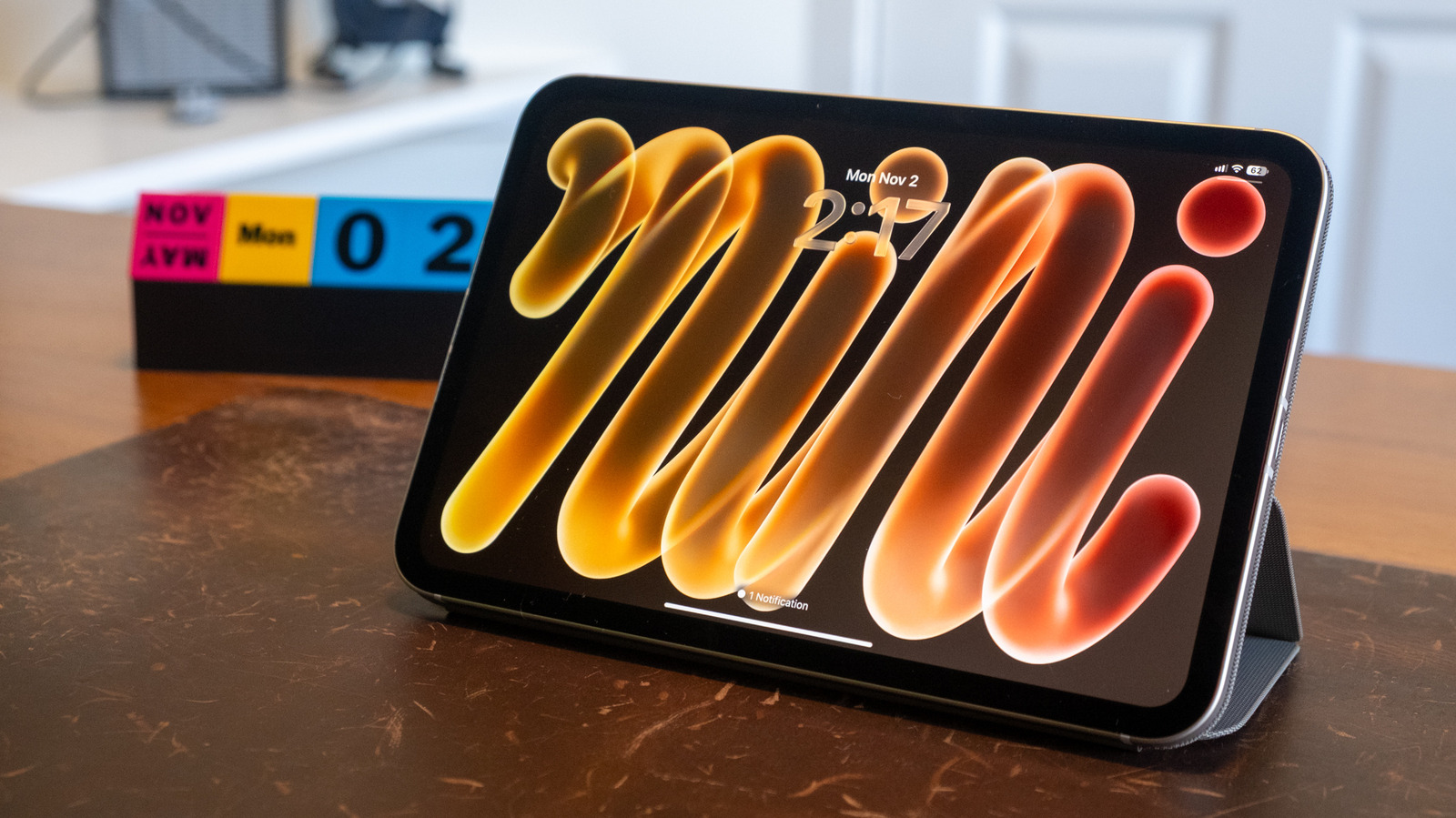
Apple made significant improvements this year, but they don’t come cheap.
The iPad mini has often gone for years without updates, making it feel like a forgotten part of Apple's tablet lineup. But it's often been sneaky powerful despite its size, usually toting specs and features that make it a more compelling option than the basic iPad, even with its smaller screen. And after two versions of the iPad mini without a home button, Apple has given the tiny tablet a compelling update in almost every facet.
The new iPad mini's screen is slightly larger, but the device is thinner and lighter than the one it replaces. It's the first iPad mini with an OLED display, a major step forward from the standard LCD this model has had for years. And for the first time, you can get a nano-texture glass front for reduced glare in bright light. Naturally, its chipset has been upgraded, as well — the A20 Pro inside it is brand new, just released alongside the iPhone 18 Pro and iPhone Duo. The previous iPad mini made do with the A17 Pro, which was first used in 2023's iPhone 15 Pro series. It has a new speaker system and is the first iPad to have an IP67 rating for dust and water resistance. Finally, it's the second iPad to get fast-charging capabilities, following last year's iPad Pro.
All told, it's a major update to a device that doesn't always get a lot of love. But, of course, these improvements come at a cost. The iPad mini now starts at $699 with 128GB of storage, $200 more than the last iPad mini cost when it was released two years ago (but only $100 more than Apple was selling it for after its round of major price increases this past summer). Between the cost and new set of features, it almost feels like an iPad Pro mini. And while technology-wise it's an impressive device, I'm not sure if the price will be worth it for most.
If I handed you the new iPad mini, you might not immediately notice how different it is compared to the 2024 model. At first glance, it has a similar enough physical impression and display, and its aluminum unibody and glass front are just as solid as ever. This year, you can only get the iPad mini in the all-business "midnight" and "starlight" shades, which is a bit of a bummer. But there are nips and tucks throughout that add up to a refreshed experience. While the iPad mini still has relatively large display bezels, they're noticeably thinner than before thanks to the 8.5-inch screen Apple included (compared to the 8.3 inches on the prior mini). Apple also reduced its thickness from 6.3mm to 5.4mm, and its weight from 0.65 pounds to 0.56 pounds (or 0.66 to 0.58 for the cellular-enabled models). More screen in a thinner and lighter package is always a win, and Apple has come the closest it ever has to making an iPad that you can truly carry with you everywhere without thinking about it.
While those physical tweaks are small but welcome, the new display tech is more significant. The iPad mini's OLED screen offers twice the peak brightness when viewing HDR content at 1,200 nits, while SDR brightness has been slightly increased from 500 to 600 nits. It can also go all the way down to 1 nit minimum brightness. And thanks to OLED, blacks look exceptionally black and overall contrast is excellent. It has a 2,000,000:1 contrast ratio, which far surpasses what you'll get on an LCD like the older iPad mini used (Apple doesn't specifically list the contrast ratio for older iPad mini models, but its recent LCD screens are in the 1000:1 range).
What this means in practice is that the iPad mini is an even better portable cinema than ever. If you're going to use this tablet to watch movies on the plane, it's a notable upgrade. It's not the most technologically advanced OLED screen you've ever seen, but its dark blacks, HDR performance and excellent overall contrast makes even dimly-lit scenes much sharper than what you'll get on an LCD-equipped iPad mini. You'll notice this the most when watching video, but it makes everyth