// ARS TECHNICA — LINUX & OPEN SOURCE
EPA throws in the towel on policing air pollution from factory farms
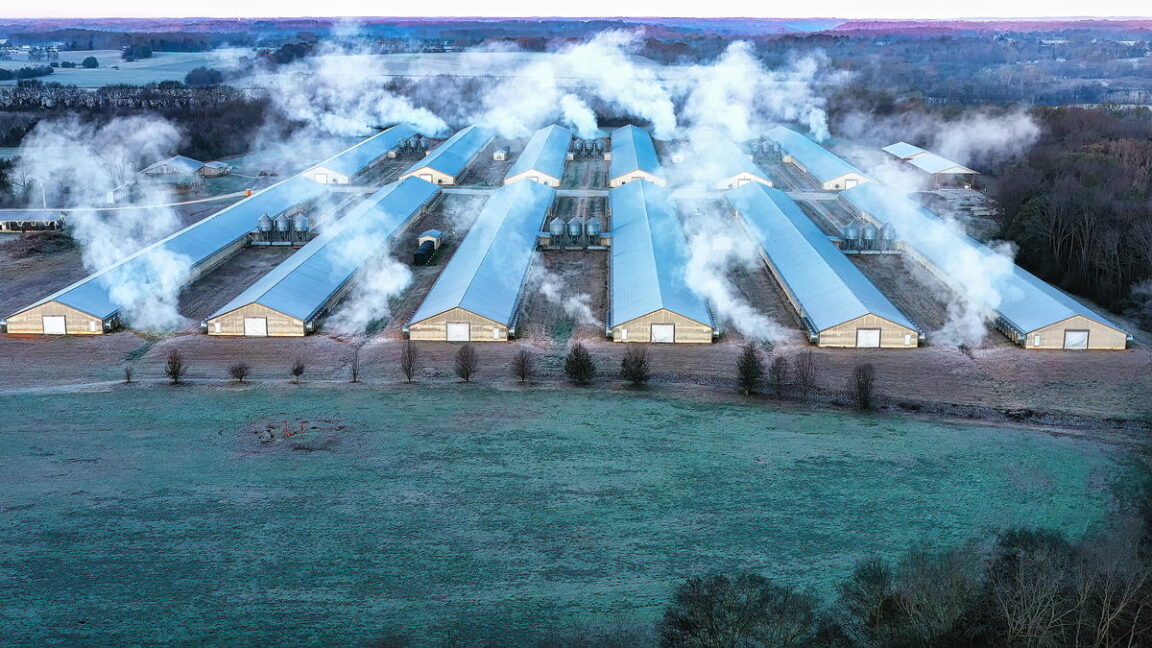
Critics say EPA is effectively abandoning Clean Air Act enforcement at factory farms.
The Environmental Protection Agency late last week announced it would end a 20-plus-year effort to develop methods to monitor air pollution from factory farms, effectively shuttering the agency’s stop-and-start attempts to regulate the potentially pollutant-spewing facilities under the Clean Air Act.
The announcement came just days before the midterm elections and was characterized by the agency as a long-awaited reprieve for farmers, a historically important constituency for Trump and the Republican Party.
When tens of thousands of animals are packed into one place, pollution from their waste is blown from ventilation fans or emanates from giant lagoons of liquid effluent. Livestock facilities emit fine particulate matter, ammonia, nitrogen oxides, sulfur dioxide, and volatile organic compounds, all contributing to a toxic mix. Research has shown that emissions from these operations are a major cause of air pollution, causing nearly 12,700 deaths in the United States a year.
Strictly speaking, concentrated animal feeding operations, or CAFOs, are required to get permits under the Clean Air Act and report emissions of these pollutants under the Comprehensive Environmental Response, Compensation and Liability and Act and the Emergency Planning and Community Right-to-Know Act. But through a deal crafted in tandem with the EPA and the livestock industry, they’ve been given amnesty from doing so for more than 20 years.
The arrangement goes back to the early 2000s when the agency attempted to prosecute CAFOs for exceeding limits on some of these pollutants. The industry pushed back, arguing there was no adequate way of measuring them. So the agency worked with industry groups to develop what was dubbed the Air Consent Agreement, through which the EPA granted thousands of CAFOs safe harbor from legal action in exchange for their participation in a study that was funded by the industry.
The goal of the study, the agency said, was to develop tools and models that CAFOs could use to “determine whether they emit pollutants at levels that require them to apply for permits under the CAA or submit notifications under CERCLA or EPCRA” and “produce a scientifically sound basis for measuring and estimating air emissions” from these facilities.
But since the adoption of the agreement in 2005, the agency has failed to produce any air “emissions estimating methodologies,” even prompting a 2017 report from the agency’s Office of Inspector General that faulted it for slow-walking the process.
Meanwhile, the Trump administration and Congress have also gutted reporting requirements for factory farms to report air pollutants under CERCLA, also known as the Superfund Act, and EPCRA.
“As EPA has been saying it’s proceeding with this plan, it’s been dismantling all of its own tools to regulate emissions,” said Tarah Heinzen, the legal director for the advocacy group Food & Water Watch, which has tracked the proceedings from the beginning and filed dozens of lawsuits attempting to push regulators to control pollution from CAFOs. “Now it has announced it has no intention, basically, of ever holding factory farms accountable under the Clean Air Act, either.”