// ARS TECHNICA — HARDWARE & GADGET
Mercedes-AMG GT 4-Door Coupe first drive: Where tech and fun collide
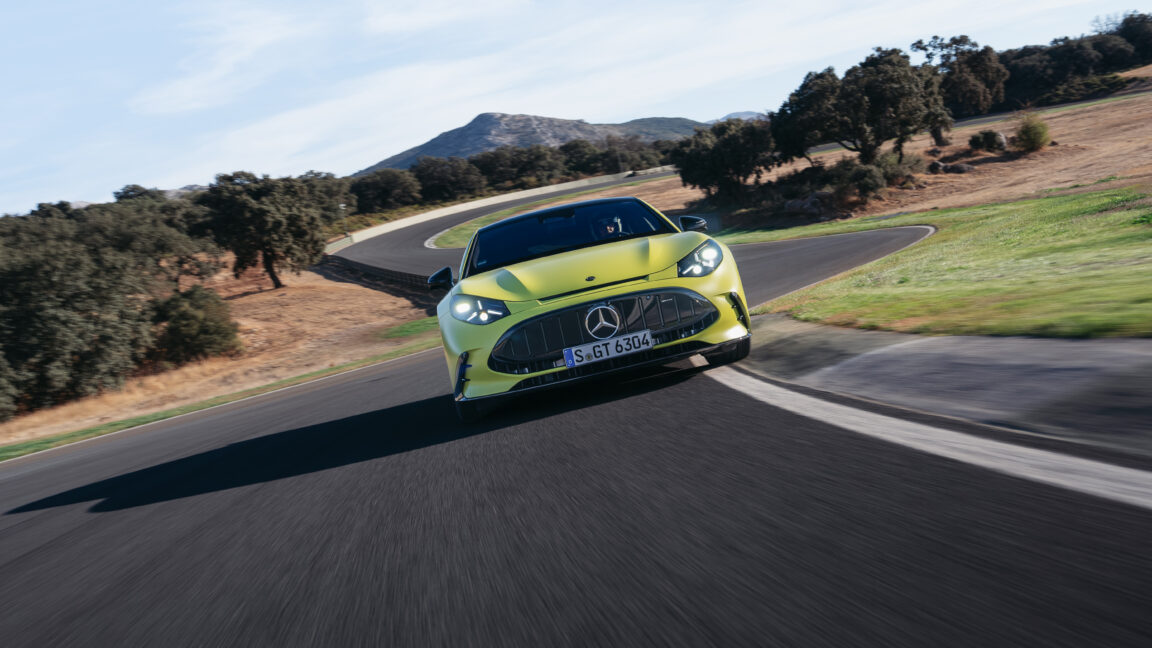
The spirit of AMG is alive via three axial flux electric motors.
The night before I drove the AMG GT 4-Door Coupe, I complained to a group of journalists that automakers don’t want to take chances and just build fun, weird cars anymore. About 12 hours later, Mercedes made me eat my words. Outside of all the bombastic extravaganza of the Los Angeles launch, the first true AMG powered exclusively by batteries is a technological triumph that’s as comfortable on the track as it is on the street. And it’s really very good on the track.
One of the fundamental problems with EVs is weight. Batteries are heavy, and the old rule about an object in motion tending to stay in motion makes the notion of nimble cornering a difficult engineering problem. Mercedes loves an engineering problem, and after two days behind the wheel of the AMG GT EV, the company has mostly reduced the battery-weight tax that mires EV performance.
On the road and on the track, the vehicle is firmly planted to the roadway. Mercedes says various technologies make this possible. In addition to decades of producing high-performance vehicles, the automaker’s AMG.EA sports-car architecture does a lot of heavy lifting here, constantly adjusting power delivery from the three motors while guiding the Active Ride Control suspension, steering—including up to six degrees at the rear axle—and active aerodynamics to deliver the performance AMG customers have come to expect from a vehicle with the Affalterbach badge on the hood.
Of the technology added to the vehicle, the axial flux motors are the most intriguing. Three motors offer a lighter, smaller powertrain that unlocks a host of abilities: two that are 3.1 inches (79 mm) wide in the back, one that’s 3.5 inches (89 mm) wide in the front. Produced by Yasa, which Mercedes bought in 2021, the motors output up to 1,153 hp (860 kW) of peak power in the AMG GT 63, with a nominal output of 711 hp (530 kW) and 1,475 lb-ft (2,000 Nm). During Boost mode, the additional horsepower is available for 63 seconds. Because it’s the AMG GT 63, obviously.
The AMG GT 55’s Boost mode lasts for 55 seconds with a peak output of 805 hp (634 kW). The 55’s nominal output is 557 hp (415 kW) and 1,372 lb-ft (1,860 Nm) of torque. I was able to use the Boost modes of both trim levels multiple times in a row without issue. Indeed, zero to 60 mph (97 km/h) takes about 2.3 seconds and zero to 124 mph (200 km/h) around 6.8 seconds.
Which means on track you can arrive at a corner going really quite fast.
Thankfully, the AMG GT’s speed can be tamed with regenerative braking and hydraulic brake-by-wire friction brakes: carbon ceramic discs at the front and steel ones at the rear. The system offered incredible stopping power when I decided to push the vehicle on the track and hit the brakes far too late for a tight left-hand corner. The deceleration was solid even as the vehicle was cresting a hill when I applied the brakes.
For drivers looking for an extreme amount of control over their vehicle, there’s the AMG race engineer control system (standard on the 63, optional on the 55) that consists of three dials in the center console: Response, Agility, Traction. They all go up to nine, which is a shame because they could have added two more levels of control. At one, the settings are essentially for new drivers who really shouldn’t be behind the wheel of this vehicle. At nine, everything is turned up to (well, I’d like to say 11) the limit, and it’s a great way to fully unleash everything the vehicle has to offer and spend the day melting tires and struggling to keep the vehicle pointed forward around corners.
On the track, they had us dial it up to seven, which loosened up the rear end and increased throttle response to a level where we easily broke traction at the rear. Regardless of skill level, it’s a fun tool for track days where you can dial in exactly how you want the vehicle to respond.