// ARS TECHNICA — FINANZA
Agility Robotics' Nasdaq debut invites scrutiny of humanoid robot market
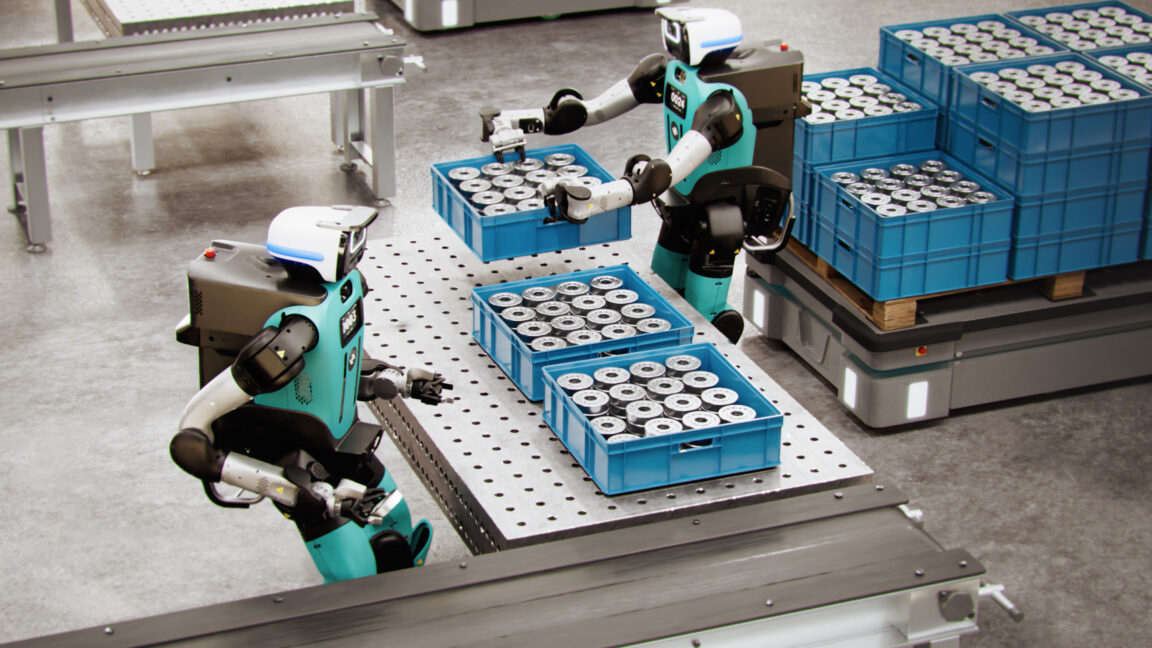
US leader in deploying humanoid robots goes public on the Nasdaq stock exchange.
Humanoid robots remain unproven at scale and have not yet achieved widespread commercialization, compared with industrial robots that have decades of proven track records in warehouses and factories. That frank acknowledgment is among the risks outlined in a securities filing by Agility Robotics—the first dedicated developer of humanoid robots to become a publicly traded company in the United States.
The robotics company, headquartered in Salem, Oregon, previously became the first to achieve full-time commercial deployment of humanoid robots at a customer warehouse in 2024. Now, Agility’s public listing on the Nasdaq stock exchange as of November 5 has come with financial disclosures detailing how the company plans to build a business around renting out or selling humanoid robots to perform manual labor.
“When we are doing robots as a service, it is much lower risk for customers to use it because they are getting a return on investment on day one,” Jonathan Hurst, co-founder and chief robot officer at Agility Robotics, told Ars. “Because they’re paying a rate that is comparable to the human labor rate, and that makes the economics pretty straightforward.”
Agility is one of many startups attempting to commercialize humanoid robots. But the company has stood out from the competition through its lead in deploying and operating Digit humanoid robots with multiple customers, including the warehouses of logistics company GXO, the South Carolina factory of German automotive manufacturer Schaeffler, and the automotive production lines of Toyota Motor Manufacturing Canada. As Agility’s very first customer, GXO announced it would expand deployments of Digit robots beyond a warehouse in Georgia to additional facilities in North Carolina and Tennessee.
The filings accompanying Agility’s journey toward becoming a publicly traded company—based on a merger with a special purpose acquisition company—also provide a rare look at the business prospects and potential unit economics of humanoid robots. Most of its startup competitors remain privately held companies that have not been nearly as forthcoming.
Another exception has been China’s humanoid robotics company Unitree, which opened its books when it went public on the Shanghai Stock Exchange STAR Market in August 2026.
Agility described the “illustrative unit economics” for both its “robots-as-a-service” subscription business and an “ownership model,” which would involve corporate clients purchasing robots outright, in an S-4 registration statement filed with the US Securities and Exchange Commission on September 4.
With the subscription model, customers would pay a one-time cost of about $25,000 per robot for delivery and deployment to a work site, along with a recurring monthly fee of $8,500 for software and maintenance.
Customers can also purchase the robot’s hardware outright for a one-time payment of $200,000, along with another one-time cost of $20,000 for delivery and deployment. But that still comes with an annual subscription fee of $36,000 for software and maintenance, or about $3,000 per month.