// ARS TECHNICA — MOBILE & WEB
2026 iPad mini review: Maximizing the mini
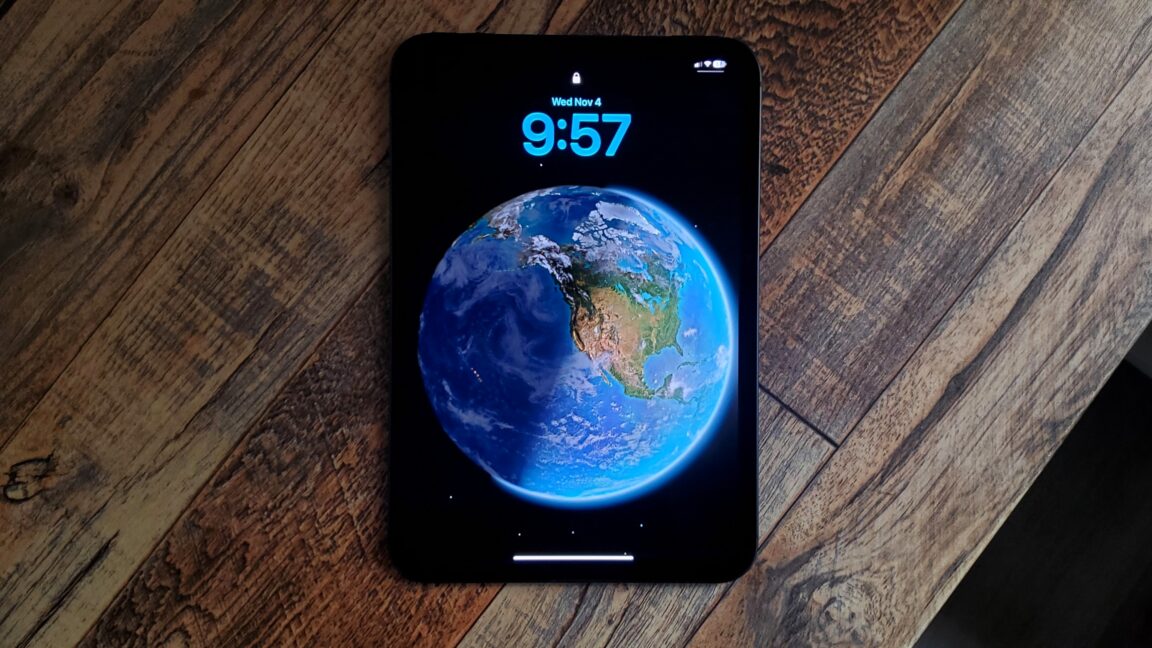
It’s more compelling than ever, but also more expensive.
The iPad mini has long felt like a niche product. It has earned a reputation as a quality tablet for people who want something small, comfortable, and portable, but its small screen and comparatively limited processing power have restricted its appeal, making it best suited to watching media or playing games.
With the 2026 version, the iPad mini is more competitive than ever. Its chip is current, its speakers are better, and, most impressively, it trades its 8.3-inch IPS screen for an 8.5-inch OLED that can hold its own against other premium tablets. There isn’t much more you can ask of an iPad this small.
But at just $50 less than the larger, more powerful iPad Air (11-inch), the iPad mini still has a hard time making a case for itself.
The most immediately noticeable change to the 2026 iPad mini is its display. At 0.2 inches larger than the 2024 iPad mini’s screen, the difference might not sound like much, but it has a meaningful impact on a tablet this small. Beyond providing a bigger view of photos, video content, and lengthy documents, the extra space makes it easier to work with multiple windows, giving you more room to view them and adjust their size and location.
One of our biggest complaints about the prior mini was its bezels, which felt large for a tablet of its size. This time, Apple managed to fit a larger screen in a slightly smaller tablet (7.69 × 5.22 × 0.21 inches and 0.56 pounds for the 2026 mini versus 7.69 × 5.3 × 0.25 inches and 0.65 pounds for the 2024 mini) by reducing the bezels by 24 percent. The result is a streamlined viewing experience that feels more modern and appropriate for a new Apple product.
And you’ll certainly want to watch content on the 2316 × 1512 OLED display, which packs 326 pixels per inch. OLED displays often lack the brightness of their LCD-LED counterparts, but the gap has narrowed in recent years. The new mini is brighter than its IPS-based predecessor, with Apple claiming full-screen brightness of up to 600 nits, compared to 500 nits on the previous model. It’s also much better suited to HDR content, with peak HDR brightness reaching 1,200 nits for highlights and a contrast ratio of 2,000,000:1.
Since content consumption is arguably the mini’s strongest use case, it makes sense for Apple to focus on changes that enhance the viewing experience. Watching shows and movies feels as luxurious as possible on a screen this size, and the mini maximizes its display in nearly all the ways that matter.
I say “nearly” because the mini still has a 60 Hz refresh rate; 120Hz is limited to the iPad Pro. A 120 Hz refresh rate makes little difference when watching most shows or movies, but it can make some tasks, such as scrolling through long documents, look smoother. Still, the difference is less noticeable on a smaller screen.
Overall, the refresh rate didn’t feel like a drawback during regular use. Apple has gone a step further, noting that OLEDs typically have faster response times than IPS displays. That’s generally true when discussing gray-to-gray (GtG) response times. However, moving picture response time (MPRT) can be a better indicator of potential persistence-related motion blur, including during scrolling, because it measures how long an image remains visible on the display, contributing to blur as your eyes track moving content. GtG, by contrast, measures how quickly individual pixels transition between shades. Slower pixel transitions can create motion artifacts such as ghosting.