// TOM'S HARDWARE US — HARDWARE & GADGET
Intel’s next-gen Nova Lake needs new motherboards — what we expect from Nova Point and Z990, Z970, and B960 chipsets
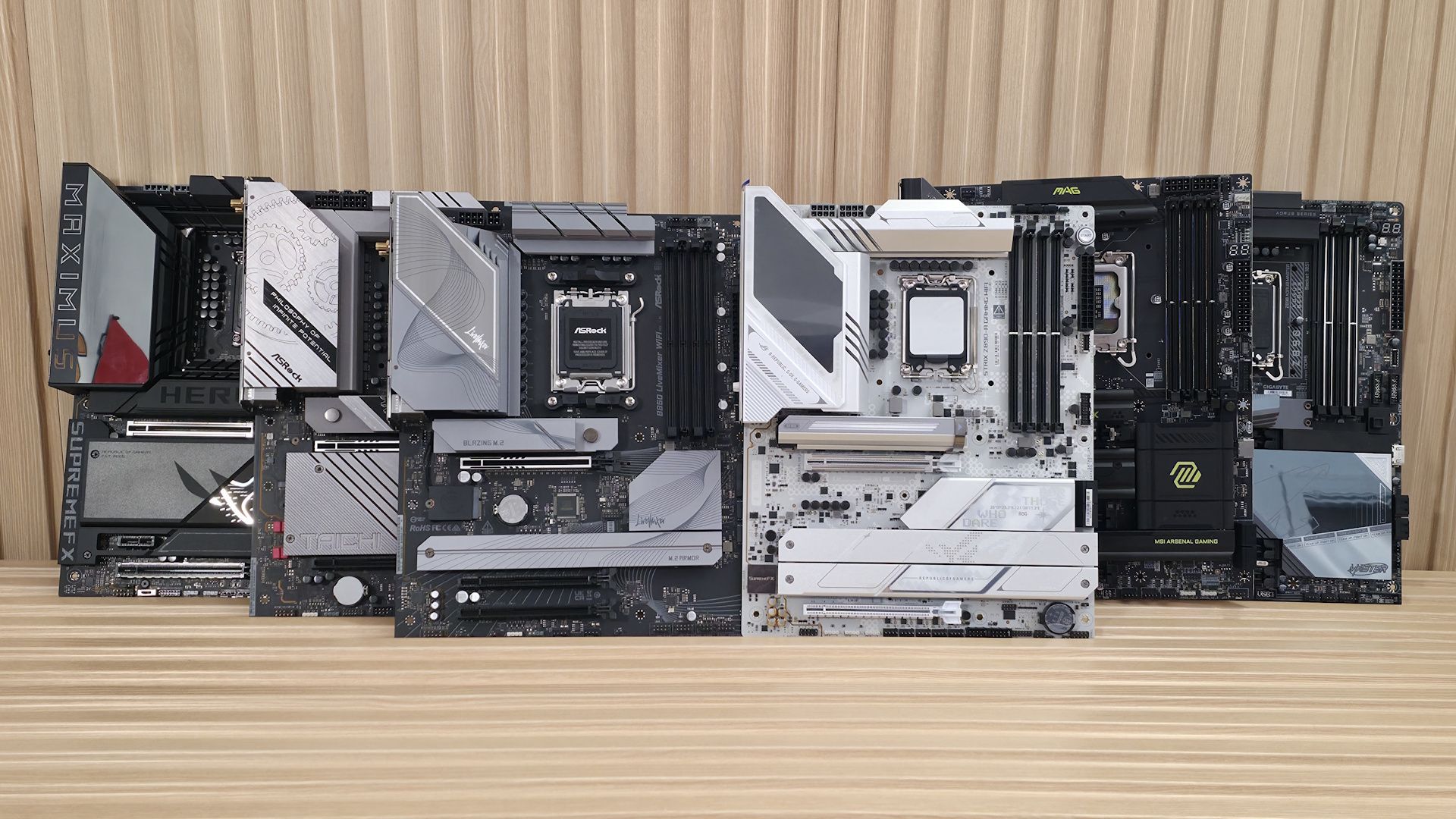
More PCIe 5.0 lanes, Thunderbolt 5 support, faster memory speeds, and the potential of active chipset cooling highlight the list of Nova Point chipset features.
When you purchase through links on our site, we may earn an affiliate commission. Here’s how it works.
Intel’s new Nova Lake-S CPUs are rumored to be on track to start mass production in Q4 2026, with a launch expected in Q1 2027. Unlike previous launches, we’re supposed to see mid-range SKU(s), supposedly an unlocked 28-core product(s), first in Q1, followed later in 2027 by flagship-class models that allegedly use two compute tiles and feature up to 52 cores.
Lip-Bu Tan, Intel CEO, said earlier this year that Nova Lake is “coming at the end of 2026.” Despite the growing number of rumors and statements, we still don’t have a concrete date, but we can expect to see the CPUs soon, and with them, a brand-new socket and motherboard chipsets.Regardless of how many cores they have or when they arrive, you will need a new motherboard for Nova Lake. The LGA 1851 socket is at the end of its life with the release of Core Ultra Series 2 processors like the Core Ultra 7 270K Plus, released earlier in 2026; that means no more new processors and a dead end. A new socket, LGA 1954, is necessary because Nova Lake CPUs have a significant increase in I/O and power needs. It’s also Intel’s first bLLC (big last-level cache) intended to take on AMD’s X3D CPUs.
We haven’t seen many details about the boards themselves, like pricing, official configurations, or product stacks, and we've only caught glimpses of one or two early models at Computex. Still, we have seen a few interesting platform details and rumors. To that end, we’ve put together a table of what we know so far about the specifications. Some things aren’t official yet and are noted by the tilde (~). We’ve also listed last-gen equivalents for reference.
The new lineup consists of five different chipsets. You get Z990 and Z970 for the enthusiast class, B960 for the Mainstream, W980 for workstations, and Q970. You may notice it’s missing the ‘H910’ platform for entry-level PCs, and now we see a second enthusiast-class platform, the Z970, wedged between the B960 and Z990. Z990 is still the flagship, offering more PCIe lanes, a DMI Gen5 x4 link, and 12 Gen5 lanes from the chipset. Z970 is the less expensive enthusiast option and is reportedly built on the same silicon as B960. You get CPU multiplier overclocking, but no BCLK adjustment, and of course fewer ports and lanes than the flagship.
The chipset package itself, internally codenamed “Nova Point,” will also differ slightly and is smaller than Z890 (600 mm² vs 658 mm²). The die-on-package shrinks to 72.5 mm² (11.15 x 6.5mm) compared to 92.9 mm² (11.15 x 8.33 mm), or roughly 22% smaller. Base power increases to 7.9 Watts, up from 6 W on the Z890, with a maximum of 14 W while working.
That power-density increase explains Intel’s rumored active-cooling guidelines for the chipset. When you start connecting components that use the chipset, think some PCIe slots and M.2 drives, the chipset raises its working voltage to maintain signal integrity for all of the bandwidth it now has to provide for the attached devices. Hopefully this is only needed in the high-end Z990/970, where it has a lot more lanes/bandwidth to support, as some of the fans on the chipset (remember early X570?) could get loud.
Beyond the new LGA 1954 socket, not much information has been released about what to expect from motherboard partners. We know the platform's base memory speed is a smoking-fast DDR5-8000, up 800 MT/s over the Arrow Lake refresh chips. And if you don’t have a kit that can run those speeds and want to, it will cost at least $700 from any reputable brand. So the platform's cost of entry will be high unless you’re starting with compatible RAM. That said, you can run slower speeds if you already have DDR5, which would save money, but it could create a performance ceiling.
We’ll also see mor