// ARS TECHNICA — SPAZIO & SCIENZA
The migration that transformed Africa's languages, genes, and cultures
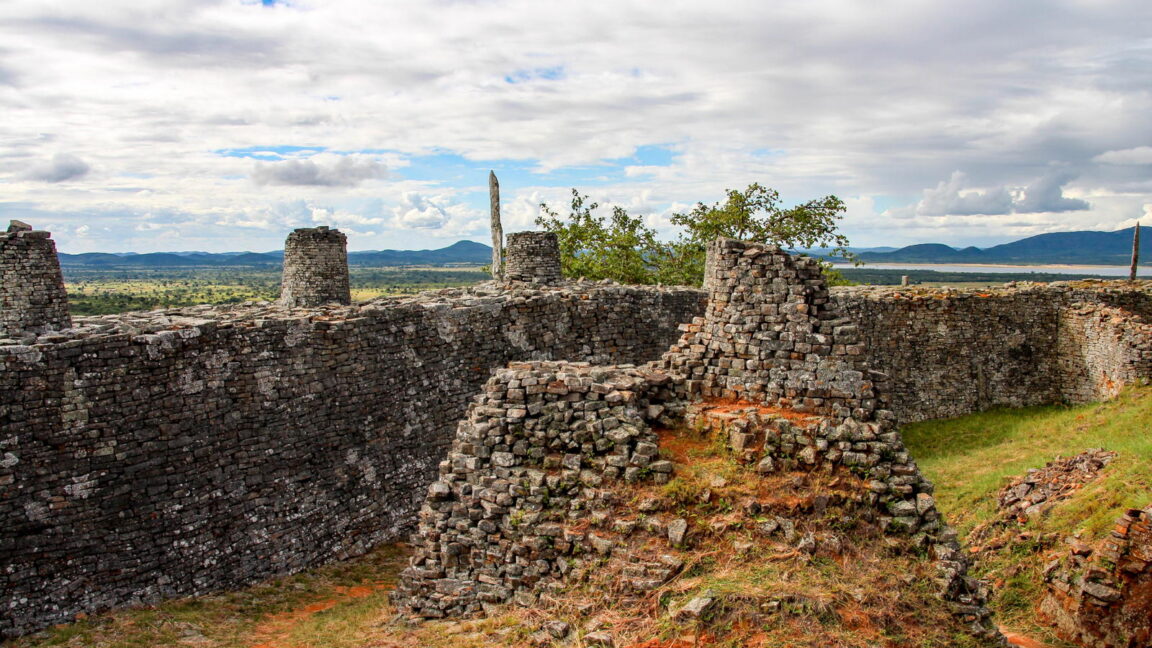
Genes and archaeology are revealing how Bantu speakers spread across much of Africa.
It’s not easy to extract iron from its ore. But the peoples of the ancient city of Great Zimbabwe—the capital of a thriving kingdom in southern Africa between 1000 to 1700 AD—were masters.
At sites near the city’s stone ruins, clusters of iron-smelting furnaces survive today as mounds of rubble. At Mashava, a village 25 miles northwest, fragments bear fingermarks of those who long ago smoothed the structures’ clay interiors.
Some of the furnaces were nearly an adult’s arm span in width, with walls thick and strong to contain the heat of more than 2,100° Fahrenheit needed to smelt iron. Unlike other furnaces that required workers to force air into them with bellows, these were designed to suck air in, then out through a chimney, no human labor required. This would have made it significantly easier to produce the iron, which was fashioned into hoes, axes, and arrowheads.
“The number and size of these furnaces, together with the use of natural-draft technology, indicate intensive and technologically sophisticated iron production,” says archaeometallurgist Ezekiel Mtetwa of Chicago’s Field Museum of Natural History, who has long studied the furnaces.
Scientists are extremely interested in the peoples who created this and other iron-powered societies across eastern and southern Africa. Research points to an adaptable and innovative group from western Africa as the masterminds. Known as Bantu speakers, these communities began gradually expanding across the continent’s southern half, starting from 6,000 to 4,000 years ago. In doing so, they introduced a fundamentally new, sedentary way of life—characterized by farming, raising livestock, pottery-making, and metalworking—to regions previously dominated by hunter-gatherer communities.
This migration transformed not only the region’s history and technology, but also its languages: Today, around 350 million Africans speak one of roughly 500 distinct Bantu tongues, from southern African Zulu to eastern African Swahili. And at least as many Africans—as well as many African Americans and Afro-Latinos—carry Bantu ancestry in their DNA.
Reconstructing this expansion has been a tough puzzle, especially given the region’s sparse written historical records and limited research funding. But a unique blend of scientists—linguists, archaeologists, and geneticists—have teamed up to unearth clues about the deep origins of the Bantu-speaking people, their path across Africa, and their relationships with other cultures. Although much debate and uncertainty remain, little by little the work is uncovering one of history’s largest and longest human migrations.
“It completely reshaped the demography in sub-Saharan Africa, and we are really interested in trying to understand it,” says population geneticist Sandra Beleza of the United Kingdom’s University of Leicester.
The first evidence of the Bantu expansion came from observations of similarities among Bantu languages. They’re so alike, in fact, that when the Portuguese explorer Vasco da Gama sailed around the southern tip of Africa in 1497, a Portuguese crew member who had spent time in west-central Africa could reportedly communicate with locals in southeastern Africa.