// SPACE.COM — SPAZIO & SCIENZA
SpaceX moves Starship Flight 15 booster to launch pad for 'squeeze test' ahead of epic double-catch attempt (photos)
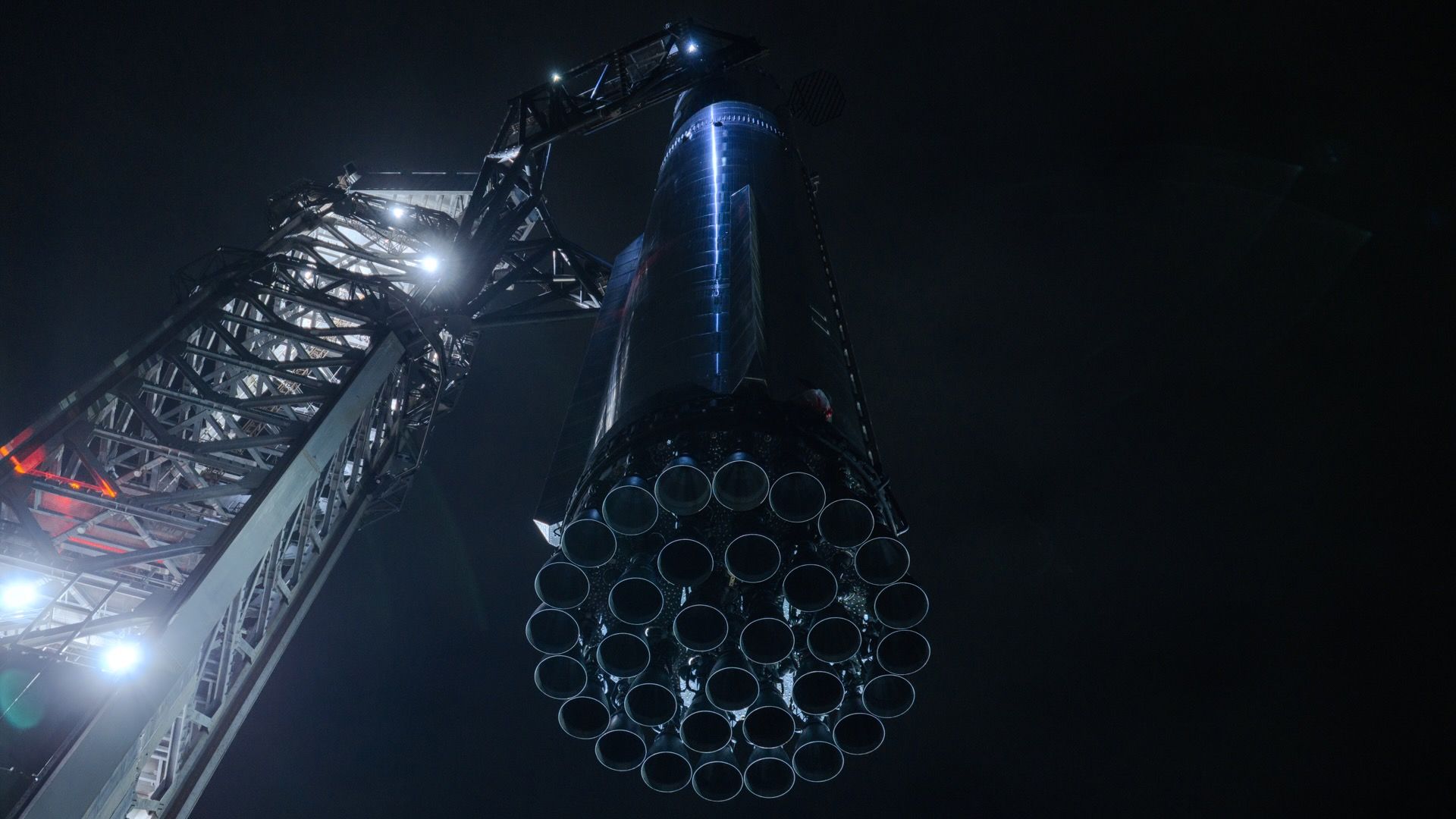
The historic flight is scheduled to launch on Friday (Nov. 13).
When you purchase through links on our site, we may earn an affiliate commission. Here’s how it works.
SpaceX is one big step closer to the 15th test flight of its Starship megarocket.
The company announced today (Nov. 10) that it had moved its latest Starship first stage, known as Super Heavy Booster 22, to the launch mount at its Starbase facility in South Texas ahead of Flight 15, which is scheduled to lift off this Friday (Nov. 13).
During the upcoming launch test, SpaceX plans to catch both Booster 22 and Starship's Ship upper stage with its launch tower's "chopstick" arms in a double landing catch — something the private spaceflight company has never tried before. It will be the first full recovery of an orbital rocket in history.
Booster 22 therefore "was used for final catch testing upon arrival [at the pad], including a suspended squeeze test at catch height," SpaceX said in an X post today (Nov. 10).
That post shared four photos of the giant booster, which is powered by 33 of SpaceX's next-gen Raptor engines. The first shot showed Super Heavy in one of Starbase's "Mega Bay" assembly buildings before rollout, while the other three depicted it grasped by the tower's arms, held high in the South Texas sky.
SpaceX has used the chopstick arms during Starship flights before; it has successfully caught Super Heavy on three separate occasions. But the company has never attempted a catch of Ship, which flies higher and farther than the booster and is therefore a more challenging target. And SpaceX only reached orbit with Starship for the first time on Flight 14, which launched on Sept. 28.
So Flight 15 will break new ground. And, if all goes to plan, it will give us a look at the future: SpaceX plans to catch Super Heavy and Ship on all operational Starship missions, as this recovery strategy will allow the company to boost the megarocket's launch cadence.
And SpaceX wants to fly Starship incredibly often, so that it can build out its Starlink V3 broadband constellation and even bigger Starmind AI data-center network. Indeed, Elon Musk has said the company is eyeing 10,000 Starship flights per year by 2030.