// SPACE.COM — SPAZIO & SCIENZA
Double-catch drama: Why Starship's Flight 15 is so important to SpaceX
"This is the critical breakthrough needed to make life multiplanetary."
When you purchase through links on our site, we may earn an affiliate commission. Here’s how it works.
Having reached orbit for the first time with Starship last time out, SpaceX is looking to take a huge stride toward full reusability with Flight 15 — the first attempt to catch the megarocket's Ship upper stage, as the company eyes hourly launches by 2030.
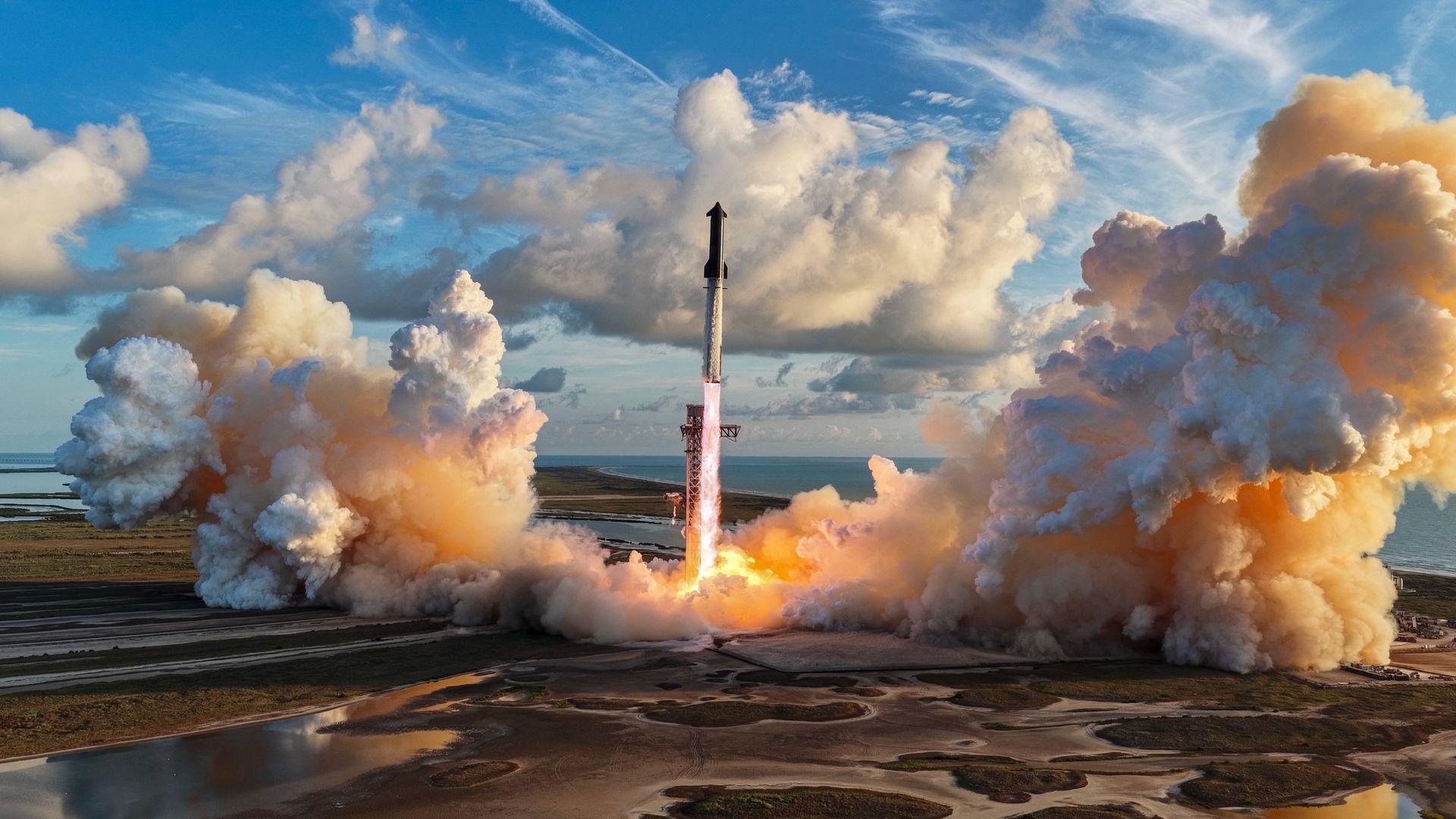
SpaceX is targeting today (Nov. 13) for Starship's 15th flight, which will lift off from the company's Starbas site in South Texas. If all goes well, the mission — which you can watch here at Space.com — will end on Saturday (Nov. 14) with the first attempt at what SpaceX itself calls the "Holy Grail of rocketry": Catching both Starship's Super Heavy booster and Ship upper stage chopstick-style back at the launch pad.
"If successful, this will mark the first full recovery of an orbital launch system and a breakthrough moment in making Starship a reliable, rapidly reusable rocket," SpaceX wrote in its Flight 15 mission description.
The 75-minute Flight 15 launch window opens today at 5:45 p.m. EST (2245 GMT), and a number of Starship firsts are planned for early in the flight. For example, while SpaceX has caught three Super Heavy boosters and reused two of them to date, the first attempt to catch a next-gen Super Heavy "V3" vehicle will come today, around 6.5 minutes after liftoff.
If the Ship upper stage gets the go-ahead for orbital insertion, it will deploy 26 Starlink V3 satellites — designed especially for use on Starship — into low Earth orbit (LEO), starting about 35 minutes after launch. Then, 21 hours later, if "internally developed, and FAA-approved, conditions" for a return to Starbase and catch are met — including on-orbit assessment of Ship's heat shield by three of the V3 satellites — SpaceX will attempt to recover the orbital upper stage.
This landmark try will follow the first-ever Ship reentry over inhabited areas, as the vehicle will maneuver its way over sparsely populated regions of northern Mexico and southern Texas. (On previous missions, Ship has splashed down in the open ocean.) It will head back to Starbase and make a bellyflop maneuver as it descends to the site's Pad 2 before flipping itself vertical, ready for embrace of the launch tower's waiting mechanical arms.
"SpaceX will attempt to catch both the Super Heavy booster and Starship on the upcoming flight. If both are successful, it will mark the first time that all parts of an orbital rocket return to Earth intact," Elon Musk said via X, the social media platform he owns, on Nov. 6. "This is the critical breakthrough needed to make life multiplanetary."
Half of the system is already proven. With catching and reflying boosters largely established, the next and unprecedented step is catching Ship. This is no easy task. The vehicle, returning from orbital speeds, must survive the heat of reentry, make its way precisely back to the pad put itself in position to be caught by the tower's "chopstick" arms. The full recovery of an orbital launch system would, in the words of SpaceX, be a "breakthrough moment in making Starship a reliable, rapidly reusable rocket" and would open the "door to airplane-like cadence."