// SPACE.COM — SPAZIO & SCIENZA
Think you have good eyesight? Try counting the stars in the Pleiades tonight
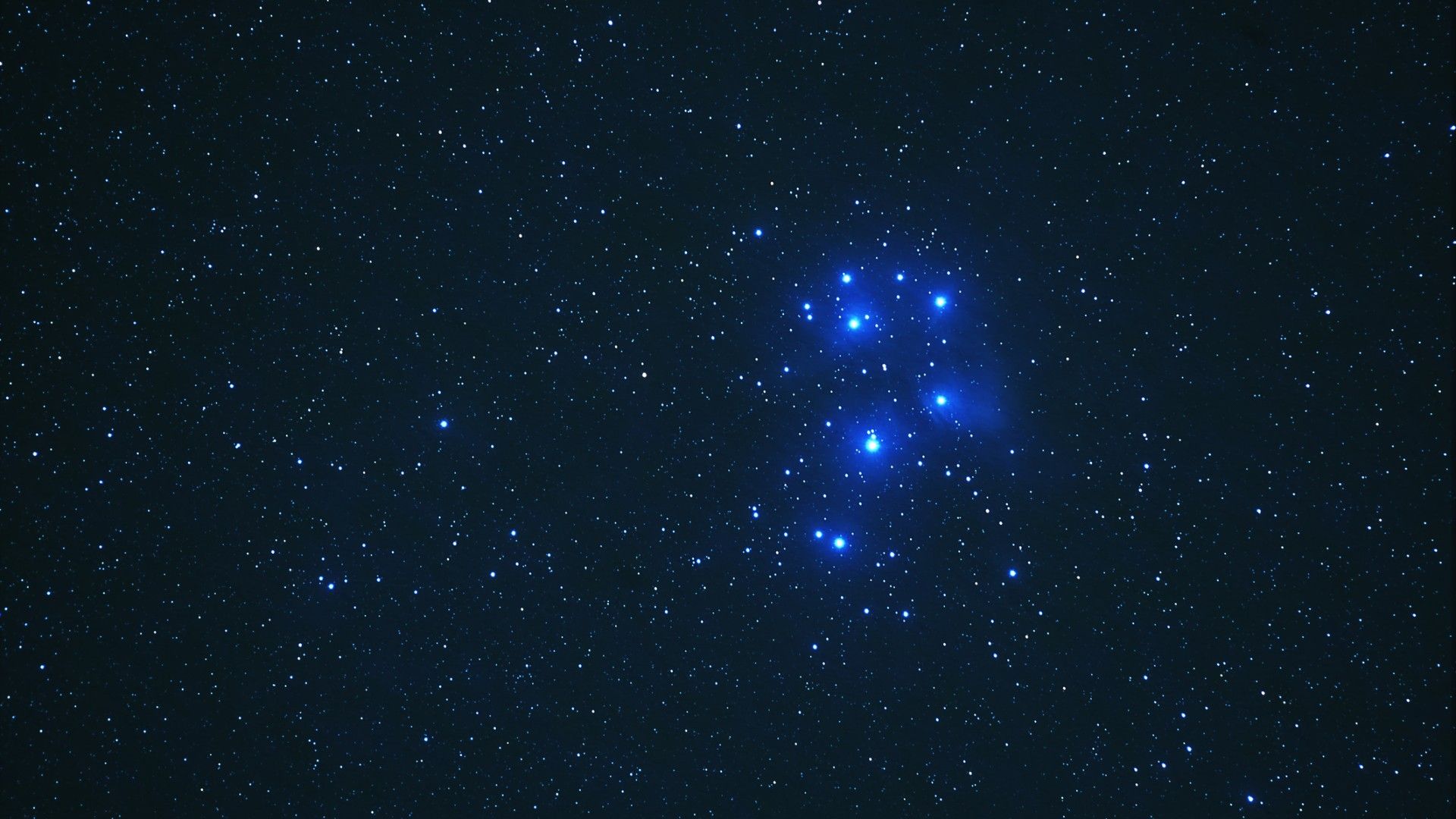
Every November, I give myself a completely unscientific eyesight test using one of my favorite sights in the night sky — the Pleiades. How many stars can you see?
When you purchase through links on our site, we may earn an affiliate commission. Here’s how it works.
Every autumn, I conduct an eyesight test that no reputable optometrist would understand.
I go outside, find the Pleiades and count how many stars I can see. Usually I start confidently. One, two, three, four, five. Then things become contentious. Is that another star? Did I actually see it, or did I decide I ought to see it because I know it's there? I look away, look back and begin again.
This is not, I should emphasize, a meaningful test of eye health. What it tests, rather, is how badly I've prepared for looking at the night sky.
The Pleiades sit roughly 444 light-years away in Taurus and are right now becoming extremely convenient in the evening sky. You don't need a telescope to find them. You don't even need binoculars. In fact, you're likely to catch their collective brightness in your peripheral vision every time you go outside and look up.
But every November the Pleiades remind me that naked-eye observing isn't as simple as opening the back door and looking up. How many Pleiades I can see can change depending on what I do during the next 10 minutes.
The Pleiades, also known as Messier 45 (M45) or the "Seven Sisters," are an open star cluster in Taurus. They're one of the closest clusters to the solar system and some of the youngest stars you can see with the naked eye — just 100 million years old. They're basically newborns.
In mid-November, they rise in the east in the early evening and climb higher as the night progresses, making this an excellent time to get acquainted with them. Look east after dark for a tiny, compact group of stars. If you know Orion, which rises later, the Pleiades are above and to the right of it from mid-northern latitudes. Nearby you'll also find orange Aldebaran and the much broader V-shaped Hyades cluster. The Hyades are closer to the sun, but their stars are about 625 million years old.
The name "Seven Sisters" creates an immediate observational trap: people assume they're supposed to see seven stars. That's not necessarily true. In fact, six is a common naked-eye result under decently dark conditions (note that the shape of the six brightest is like a mini Big Dipper/Plough), while people with sharp eyesight under darker skies may see more. The cluster itself contains about 1,000 stars. The number you personally distinguish depends on eyesight, sky brightness, atmospheric conditions and how well your eyes have adapted to darkness.