// ENGADGET — MOBILE & WEB
Hands-on (and off) with Mercedes-Benz's upcoming MB.Drive Assist Pro system
The streets of San Francisco are increasingly littered with oddly shaped cars festooned with bulbous sensors on the outside and no drivers on the inside. You can't go two minutes without seeing a car from Waymo or Zoox buzz by, proof that the autonomous revolution has hit the Bay Area. Still, those are all limited-use cars, summoned via smartphone, taking you to your destination, then disappearing from your life as quickly as they arrived.
When it comes to cars you can actually own, various manufacturers are making meaningful strides toward autonomy, but all in the form of driver assistance. These systems do some of the driving some of the time, but under the active supervision of the driver behind the wheel.
Next year, Mercedes-Benz is taking its own step forward with advanced driver assistance in the form of Hands-Free Highway Assist and MB.Drive Assist Pro. To get an early look, I visited that haven of autonomy for some laps of the Bay in the best that Mercedes has to offer.
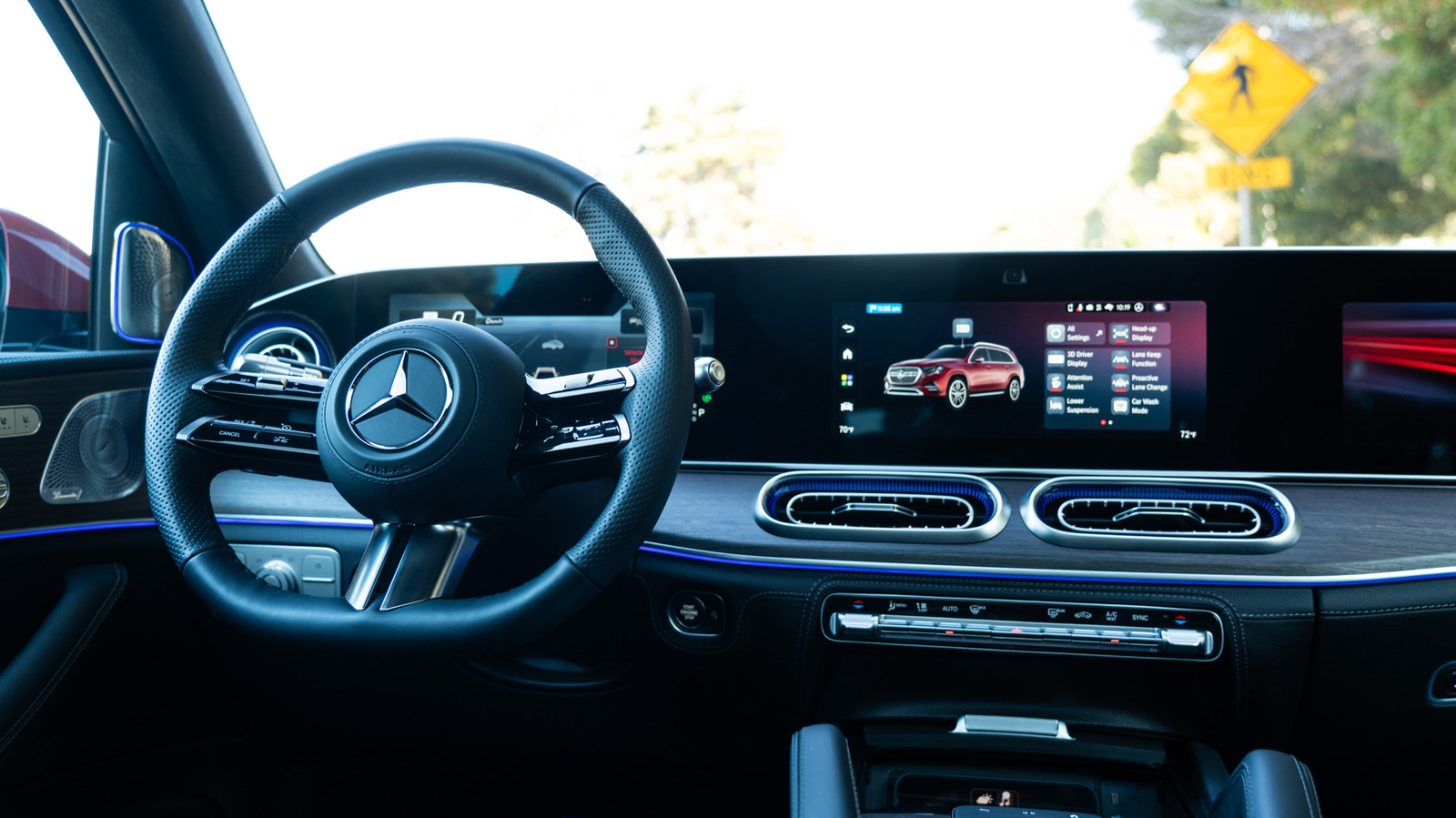
My first go was behind the wheel of a GLS, Mercedes-Benz's largest and most luxurious SUV. In the high-performance AMG flavor, it's also reasonably fun to drive, but my job for the morning was to sit back and take my hands off the wheel.
Hands-Free Highway Assist is an upcoming feature that will let the driver go hands-free on limited, designated, divided highways. The driver will need to keep paying attention — an eye-tracking camera ensures that — but they can at least sit back and let the car handle the highway drone at speeds up to 85 mph.
I started in Alameda and made my way up to the 880, a highway still littered with the remains of the morning gridlock. Once there, I just turned on cruise control and waited for the visual indicators on the gauge cluster and heads-up display to change from a green steering wheel with green hands to a green steering wheel with gray hands.
That subtle cue proved to be the first problem. In the bright California morning sunlight, I struggled to spot the subtle color change on the HUD. On the gauge cluster, the indicator is positioned up in the corner, blocked by the steering wheel.
But eventually I spotted the signal, took my hands off, and that was that. The SUV and I just kept on going. It was entirely uneventful, which is exactly how these things are supposed to go. That didn't mean it was a completely passive experience, though. Traffic was thick and moving at various speeds across many lanes, and before long the GLS started to pick its way through, moving with intention and even aggression at times to maintain my chosen speed.
As my exit approached, it even changed lanes to the right, ensuring I was in as good a position as possible to get where I needed to go.
The automatic lane changes in the GLS generally worked well, but there was one moment when the SUV failed to detect a rapidly approaching car in the left lane and tried to change directly into its path. I had to grab the wheel to override.