// TOM'S HARDWARE US — HARDWARE & GADGET
Intel bets on Classiq acquisition to turn Quantum efforts into commercially viable business — deal positions company as leading vendor of qubit chips, acquisition to close by the first half of 2027
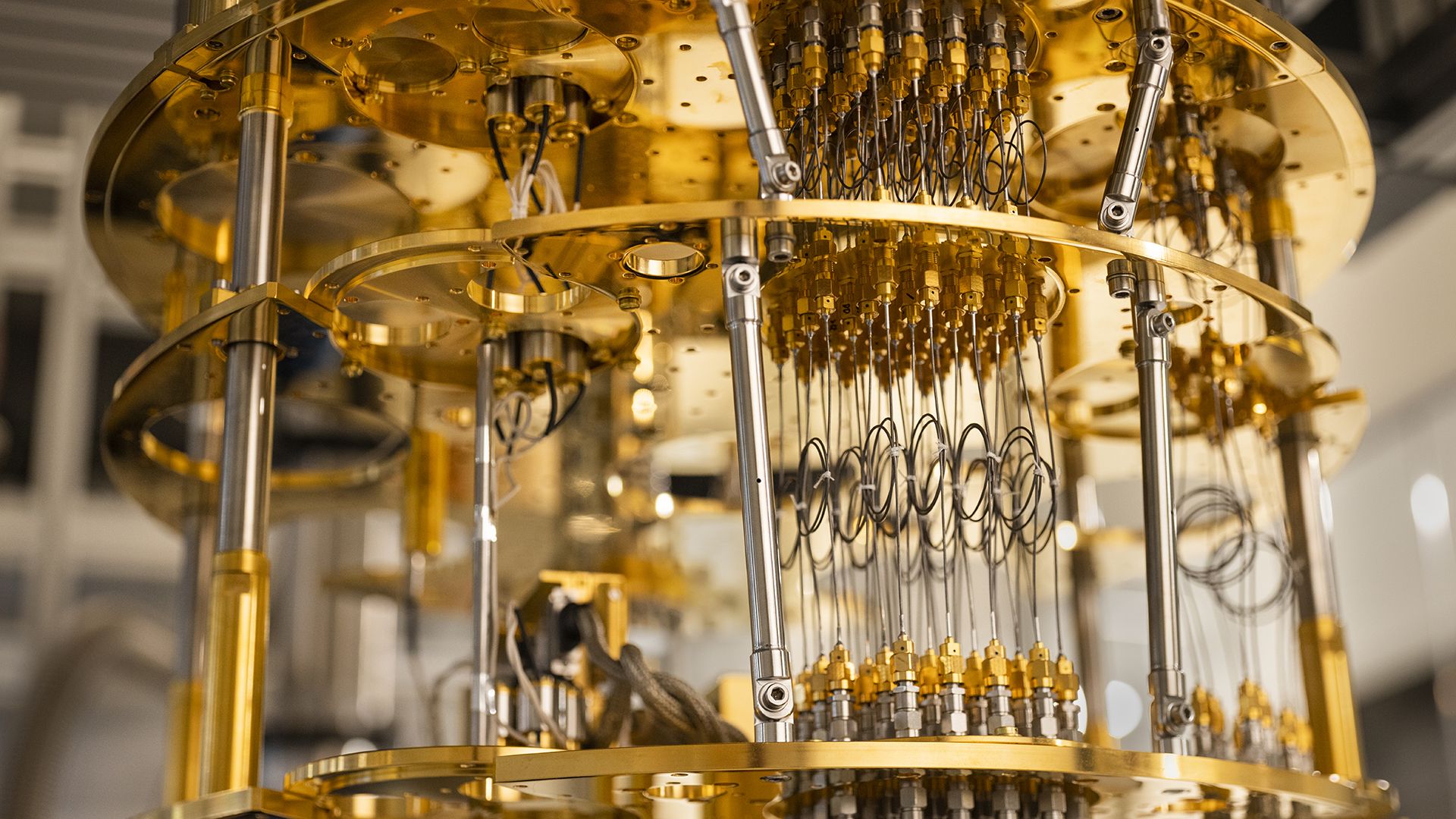
Intel becomes a top-to-bottom quantum computing company.
When you purchase through links on our site, we may earn an affiliate commission. Here’s how it works.
After having spent more than a decade pursuing quantum computing research, Intel is making its first real push at commercializing its efforts. First, with the pending acquisition of quantum computing company Classiq, which has an existing list of enterprise customers. Intel says it'll be the only company that can produce qubit chips and cryogenic control electronics at scale; the deal would give it a complete top-to-bottom hardware-to-software stack, and Intel will also gain the chance to become a leading vendor of quantum computing products. Intel's acquisition of Classiq is expected to complete in the first half of 2027.
The key ingredient of that strategy is the pending acquisition of Classiq, which offers a hardware-agnostic quantum software development platform that enables engineers to design, synthesize, optimize, simulate, and execute quantum algorithms using high-level programming tools and AI-assisted automation, essentially untying software design from the complexity of quantum hardware. Meanwhile, Intel also plans to manufacture quantum processors using specialized versions of its 18A process technology, offer foundry services, and eventually sell complete quantum computers. Although the company expects its quantum business to become profitable, it acknowledges that commercial success will take time.
Intel has spent more than a decade developing quantum computing technologies, including silicon spin-qubit processors, cryogenic control electronics, and software for hybrid quantum-classical computing. However, the company has largely treated these activities as research and development projects rather than an actual business. The acquisition of Classiq, which Intel expects to complete in the first half of 2027, marks a shift toward commercialization as Classiq already has many clients and established revenue streams.
"Up until now […] our quantum computing group for the last ten years was […] purely a research and development project," said Pushkar Ranade, chief technology officer at Intel, during a media briefing. "It was not really viewed as a commercial activity."
Intel's quantum computing journey kicked off in 2015 with a research collaboration with QuTech — the quantum research institute of TU Delft and TNO — to develop quantum computing technologies, including silicon spin qubits. The idea was to leverage Intel's extensive expertise in silicon transistor development and its high-volume semiconductor manufacturing infrastructure to produce quantum processors in the same fabs that make conventional CPUs, overcoming the manufacturing scalability challenges alternative quantum computing architectures faced at the time. Intel subsequently developed Horse Ridge, a cryogenic control SoC manufactured using a 22nm process technology in 2020. Three years later, the company introduced Tunnel Falls, a 12-qubit silicon spin processor manufactured on a 300mm wafer.
Intel's quantum computing effort focuses on silicon spin qubits, which use spin states of individual electrons to store and manipulate quantum information. The company chose this approach partly because silicon spin qubits can be manufactured using equipment and processes similar to those employed for conventional semiconductor devices. This compatibility enables Intel to re-use most of its existing manufacturing infrastructure and expertise rather than build dedicated semiconductor fabrication facilities for quantum processors that yet have to become commercial products.
Despite the recent cuts at Intel, the company sustained its quantum computing project. Intel has developed two specialized versions of its 18A manufacturing technology for quantum computing: 18A-Q for silicon spin-qubit processors and 18A-CC for cryogenic control and readout electronics. To define/build 18A-Q, Intel has collaborate