// TOM'S HARDWARE US — HARDWARE & GADGET
Nvidia claims its Vera CPU can gain up to 39% performance boost via software optimization at SC26 — architectural fine-tuning is needed to fully unleash custom Olympus cores
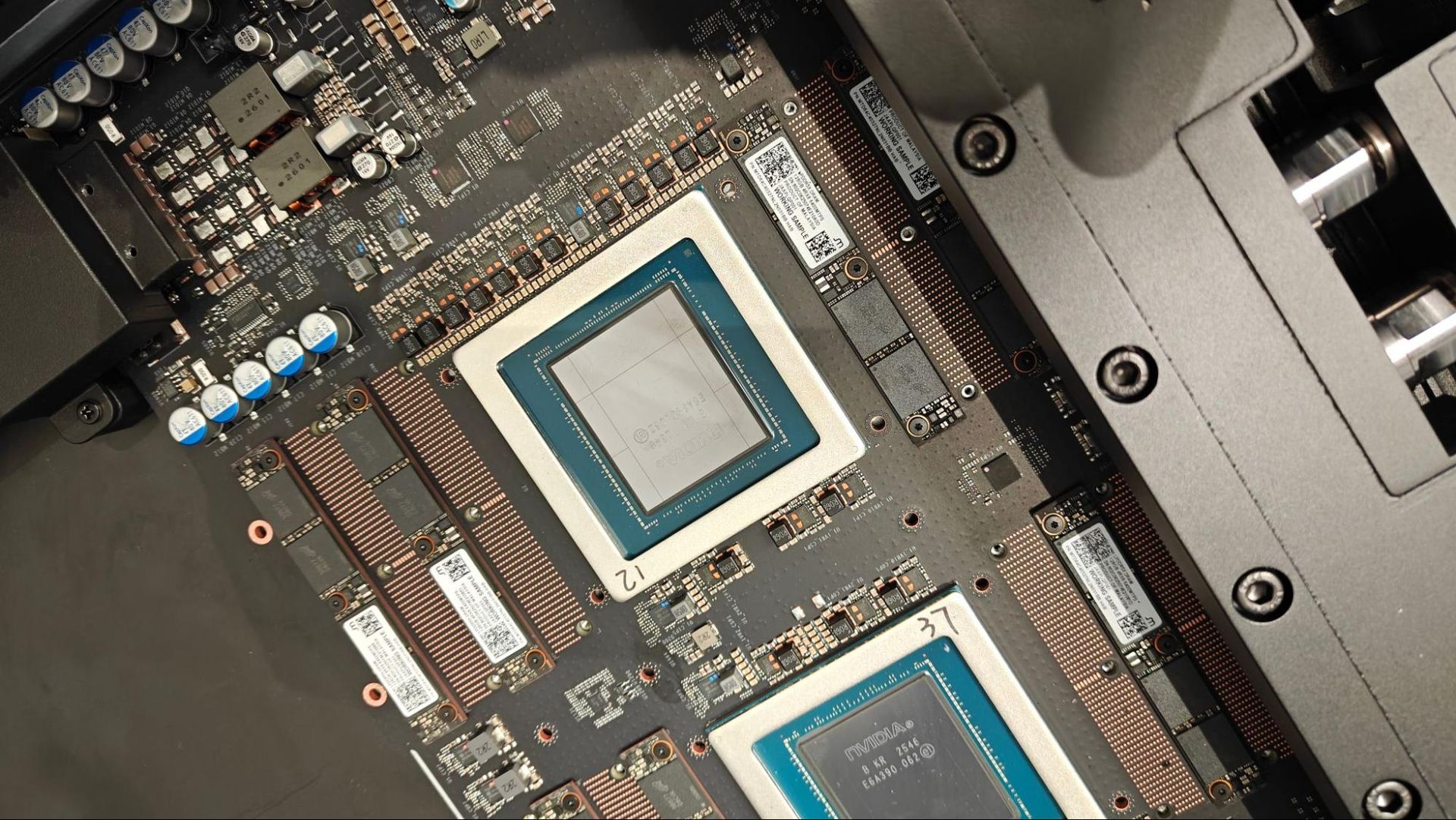
Vera can speed up old code out of the box, but there's more performance to unlock
When you purchase through links on our site, we may earn an affiliate commission. Here’s how it works.
Nvidia's Vera CPU, designed as both a standalone data-center part and a host for Nvidia's Vera Rubin NVL72 servers, offers impressive performance thanks to substantially higher execution resources per core than its predecessor, Grace. However, Nvidia admits at Supercomputing 2026 (SC26) that existing software cannot always take full advantage of Vera's resources without adaptation for the architecture.
The company shared that architecture-specific software optimizations can boost Vera's performance by nearly 39% in certain computationally intensive workloads. But despite offering unbeatable single-thread performance, the CPU is not positioned for general-purpose workloads.
Get the full Tom's Hardware experience on your device with our brand-new app. Bookmark articles, use our smart search feature, personalize your feed, and get push notifications so you never miss a beat.
Unlike Grace, which relies on off-the-shelf Neoverse V2 CPU cores developed by Arm, Vera uses Nvidia's proprietary Olympus cores specifically designed to maximize per-core performance as well as to ensure high aggregate throughput. To that end, Nvidia equipped Olympus with a wide front end that features a 10-wide decoder, a neural branch predictor, a deep out-of-order execution engine, six vector execution units, four load pipelines, two store pipelines, all backed with large private caches and advanced prefetch mechanisms.
In fact, Nvidia deliberately opted for 88 high-performance general-purpose cores with support for its proprietary spatial multithreading technology (176 threads in total) rather than maximizing the number of cores per socket, as the maximum possible single-thread performance was one of the key design goals for Vera.
"CPU design is really just a game of trade-offs," said Hannah Coutand, who leads Vera CPU marketing at Nvidia, in an interview with Tom's Hardware Premium. "You could maximize for a lot of cores, but literally when you maximize the die for lots of cores, you do not actually have space to maximize for IPC, like instructions per clock."
Although Nvidia primarily positions Vera as a CPU for agentic AI and other AI-related workloads, the company originally conceived its Olympus microarchitecture with data processing applications in mind. As it turned out, the key attributes of Vera — high per-core performance, high memory bandwidth, and low memory access latency — are precisely what agentic AI workloads need as well, according to Coutand.
"We are very clear in our strategy with Vera and our positioning with Vera that it is not a general-purpose CPU," Coutand said. " If you want a web server for your cloud data center, there are probably other choices that are better suited for that than Vera. [Vera is made for] workloads […] that require that high per-core speed, high memory bandwidth, low latency. […] It has great fungibility for lots of workloads as long as those workloads value the things that Vera is good for."