// ENGADGET — FINANZA
The dangers of using your old, damaged charging cables
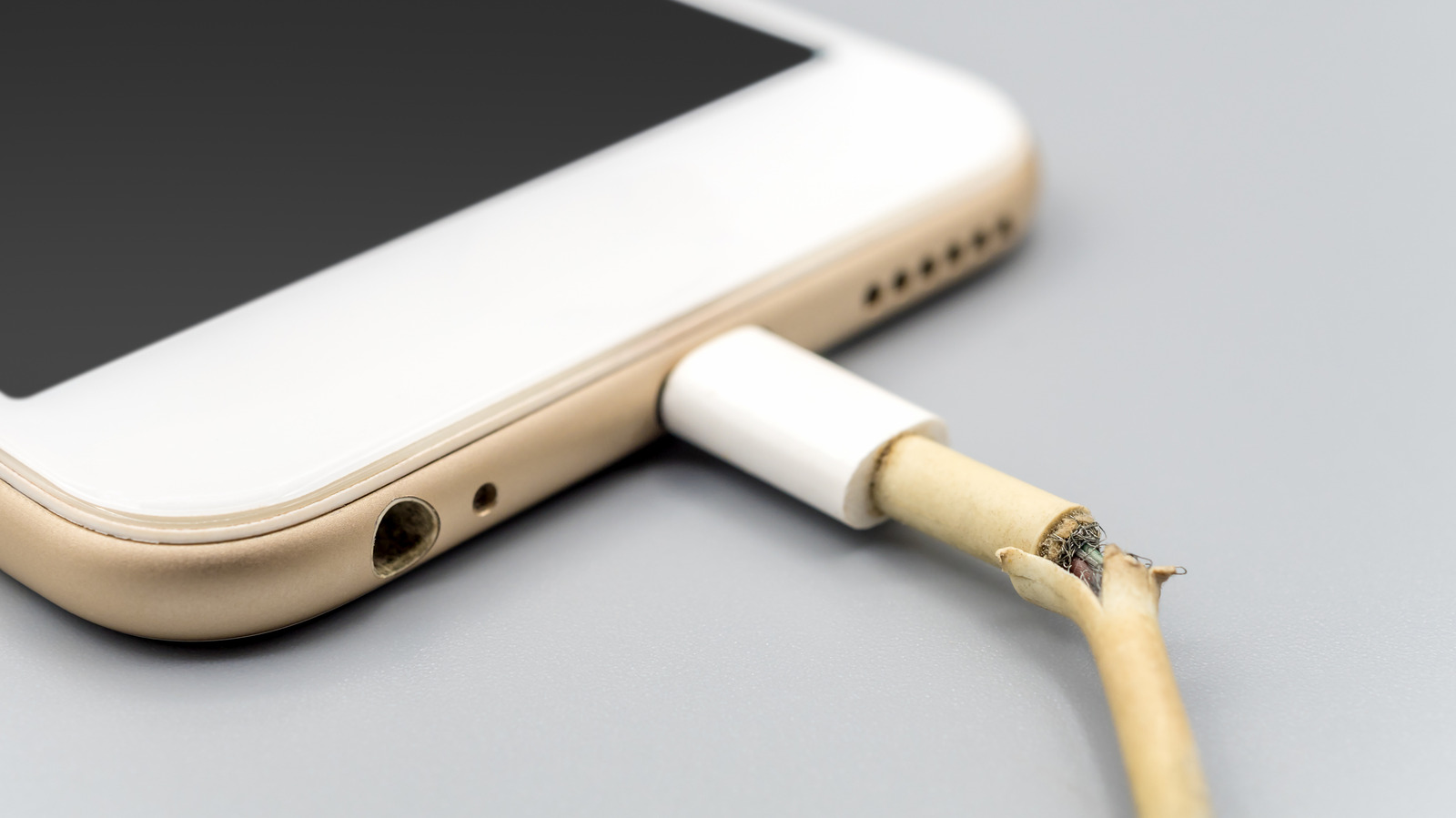
Don't let a damaged $5 cable cost you thousands in fire damage or medical bills.
A charging cable has two important jobs: keep your devices charged, and do so without causing you or the item any damage. You can't expect a cable to last forever, though. After being plugged in and disconnected countless times, it's going to degrade, bend, break down, or split apart. The end result is an unsafe cable that will need replacing.
If you don't replace a compromised charging cable, you're risking damage to your device or being burnt yourself every time you plug it in. For the sake of a few dollars, you're better off buying a new one than persevering with a cable that should have been recycled long ago.
Pulling a charging cable out by the wire puts strain on the connection behind the plug. And you're going to bend it sharply in roughly the same places, especially at the two ends. This wears down the fine strands of metal inside before there's any sign of outer damage.
The funny part is that even if the cable is damaged inside, it can still work, although the connection might keep cutting out. Even if it's to the point where you see a lot of physical damage, it may be able to provide a charge. The remaining strands are carrying the weight, letting the current charge through.
The problem with this is pure physics. With fewer intact strands carrying the current, you're going to see increased electrical resistance. More energy will turn into heat as the current passes through, with that heat concentrated in a smaller area. This is where a damaged cable can start to overheat, especially when it's carrying the higher current used for fast charging.
You might have a charger with safety features designed to protect against overheating or short-circuits, to name but a few. You can't rely on this, though. A damaged connection can still heat up, even if the current passing through your cable is within the safety limits. You might get a warning on your phone about this, if your device has that functionality.
The immediate danger is getting either burned or electrocuted. Heat will concentrate around a damaged connector, making it hot enough to burn your fingers and melt the plastic around it. While the US Consumer Product Safety Commission can recall poorly-made cables, like this heyday Lightning cable sold at Target in 2019, your cable might simply be damaged by overuse. Even with a good cable, charging your device underneath a pillow or blanket isn't a good idea, as this traps the heat.
Potential problems include damaging your device's battery or reducing its long-term health from the inconsistent power going into it. It's also possible for the compromised electrical signals to fry your device's USB port. There's also a risk of electrical shock if you're using a frayed cable. USB leads carry low voltage, but you don't want to chance it. Further shock dangers can occur if the cable is connected to an adapter, or if the adapter itself is exposed. Moisture adds to the risk, too.
The worst-case scenario is a fire. I'm not suggesting every frayed USB cable will lead to a fire, but it's a possibility. A properly functioning charger should have protections against short circuits and excessive current. If the equipment is poorly made, you're not going to have confidence that those protections work. Obviously, the consequences if a fire starts are much bigger than just a broken cable or device.