// SPACE.COM — SPAZIO & SCIENZA
On this day in space! Nov. 18, 2013: NASA launches MAVEN spacecraft to Mars to find out how the Red Planet lost its water
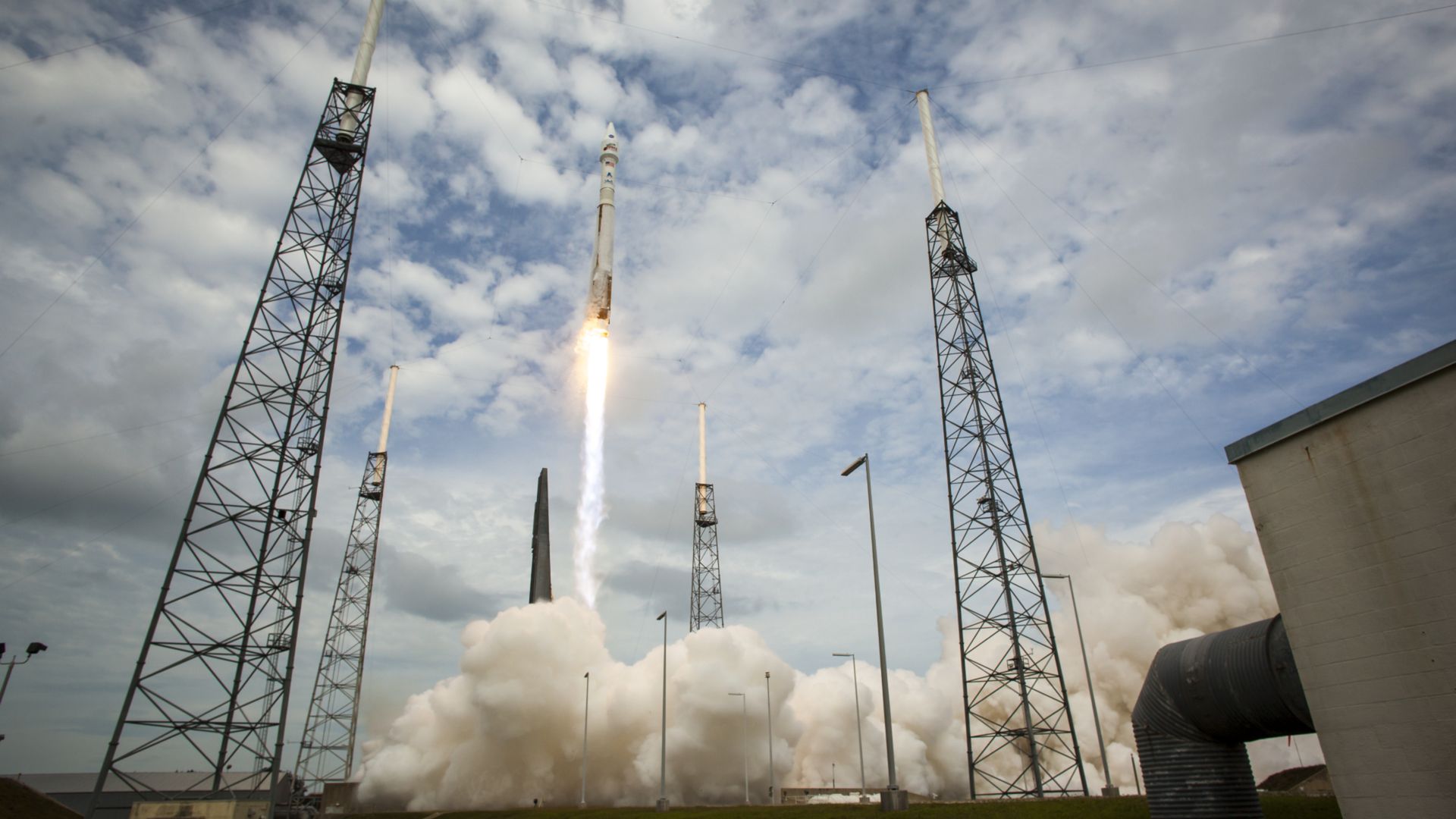
Scientists think that when Mars lost its atmosphere, water dried up on the surface as a result. MAVEN launched to find out.
When you purchase through links on our site, we may earn an affiliate commission. Here’s how it works.
On Nov. 18, 2013, NASA launched the MAVEN spacecraft to Mars.
The name of NASA's MAVEN spacecraft stands for Mars Atmosphere and Volatile EvolutioN. The spacecraft was an orbiter designed to help scientists figure out what happened to the water on Mars and its atmosphere. Mars is dry today, but it data from several Mars missions suggest that it was a much wetter environment a long time ago.
MAVEN tracked the rate of atmospheric loss from Mars. The planet has a super thin atmosphere that has been leaking into space for a few billion years. Scientists think that when Mars lost its atmosphere, water dried up on the surface as a result.
Solar storms that blast radiation into the solar system appear to have blasted away some of the atmosphere. Carbon dioxide in the atmosphere once kept Mars warm enough to sustain liquid water on its surface, and losing that greenhouse gas turned Mars into a cold and dry place.
NASA's MAVEN spacecraft was the first Mars orbiter ever built to measure how the Martian atmosphere interacts with solar wind, as well as how that constant stream of particles from the sun slowly stripped the Red Planet of its precious atmosphere over time.
After its launch in 2013, MAVEN spent about 10 months en route to Mars before entering orbit on Sept. 21, 2014. The spacecraft then spent the better part of 11 years studying the Red Planet from orbit using three different suites of instruments: An imaging ultraviolet spectrograph to study the global characteristics of the Martian atmosphere; a Neutral Gas and Ion Mass Spectromenter to measure its composition; and a six-instrument setup to study how Mars' ionosphere reacts to solar wind.
"The science MAVEN has given us is key to informing what kind of radiation protection and safety measures we must take before sending humans to Mars," Louise Prockter, NASA director of planetary science, said in June 2026 after the mission concluded. "The data collected from MAVEN will continue to provide valuable insight into Mars for decades to come."
MAVEN was originally designed to study Mars for 1 full Earth year after arriving at the Red Planet. That mission ended in 2016, but the spacecraft managed to survive for another 10 years adding more observations for scientists to study.