// SPACE.COM — SPAZIO & SCIENZA
What's next for NASA interstellar Voyager 1 probe after passing 1 light-day from Earth?
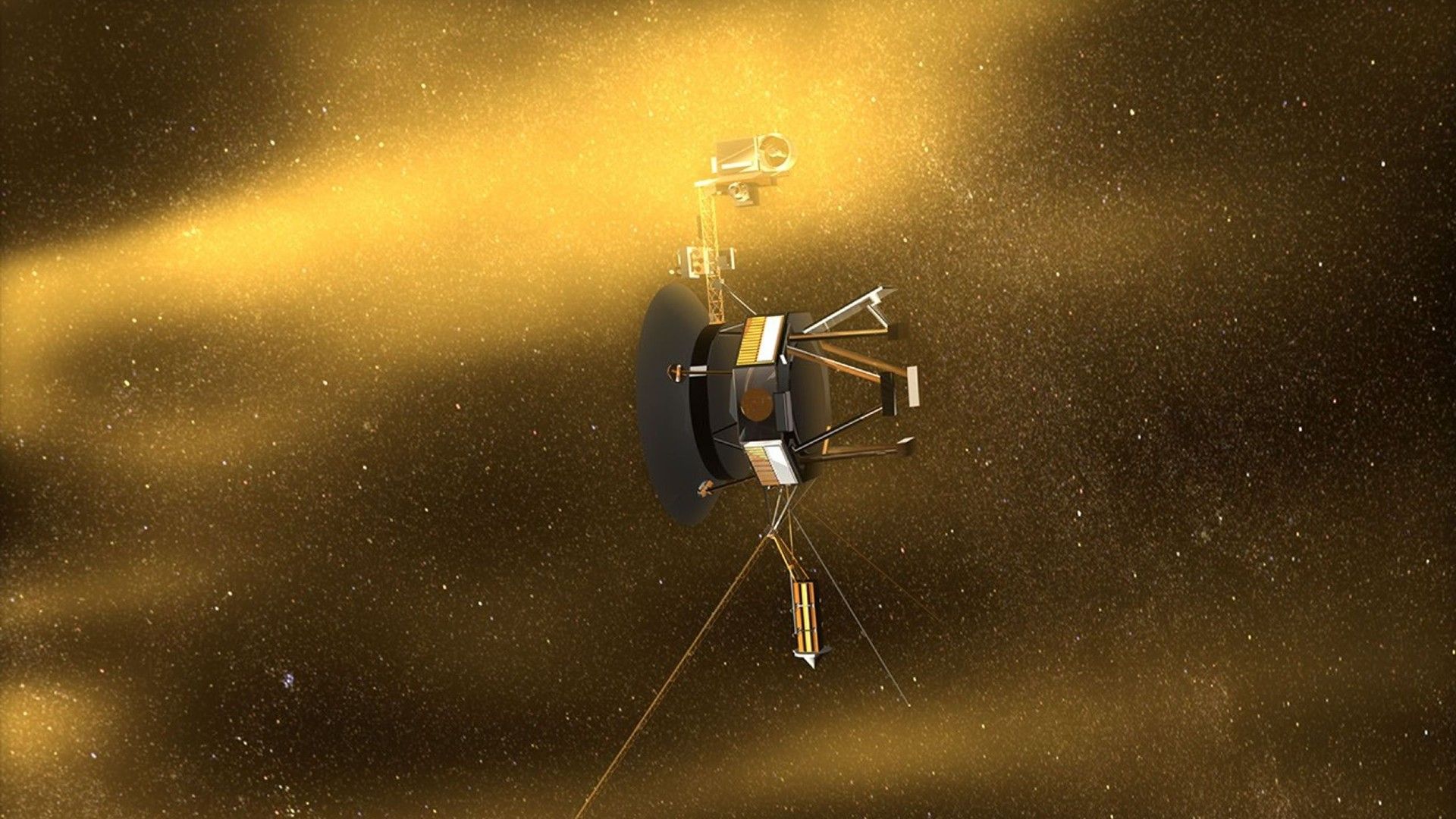
Voyager 1 should keep running until at least its 50th anniversary next year. What happens next is up to physics — and chance.
When you purchase through links on our site, we may earn an affiliate commission. Here’s how it works.
Voyager 1 has reached a historic milestone in space — it now takes a light-day to send a command to the spacecraft, meaning a full 24 hours for Earth to hail the distant spacecraft.
Since Voyager 1 and its twin, Voyager 2, launched on an initial tour through the outer solar system in 1977, their missions have been packed with science. Voyager 1 looked at Jupiter and Saturn from up close before veering for a flyby of Saturn's moon Titan and Saturn's rings, a pathway that brought it above the plane of the solar system in the early 1980s.
Voyager 1's faster path out of the solar system brought it to one light-day in distance on Wednesday (Nov. 18), while Voyager 2 — which took a slightly slower track to see Jupiter, Saturn, Uranus and Neptune — will reach a light-day of distance in 2035. So what's next for the two Voyager spacecraft as they reach further into interstellar space?
Interstellar space, which is the area where the sun's constant stream of solar particles within the heliopause gives way to the physics of interstellar space, has been a valuable harvest for both Voyagers. Voyager 1 crossed interstellar space in August 2012 and continues to get data, while Voyager 2 has done the same since November 2018.
"Current science is continuing our investigation on magnetic field strength and direction, plasma density, and energetic particle detection. What is important is to measure how these phenomena change as the spacecraft travels further away from the sun," Suzanne Dodd, project manager for the Voyager missions at NASA's Jet Propulsion Laboratory (JPL), told Space.com in an email.
Added to that will be the Voyagers' examinations of plasma and magnetic fields nearby the spacecraft, and a focus on any "solar effects" such as shocks or pressure fronts, added JPL project scientist Linda Spilker in an email.
"Key Voyager science going forward includes observing the extent to which our sun continues to affect interstellar space, all the way out to Voyager 1," Spilker continued. "Where does the sun's influence end and pristine interstellar space begin? Perhaps Voyager may last long enough to answer that question."
The team also wants to watch the magnetic field around the spacecraft continue to change direction from the sun, to interstellar space, Spilker noted. That finding was not expected when the Voyagers launched, so scientists are curious to know more — as long as the spacecraft can last, that is.