// SPACE.COM — SPAZIO & SCIENZA
On this day in space! Nov. 19, 2005: Japan's Hayabusa spacecraft makes 1st-ever liftoff from surface of an asteroid
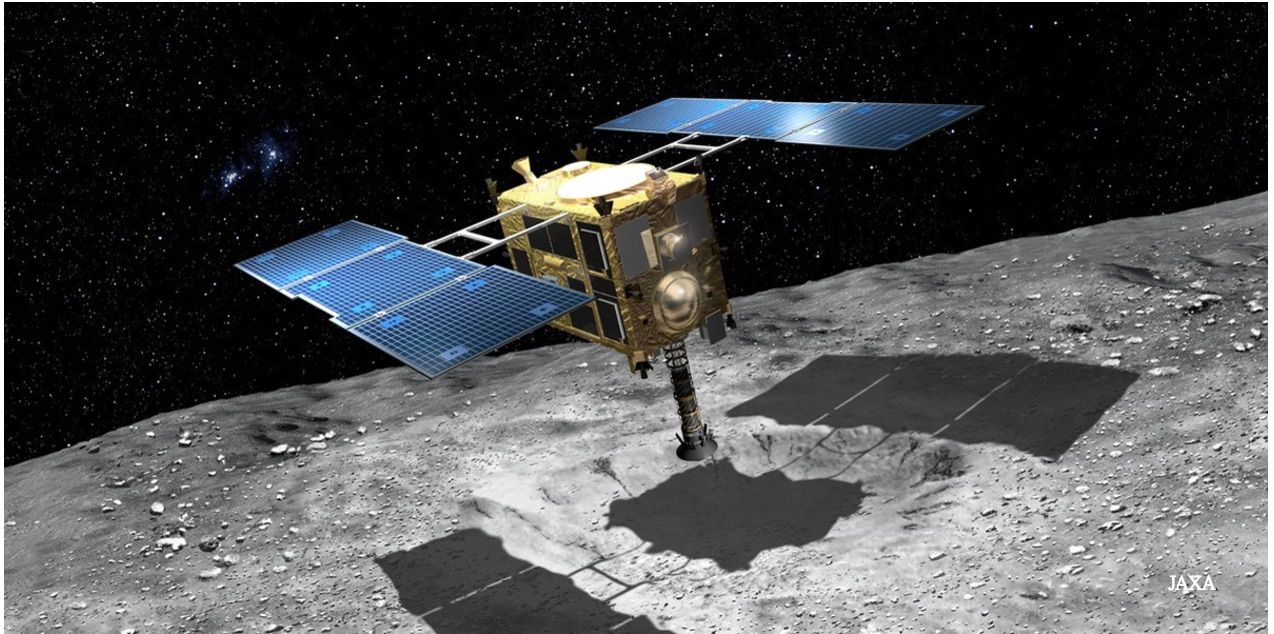
Hayabusa made two touchdowns on asteroid Itokawa. Each time, the spacecraft went into safe mode.
When you purchase through links on our site, we may earn an affiliate commission. Here’s how it works.
On Nov. 19, 2005, the Japanese Hayabusa spacecraft made the first liftoff from an asteroid. Hayabusa was supposed to return asteroid samples to Earth.
Asteroids are space rocks that were formed during the early solar system. We study asteroids to learn more about the solar system's history. Hayabusa (pronounced HI-uh-BOOS-uh) made two touchdowns on asteroid Itokawa (EE -toh-KA-wah). Each time, the spacecraft went into safe mode. Controllers weren't sure if Hayabusa gathered any material. But they sent the spacecraft back to Earth anyway.
Hayabusa's sample return capsule returned to Earth in June 2010. Scientists found dust of Itokawa inside the capsule, proving that it did indeed capture samples of Itokawa.
The primary goal of Japan's Hayabusa mission to asteroid Itokawa was never to be the first spacecraft to liftoff from a space rock. The mission was always aimed at collecting samples from an asteroid and returning them to Earth.
It was a hard road to Itokawa for Hayabusa. The Japan Aerospace Exploration Agency (JAXA) launched the probe on May 9, 2003, with plans for an arrival at the asteroid in the early summer of 2005.
That asteroid arrival was delayed until September 2005 after a solar storm degraded Hayabusa's solar arrays, limiting the available power for its ion engines.
Still, Hayabusa managed to limp along its path to reach the asteroid Itokawa on Sept. 12, 2005.
Hayabusa dropped a small lander onto Itokawa, but that probe was apparently lost. Hayabusa then dropped a landing target on the asteroid, and ultimately managed to touchdown about 99 feet from the marker, JAXA has said.