// TOM'S HARDWARE US — HARDWARE & GADGET
Power and cooling limits push 100,000+ accelerator AI clusters past single data centers
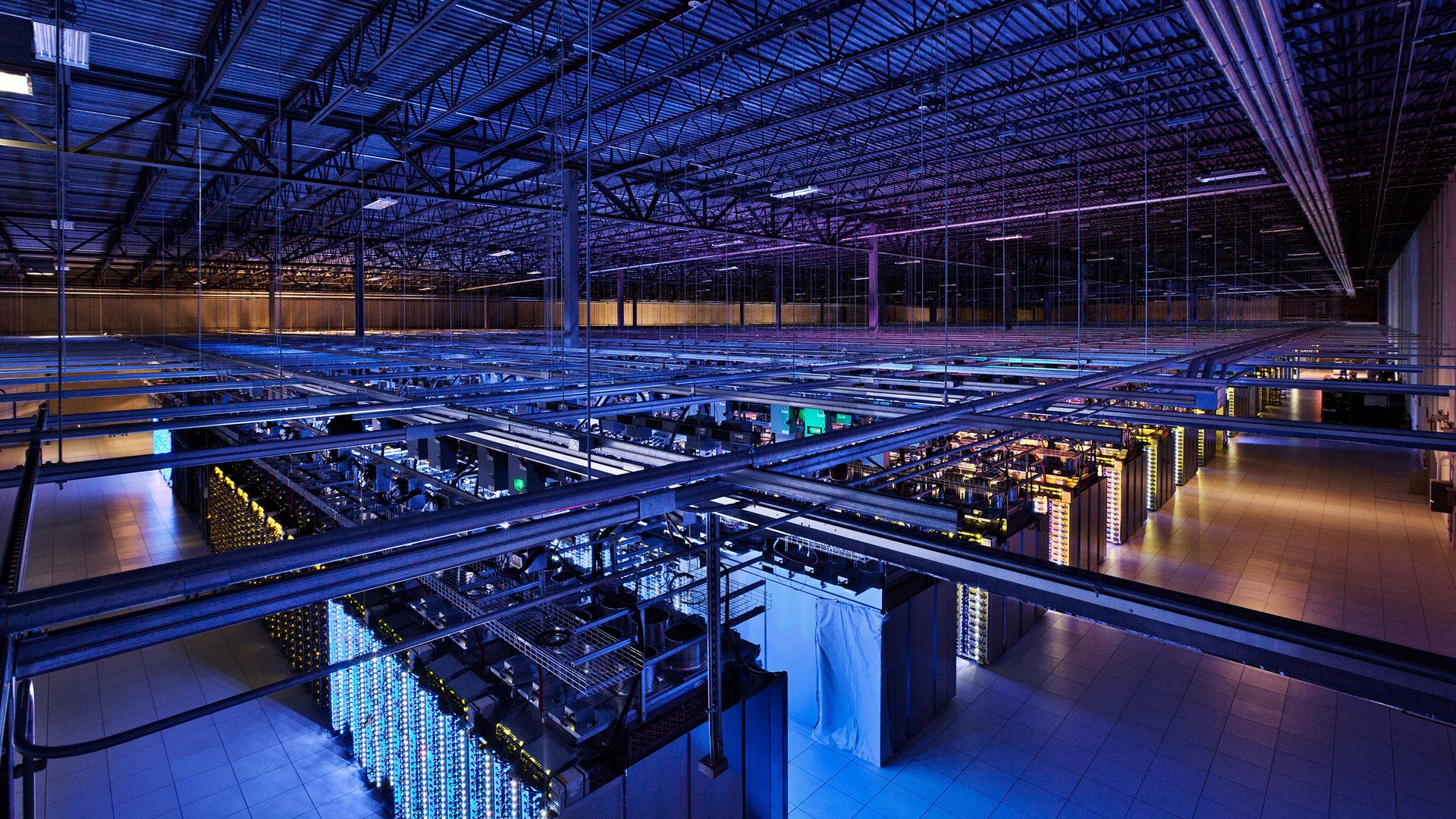
And software gains importance for such distributed data centers.
When you purchase through links on our site, we may earn an affiliate commission. Here’s how it works.
The rapid growth of AI clusters is pushing computing infrastructure beyond the physical and power limitations of individual data centers, which creates demand for new networking architectures capable of connecting compute resources across multiple facilities and even geographical regions. At Supercomputing 2026 (SC26), researchers from The Ohio State University discussed the evolution of high-performance networking technologies. At the conference, they explained how efficient distributed computing at such a scale requires considerably more than faster network connections, highlighting the importance of scale across domains to stretch workloads across different data centers in separate geographical regions.
Modern AI clusters typically accommodate more than 100,000 AI accelerators and potentially millions of CPU endpoints, placing tremendous demands on network bandwidth, latency, and congestion management. Meanwhile, an accelerator's computational performance continues to increase faster than communication capabilities, which means that faster AI GPUs do not necessarily deliver proportional improvements in application performance. As a result, the efficiency of network infrastructure determines how effectively large-scale AI systems can use their computational resources.
Traditionally, high-performance computing systems have relied on two major interconnect domains: scale-up and scale-out. Scale-up networks connect processors and accelerators within tightly integrated systems using technologies like AMD's Infinity Fabric, Intel's UPI, Nvidia's NVLink, or emerging alternatives such as UALink. Scale-out networks, which typically rely on Ethernet, InfiniBand, HPE Slingshot, or, more recently, Ultra Ethernet, connect individual servers or rack-scale systems into larger clusters. These interconnects have different requirements for bandwidth, latency, and scalability, which is why they serve different purposes.
However, the massive size and power consumption of modern AI clusters create demand for a third interconnect domain, known as scale-across. Unlike scale-out networks, which typically connect systems within a single data center, scale-across architectures extend high-performance connectivity between different buildings, campuses, or even regions.
Such an approach enables operators to combine computational and other resources from multiple locations to achieve a certain level of performance rather than to bring an excessive number of accelerators to a single data center, which may be hard, or even impossible, due to power availability, cooling requirements, or physical space constraints.
The transition toward scale-across architectures has already begun. Google introduced its Virgo network architecture earlier this year to support AI workloads that exceed the space and power capacity of individual data centers. The company intends to treat an entire campus of computing facilities as a single system, albeit with specialized networks for communication between accelerators, servers, and data centers. Cisco and Marvell are also developing technologies for scale-across deployments, including high-capacity routers, switching chips, and optical interconnects designed to connect geographically distributed clusters.
Extending AI infrastructure beyond individual facilities introduces substantial technical challenges. While modern scale-up networks offer extremely high bandwidth and low latency over relatively short distances, communication between data centers must contend with the physical limitations of long-distance connections. Even optical networks cannot eliminate propagation delays, whereas congestion, packet loss, and synchronization overhead can further reduce effective performance. Consequently, connecting two large GPU clusters with high-speed links does