// KOTAKU — GAMING
Yoshinori Kitase Wants Final Fantasy VII Revelation Players To Be ‘Curious About What Happens Next,’ Even Though They Know The Ending
Final Fantasy VIIFinal Fantasy VII RevelationYoshinori Kitase
Remaking Final Fantasy VII into a three-part trilogy was always going to be a project fraught with risk. How do you please diehard fans while offering something new? How do evolving technologies change how you portray a story or character? At South Korean gaming conference G-Star (as reported by 4Gamer), Final Fantasy VII remake producer Yoshinori Kitase gave a lecture discussing the decisions made by the development team while bringing the story to modern audiences.
Kitase opened the talk by tackling one of the biggest points of contention that has followed the trilogy since the first Remake title: Why change elements of a story people have come to know and love? According to Kitase, this question led to a lot of debate while planning the direction for the trilogy. By returning to this story three decades later, they had to contend with the creative intentions of the original developers, and player interpretations of the game and story over the years. While Kitase, having worked on the original, felt he had the right to change elements of the story, he still considered it necessary to balance this with fan expectations. “What do we keep, and what do we change?” was his central question.
This, coupled with how much of the original documentation was lost—something Kitase blames on the transition from paper to digital material archiving at the studio at that time—forced the team to make certain judgement calls when defining things like the size of this new Midgar. Kitase noted he wanted to go further in altering the design of Midgar’s central Mako reactor, getting into a heated debate with game director Naoki Hamaguchi before deciding instead simply to embellish upon the original iconic design.
Ultimately, the team refused to make any changes that would counter Final Fantasy VII’s core story themes. Instead, they wanted to create a game that could make you “curious about what happens next, even though you already know the ending,” using increased fidelity to expand on how the story was told, while adding new scenes to induce surprise and deepen the emotional impact of even familiar story beats. Using new technology that vastly surpassed the low-poly models of the original, subtle character acting offered a vast step forward from the exaggerated body movements necessary with the older tech.
Kitase talked about the flashback sequence showing how Barret lost his arm. In the original game, the focus of this scene is on Barret—as he tries to save Dyne from falling to his death, he grabs Dyne’s arm to try and pull him to safety, but in this moment he’s shot, losing his arm and his friend in the process. In the remake, the choice was made to take advantage of the improved technology, and instead frame the scene using dialogue and cinematography from the perspective of Dyne, in order to better communicate and emphasize Barret’s pain and guilt.
Similarly, Aerith’s death was elaborated upon so that players felt curious to learn more, rather than being consumed by the immediate sense of grief and loss instilled by the original. Kitase recalled the reactions to that scene at the time, saying the loss of Aerith at the end of disc one made some fearful to insert the next disc. This time the team wanted to create senses of disbelief, denial, and intrigue surrounding this now-iconic scene, opening up the story for surprises further down the line.
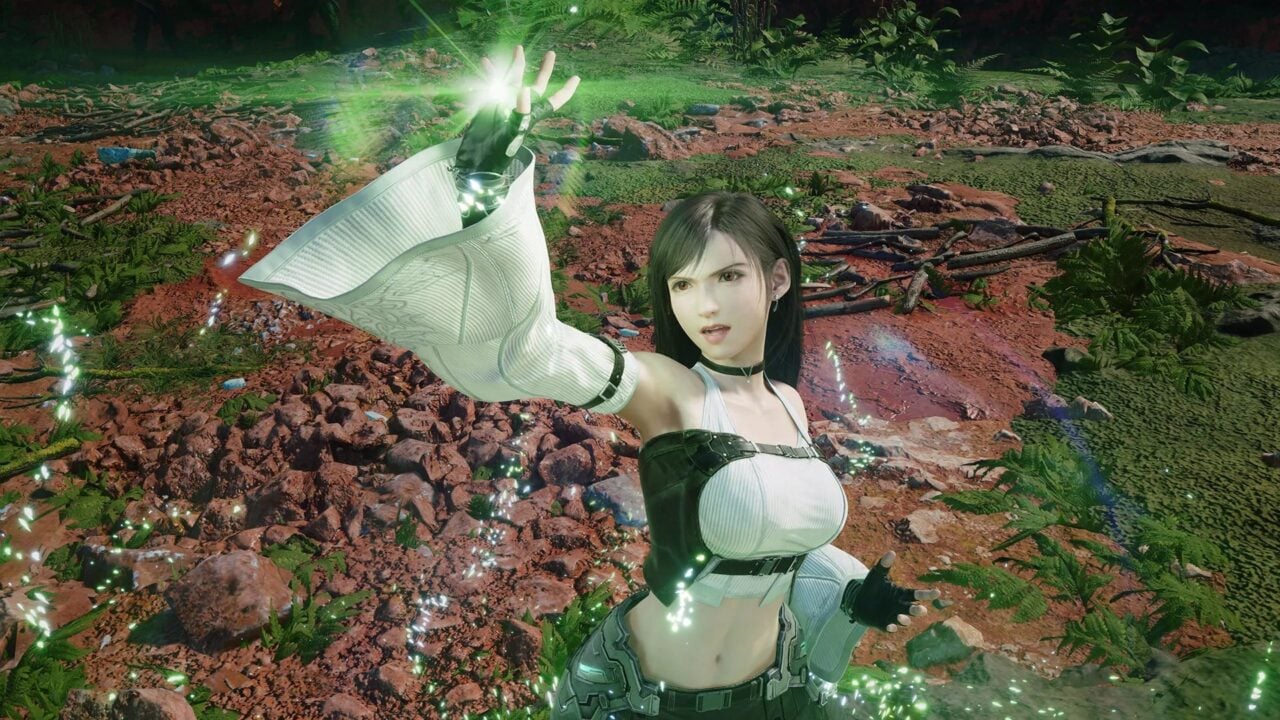
The talk also showed a new sequence from next year’s concluding chapter, Final Fantasy VII Revelation, in order to emphasize the team’s desire to expand on the portrayals of characters and their perspectives within the familiar shell of the original game’s narrative. The sequence showed off a new sidequest in which players could choose to find a runaway chocobo from the perspective of either Red XIII or Cid. If Red takes on the quest, he needs to find vegetables to tempt the chocobo back. Cid will take a more combat-driven approach.