// TOM'S HARDWARE US — HARDWARE & GADGET
China's memory giants have a record year as Huawei ships HBM without a named source
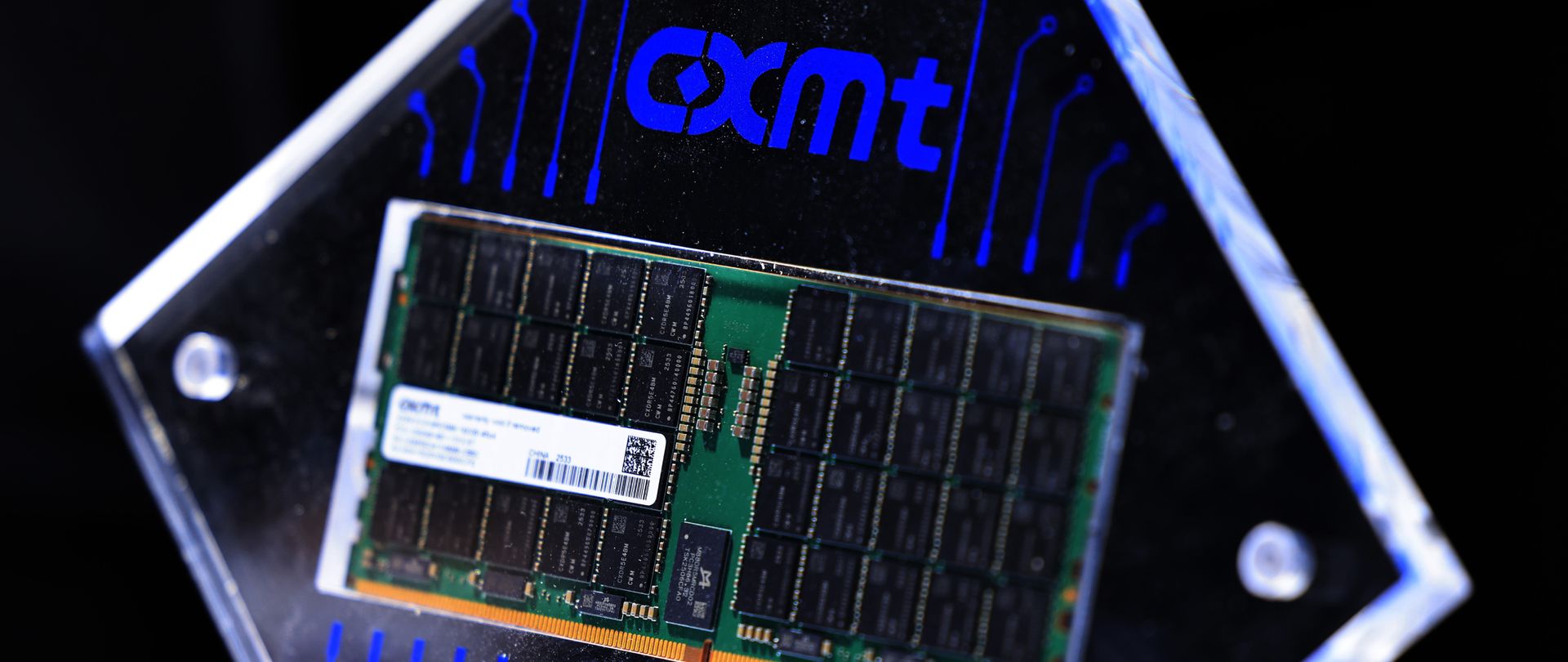
A record year for Chinese memory, while Huawei ships its own HBM without a named source.
When you purchase through links on our site, we may earn an affiliate commission. Here’s how it works.
China’s homegrown memory comes largely from two companies, CXMT for DRAM and YMTC for 3D NAND, and both are booming. CXMT’s Oct. 30 quarterly report shows a nine-month net profit of ¥132.0 billion ($19.6 billion), against a ¥5.28 billion ($785 million) loss a year earlier, on revenue more than eight times as high, at ¥269.0 billion ($40.0 billion). YMTC’s numbers, just for Q1, are at ¥47.04 billion ($7.0 billion) in revenue and ¥33.38 billion ($5.0 billion) in profit attributable to shareholders, more than double 2025.
Both are expanding and adding fabs, and each is edging into the other’s products. No Chinese manufacturer can yet produce high-bandwidth memory (HBM) in volume, though. HBM is the stacked DRAM that AI accelerators depend on, and currently the U.S. bars Samsung, SK hynix, and Micron from selling it into China. CXMT’s prospectus lists no HBM project, though its HBM3E is reportedly in risk production, an early run before the process is fully qualified. Huawei designs its own HBM but doesn’t say who makes it.
Memory is a commodity, so the story is in the wafers. We cover the companies running memory fabs in China: CXMT, YMTC, a handful of smaller Chinese fabs, and Samsung and SK hynix, which run some of their biggest plants there. Huawei makes the cut for its HBM program, though it has no memory fab. Fabless designers, module makers, and NOR flash producers are left out, except XMC for its HBM line. Fab counts, products, and financials come from filings and company statements; capacities, planned fabs, and the HBM progress that remains the big question mark rest largely on anonymous reporting. Let's dive into the current state of the Chinese DRAM industry.
CXMT, short for ChangXin Memory Technologies, is China’s biggest homegrown DRAM maker. It operates two 12-inch fabs in Hefei and one in Beijing, each able to produce around 100,000 wafers a month. It is also building fabs in Shanghai and Hefei and is in funding talks for a second Beijing fab, which together could take it past 600,000 wafers a month. The Shanghai fab is expected to have two to three times the capacity of the Hefei base, with tools going in during the second half of 2026 and volume in 2027.
CXMT is now the fourth-largest DRAM maker worldwide, with 9.5% of DRAM revenue in Q2, according to TrendForce. CXMT says LPDDR6 is in mass production for Xiaomi, and its president says the first 4F² product, a server DDR5 RDIMM, is due by year-end. This comes after record first-half revenue of ¥150.3 billion ($22.4 billion), net profit of ¥77.6 billion ($11.5 billion), an 84.84% gross margin on its main business, and a listing on Shanghai’s STAR Market on July 27. Third-quarter profit alone was ¥54.4 billion ($8.1 billion).
The primary products are DDR5 rated up to 8,000 MT/s with 24Gb dies, and LPDDR5X rated up to 10,667 MT/s. CXMT says its fifth-generation G5 platform reaches 11.95nm active-area half-pitch with quadruple patterning for 24Gb LPDDR5X, and gets at least 50% more dies out of each wafer than G4, counted as 8Gb dies. CXMT says a DRAM product on its sixth-generation platform has also completed engineering-sample validation. Jeongdong Choe, Senior Technology Fellow at TechInsights, told Tom’s Hardware Premium that the firm measured the smallest active half-pitch on CXMT’s G4 at 14.8nm and hasn’t analyzed G5 yet.
CXMT lists no GDDR or 3D NAND among its products and is limited to nodes made without extreme ultraviolet (EUV) lithography as it lacks the tooling. CXMT’s second Beijing fab, however, is planned to include a 3D NAND R&D line, which could shake things up. The growth picture for now is capacity and price, with the tests of scaling without EUV lying with the RDIMM and Shanghai fab.
YMTC, short for Yangtze Memory Technologies Co., has two fabs of its