// TOM'S HARDWARE US — HARDWARE & GADGET
TSMC’s $22.6 billion Texas plan wouldn’t make 2nm-or-better chips until 2031
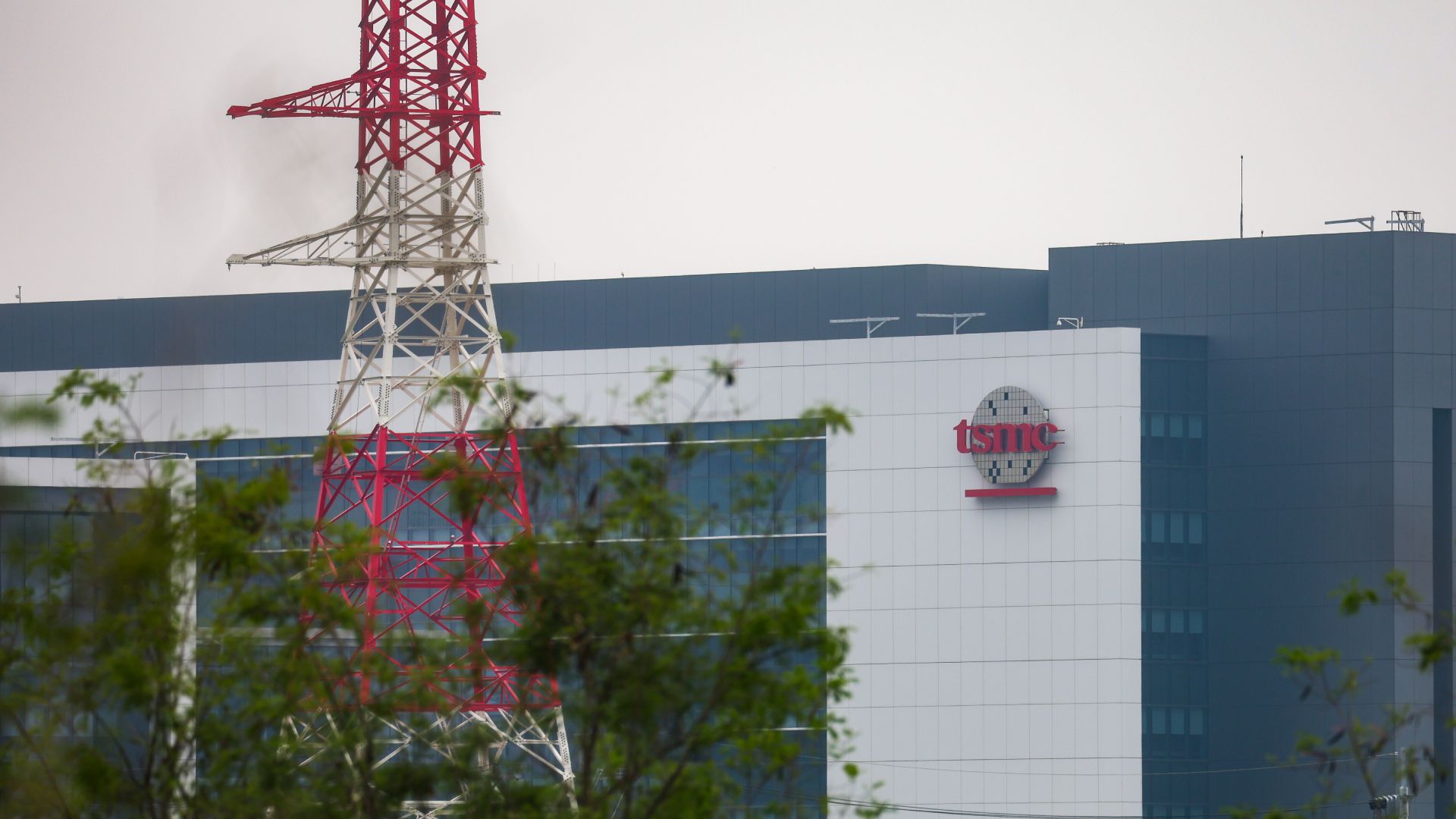
The filing lists an in-fab mask shop and $14 billion of tools and equipment, most budgeted for 2030.
When you purchase through links on our site, we may earn an affiliate commission. Here’s how it works.
TSMC has made an application for a new fab and campus near College Station, Brazos County, Texas. The proposed fab would be just one county over from Terafab, would likely share supply chains, and would be positioned to make 2nm-class chips by 2031, with the $22.6 billion plan detailing how the Taiwanese chipmaker is planning to expand its U.S. operations. An application under Texas’s Jobs, Energy, Technology and Innovation (JETI) program for a school property-tax limit shows TSMC is weighing a new fab site. The fab wouldn’t make 2nm or more advanced chips until 2031, six years after 2nm volume production began in Taiwan. It would come with a school-tax break valued at around $354 million.
This would be the company’s “second campus” for advanced chipmaking in the U.S. and the first outside Arizona. The Comptroller has recommended the tax application for approval, which the school district and the governor still have to grant. The application comes from TSMC Arizona Corporation, which is TSMC’s subsidiary located in Phoenix. Construction is projected to start in 2027, but the plan remains under evaluation, and nothing in the filing commits TSMC to buy the land or to build on it.
TSMC is looking to build out more in the U.S. because most of its large customers are based there and the government has been “very helpful” in pursuing additional fab capacity, Chairman and CEO C.C. Wei said in October. Texas is one option for expanding beyond Arizona, though the filing doesn’t say what drew TSMC there. TSMC judges each site on its tax environment, workforce availability, utility capacity and cost, and site and infrastructure readiness, as well as its “long-term scalability and expansion potential.” TSMC says Arizona offers “established operational efficiencies and lower capital risk,” and that the tax incentive would aid this further.
TSMC has “nearly 20 fabs worldwide in progress,” Wei said on the October earnings call, including 13 leading-edge and advanced packaging fabs in Taiwan and “another five to six fabs overseas.” Annual capacity for its 2nm (N2) family is expected to more than double in 2027. TSMC also expects more of its fabs to be ramping up in the U.S.
Texas wouldn’t begin commercial operations until 2031, and the economic model filed with the plan doesn’t have it at full operations until 2032. By contrast, the second fab in Arizona is expected to begin volume production in Q3 2027, but at 3nm. In Taiwan, N2 has been in high-volume production since Q4 2025. TSMC expects A14, its next full node after N2, to enter risk production in 2027 and volume in 2028. By 2031, A14 is set to have been in volume production for about three years, so a Texas fab that starts on 2nm would be at least a generation behind TSMC’s leading edge. Taiwan has also debated limits on how advanced TSMC’s overseas fabs can be.
The new site would have one or more fabs but, as it stands, Brazos County’s announcement describes one. For scale, we’ve estimated that a single 2nm-class module with about 20,000 wafer starts a month costs $25 billion to $35 billion, so this plan’s $22.6 billion budget falls below the low end of that range.
The price tag is split in multiple ways, with $8.60 billion for buildings and other real property, while 62% of the total, or $14.02 billion, is for tooling, machinery and equipment, a category that on the filing’s list also covers power, HVAC, cleanroom, water and gas systems. The building's spending would come first, in 2027, 2028, and 2029 alone. Tool spending would begin in that last year and peak at $9.05 billion in 2030, with about 65% of the tool budget landing in that year, before ending at $963.9 million in 2032 — the form’s Schedule A stops at 2031 and $21.66 billion total.
The tool spending schedule lines