// SPACE.COM — SPAZIO & SCIENZA
Jupiter and the moon will look spectacular together before dawn Nov. 30
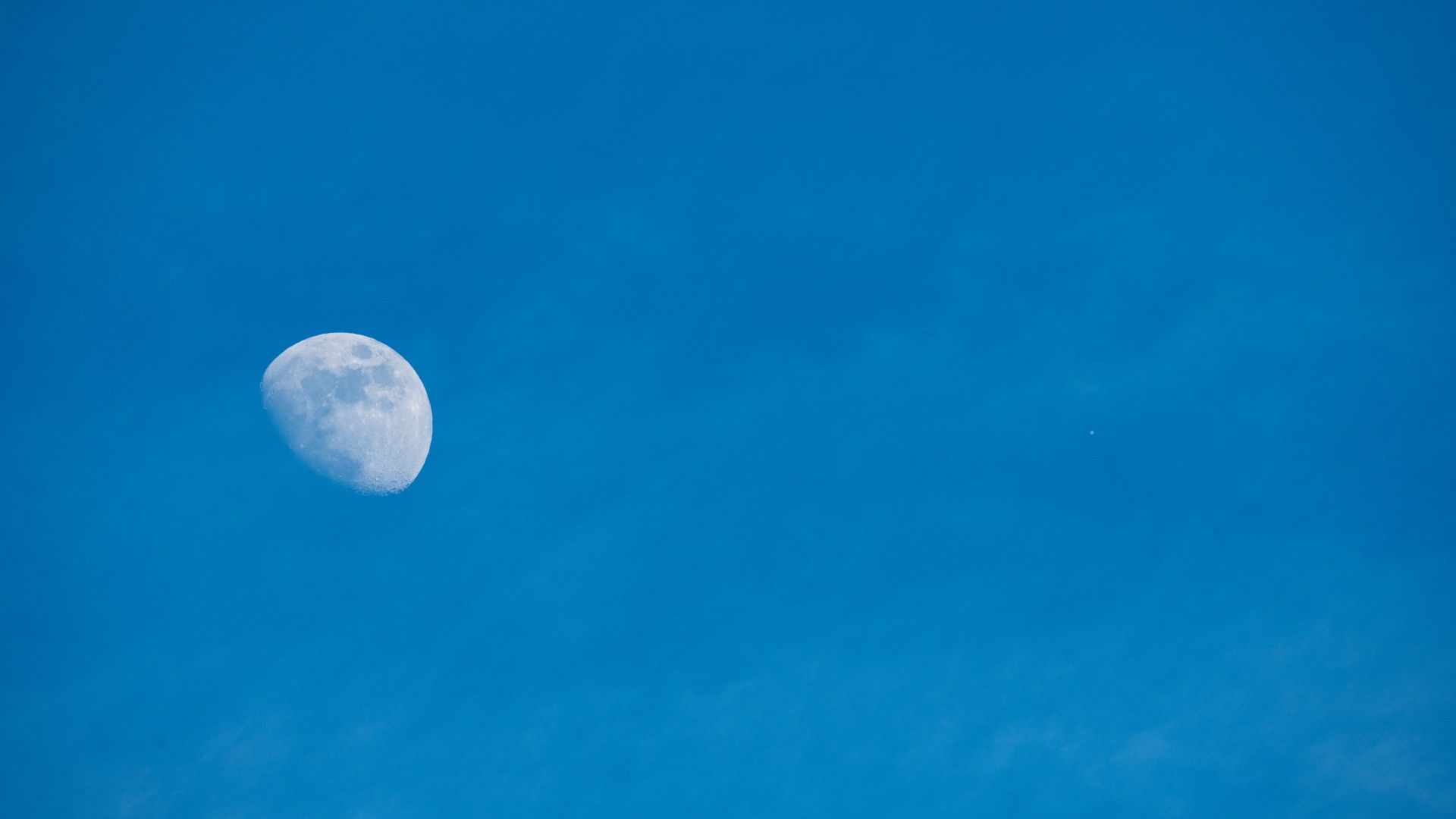
Look for Jupiter and the waning gibbous moon shining together before dawn on Nov. 30, with Mars and the bright star Regulus nearby.
When you purchase through links on our site, we may earn an affiliate commission. Here’s how it works.
If you're up late Sunday night, Nov. 29 — or rather during the predawn hours of Monday, Nov. 30 — there will be two objects that will immediately catch your eye if the sky is clear.
The first is the moon, a waning gibbous phase, 62% illuminated, emerging from above the east-northeast horizon around 10:15 p.m. local standard time. And shining brightly, less than 2 degrees to its left, will be the largest planet in our solar system, Jupiter. A dime held at arm's length against the sky measures about 1½ degrees in width and through much of the overnight hours both moon and Jupiter will appear around as close as this.
It is, of course, an illusion of perspective: the moon is only about 230,500 miles (370,700 km) from Earth. Meanwhile, Jupiter is 469 million miles (755 million km) away — some 2,035 times farther out in space compared to our natural satellite.
Adding to the scene will be orange-yellow Mars and the brightest star in the constellation Leo the Lion, the bluish-tinged Regulus. These four celestial bodies cover an expanse of roughly 7 degrees.
At a dazzling magnitude of -2.2, Jupiter shines more than twice as bright as Sirius, the brightest star. Whenever it's above the horizon, Jupiter — the solar system's biggest planet at 88,800 mi (143,000 km) in diameter — always attracts immediate attention; to the eye it resembles a brilliant silvery white, non-twinkling "star." On Feb. 10, 2027, it will arrive at opposition and be visible all night from sunset to sunrise.
Look for it glimmering balefully above the east-northeast horizon by 11 p.m. local standard time. But Jupiter will not reach an altitude of 30 degrees above the horizon — one third of the way up in the sky — until shortly after 1 a.m. For some, that's considered to be the dividing line between objects that are "low" versus objects that are considered to be "well placed." Sharp telescopic views are seldom possible until an object reaches an altitude of 30 degrees, given the typical turbulent state of Earth's atmosphere.
In a telescope, Jupiter is always a fascinating sight. Light and dark cloud belts in the giant planet's atmosphere appear to parallel the equator and slowly change, while the famous Great Red Spot, some 10,000 miles (16,000 km) long, now appears rather pale and has been described with hues ranging from very pale beige to salmon pink. Other attractions include Jupiter's four Galilean moons — Io, Europa, Ganymede and Callisto — which Galileo first observed through a telescope in 1610.
The moons are fun to watch as they change their position relative to Jupiter from hour to hour and night to night. They can be glimpsed through 7-power binoculars (if you hold them steady) or better yet, a small telescope. Early Monday (Nov. 30) morning, all four moons will be in view; a pair of satellites flanking the big planet on either side. On one side will be Ganymede and Europa, appearing very close to each other. On the opposite side, Io will appear closest to Jupiter, while Callisto will appear farthest from Jupiter, more than five times farther out from Jupiter than Io.