// NASA BREAKING NEWS — SPAZIO & SCIENZA
NASA’s SpaceX CRS-34 Dragon Returns Packed with Space Station Science
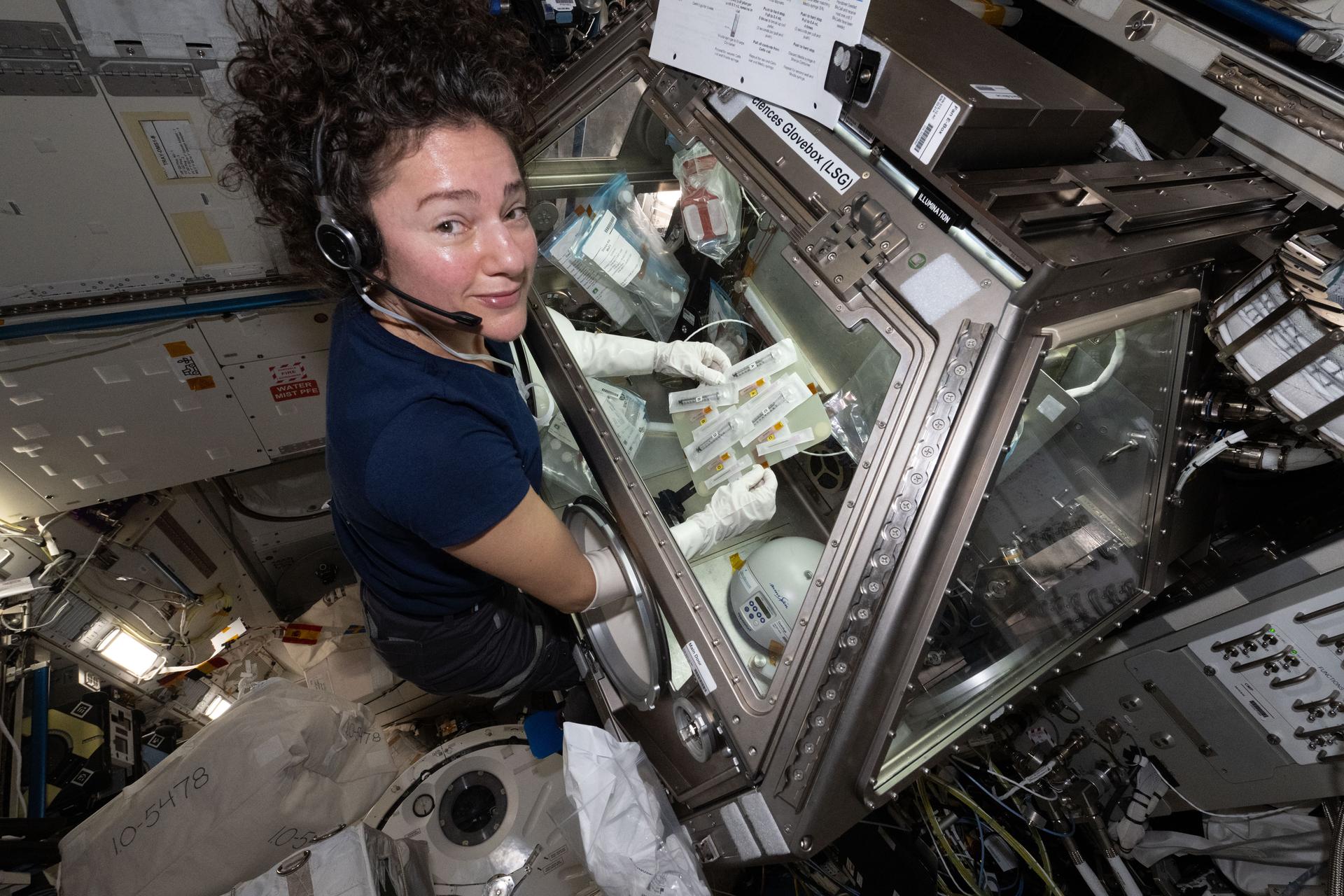
International Space Station Research Communications Team
Scientists await a big splash in the Pacific Ocean as one of the most research-packed Dragon spacecraft to date returns, completing the 34th SpaceX commercial resupply mission to the International Space Station for NASA. Biological and materials samples, along with tested hardware, are heading back to research teams on Earth for further analysis, advancing NASA’s work to prepare humans for exploration beyond low Earth orbit and to deliver benefits back home.
Some samples returning are for NASA’s Hematopoietic Stem Cell Expansion in Space: Pathfinder Investigation (InSPA-StemCellEX-H2), which seeks to use the microgravity environment to scale up the production of stems cells. On Earth, lab-produced blood stem cells lose their ability to form different cell types, like red and white blood cells that are critical to treating patients with certain blood diseases and cancers. In microgravity, researchers believe this ability will be better preserved while also growing these stem cells in greater numbers. The returning samples will undergo further analysis to determine if space-based efforts produce larger quantities of enhanced stem cells suitable for clinical use.
The team behind NASA’s Streptococcus pneumoniae (Spn) Infection of Cardiac Tissue (MVP Cell-09) experiment is awaiting the return of stem cell-derived heart tissues that were intentionally infected with a pneumonia-causing bacterium as part of ongoing microgravity research. Pneumonia increases the risk of heart disease, which is not fully understood. Because bacteria tend to become more active and virulent in microgravity, this experiment could amplify their effects, making it possible to detect cellular responses that cannot be observed on Earth.
NASA’s Megakaryocyte Flying-One (MeF1) samples are returning to Earth to help understand how large cells found in bone marrow, known as megakaryocytes, and the platelets they produce adapt to spaceflight. Megakaryocytes and platelets play important roles in the formation of blood clots and immune responses. The returning samples, including those taken from astronauts, could show us how the human immune system reacts aboard the space station and help prepare for future exploration missions.
Many spacecraft use cryogenic fuels for propulsion, but temperature swings in space can cause these extremely cold fuels to slowly evaporate and escape their tank, reducing fuel efficiency and complicating mission planning. NASA’s Zero Boil-Off Tank Noncondensables (ZBOT-NC) investigation aboard station studies how gases that do not condense into liquids at cold temperatures affect pressure control and fluid behaviors in propellant tanks. Hardware returning aboard Dragon, including drives containing fluid-physics data, could help validate models and contribute to the design of more efficient cryogenic fuel storage systems for long-duration missions.
Semiconductor research samples as part of NASA’s In-Space Production of Semimetal-Semiconductor Composite Bulk Crystals in Microgravity (SUBSA-InSPA-SSCug) investigation are returning to Earth for further analysis. This study manufactured semimetal-semiconductor composite alloy crystals in space, which have applications in many electronics, including sensors and lasers. Researchers believe microgravity could enable the production of significantly greater and higher-quality crystals, supporting the development of next-generation semiconductor technologies.
NASA’s DNA Nano Therapeutics-3 research team will receive tiny, space-assembled DNA-inspired materials that are combined with medicines to create active cancer treatments. Producing these treatments in microgravity can improve how well they perform in the body. This research could improve patient outcomes by helping therapies reach tumors more effectively, stay in the body longer, and improve medicine release.
Tissue models of the brain, heart, liver, and kidney that were tested wit