// SPACE.COM — SPAZIO & SCIENZA
'Best. Mars. Mission. Ever.' Scientists hail MAVEN's legacy as NASA retires Red Planet orbiter
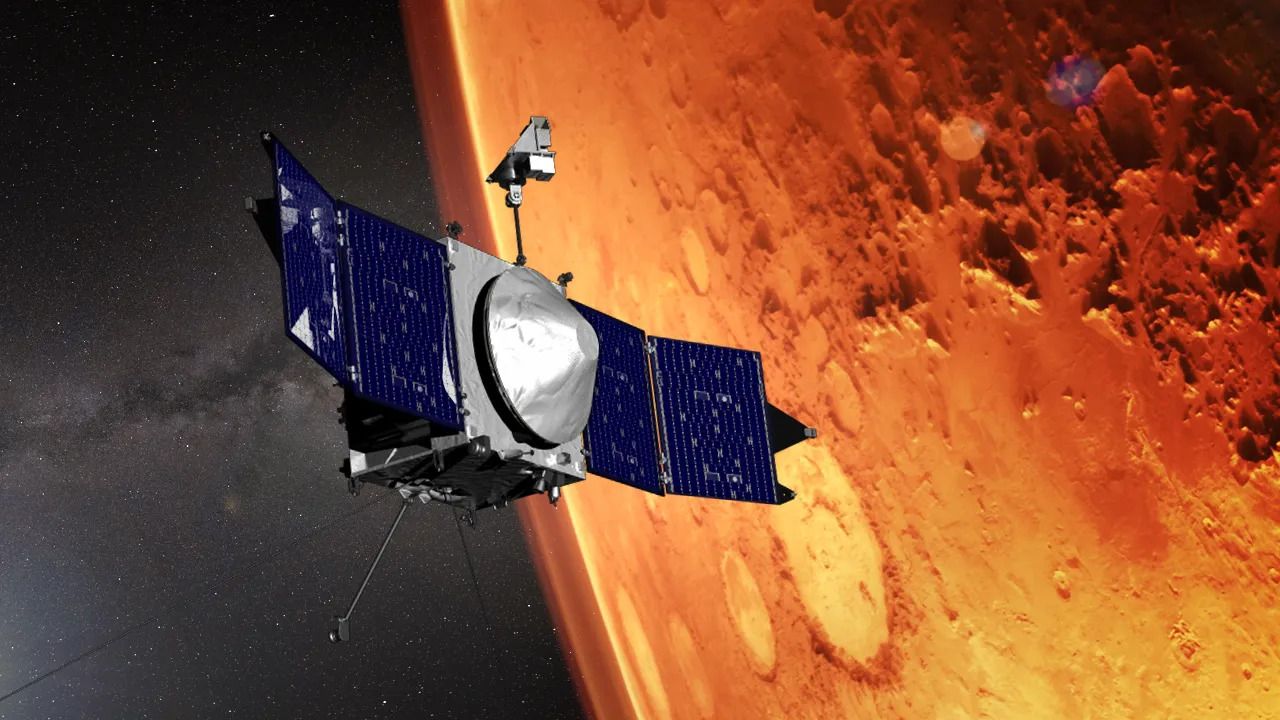
"The team really has experienced the loss of a loved one with the end of the mission."
When you purchase through links on our site, we may earn an affiliate commission. Here’s how it works.
Following months of unsuccessful recovery efforts, NASA has officially begun decommissioning the MAVEN orbiter, bringing to a close an 11-year mission that transformed scientists' understanding of Mars and became one of the agency's most valuable assets at the Red Planet.
The decision follows the loss of contact with the spacecraft in December 2025. That loss happened after a routine communications blackout while the probe passed behind Mars. Mission controllers spent months attempting to restore contact, including sending commands designed to reboot the spacecraft's computers, but MAVEN remained silent.
A review board convened by NASA in February found the spacecraft had been operating normally in the weeks leading up to the anomaly. Fragments of telemetry later recovered from recorded radio signals indicated that MAVEN emerged from behind Mars in a safe mode while spinning at roughly 2.7 revolutions per minute — an unexpected state for a spacecraft that was not designed to rotate during normal operations. Investigators found that the rotation likely drained the spacecraft's batteries over several hours, eventually causing its communications system to lose power.
The underlying cause of the anomaly remains unknown, however, and a final report is expected later this year.
"The conclusion is that the spacecraft is not recoverable," Mike Moreau, MAVEN's project manager at NASA's Goddard Space Flight Center, said during a press conference earlier this month. "The team really has experienced the loss of a loved one with the end of the mission."
Yet as scientists mourn the spacecraft, they are also celebrating a mission that far exceeded its original goals.
"The team is certainly broken up about this," said Shannon Curry, MAVEN's principal investigator and a scientist at the University of Colorado Boulder. "But at the same time, we are incredibly proud of the science we've accomplished over the last decade."
Launched from Cape Canaveral in November 2013, MAVEN — short for Mars Atmosphere and Volatile Evolution — arrived at Mars less than a year later as NASA's first mission devoted to understanding the planet's atmosphere. Originally planned to last just two years, the spacecraft was tasked with determining how Mars lost the thick atmosphere that once allowed liquid water to persist on its surface.