// ARS TECHNICA — MOBILE & WEB
Second carcass-eating fly species cleared by FDA for maggot wound therapy
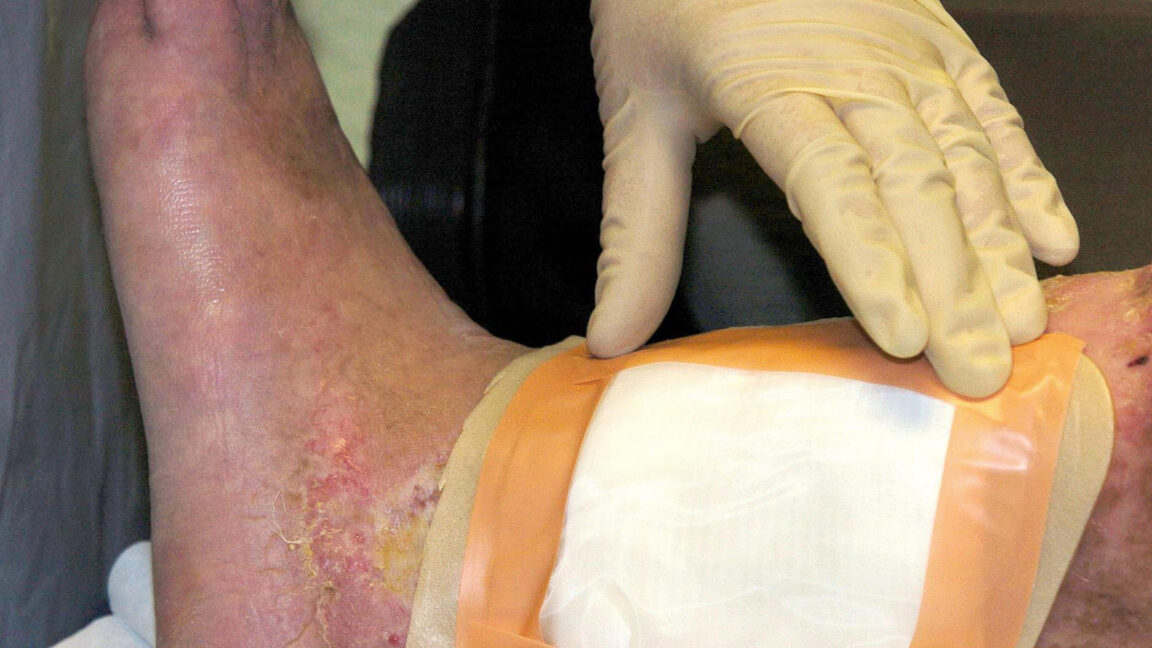
Maggot therapy lacks robust data, but it has fans and a fail-safe “bacon therapy.”
The Food and Drug Administration this week cleared a second carcass-feasting fly species for use in maggot wound therapy, according to an announcement from Cuprina Holdings, a Singapore-based company that has dubbed its new therapeutic larvae MediFly Maggots.
With the clearance, Cuprina appears to be the only company to have FDA clearance to sell two species of fly larvae—and it’s abuzz with the potential to dominate the global maggot market.
The new species is Lucilia cuprina, or Australian sheep blowfly. It’s a close relative of Lucilia sericata, or the common green bottle fly, which is the fly species most often used for wound therapy, often called biosurgery or maggot debridement therapy (MDT). L. sericata is the only other fly with FDA clearance, which the agency first granted in 2004 to Ronald Sherman, who is now Cuprina’s Medical and Scientific Director.
“We now hold FDA clearance for both species used in MDT, a position no other company holds,” Cuprina CEO David Quek said in a statement. “This anchors our wound-care platform in one of the world’s most demanding regulatory markets and gives us a defensible edge as we continue to build our portfolio.”
The company makes no claims of any significant therapeutic difference between the two maggot treatments. Rather, they are seen as fitting into different markets. L. sericata is more familiar in Western wound care, Cuprina says, while L. cuprina may have more recognition in Australia, Africa, Asia, and parts of the Americas.
For his part, Sherman, a long-time champion of wriggling remedies, cheered the clearance as a step forward for MDT generally. “Maggot debridement therapy has earned its place in modern wound care, and adding a second FDA-cleared species strengthens the entire field,” Sherman said. “Lucilia cuprina has a meaningful international track record, and bring[ing] it under US FDA clearance gives clinicians and their patients more flexibility in how this therapy is delivered.”
The idea of allowing baby flies to help clean out wounds dates back centuries, but has yet to be embraced by modern medicine—for various reasons. The most obvious is the “ick” factor, which zaps enthusiasm from both patients and healthcare providers. This has led some larvae lovers to push for a rebrand, such as reframing larvae as adorable newborn flies, wee walruses, or maggies.
It likely doesn’t help the effort that the L. curprina clearance lands as the US is facing an invasion of New World screwworm—a parasitic fly whose larvae feast on living flesh, causing horrific wounds on a wide variety of warm-blooded creatures and threatening millions of dollars in damage to the livestock industry.
The two Lucilia species used in MDT are not considered parasitic. They mainly feast on carrion—though L. cuprina can cause a parasitic infestation in sheep called flystrike. In well-controlled MDT use, they feast only on dead and decaying tissue in wounds.