// ARS TECHNICA — HARDWARE & GADGET
Before SpaceX IPO, investors in China secretly acquired stakes
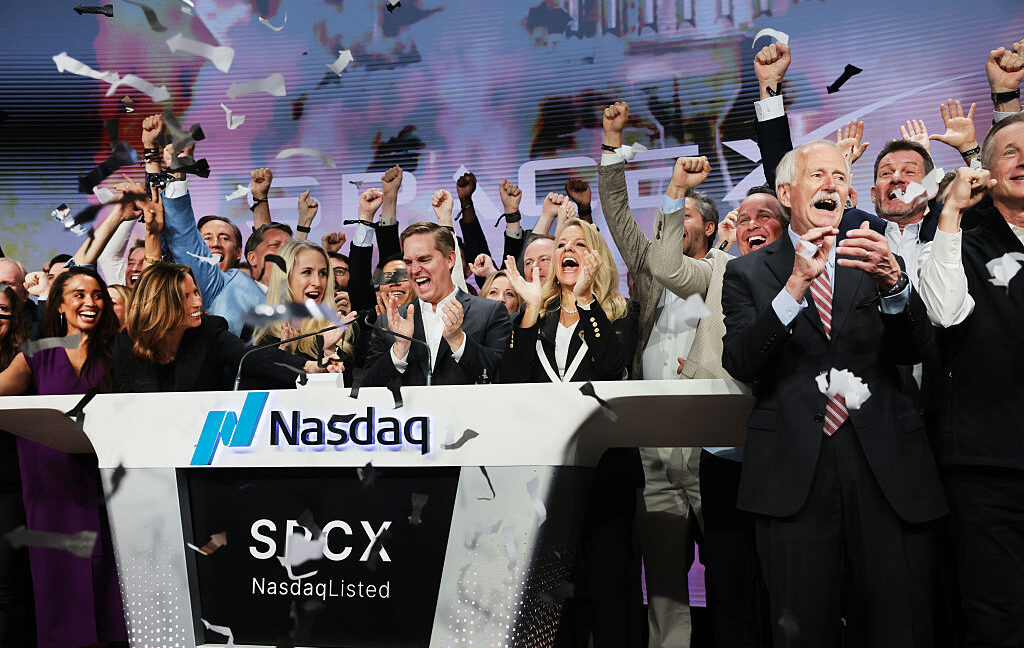
One previously unreported SpaceX investor has ties to Chinese military contractors.
A businessman with ties to Chinese military contractors was among the overseas investors who acquired stakes in SpaceX while it was still a private company. An entity linked to the Qatari royal family also took a stake.
The new details come from a private investor list obtained by ProPublica that sheds light on a particularly delicate issue for Elon Musk’s rocket company: which people in countries like China bought into the company, and how. SpaceX built its business off sensitive US government work like making spy satellites for the Pentagon. While there is no ban on Chinese investment in US military contractors, such investment is heavily regulated.
In a sign of its sensitivity to the concerns, SpaceX barred investors from China and Hong Kong from buying shares in its initial public offering last week due to “regulatory and compliance risks,” Bloomberg reported. The US government alleges that China has a strategy of using investments in sensitive industries for espionage and to get access to cutting-edge technology.
The company’s IPO last week was the largest ever, making Musk the world’s first trillionaire. Musk has extensive business interests in China, where Tesla builds many of its cars.
The new records detail at least a dozen investors with addresses in mainland China, Hong Kong, or Russia who acquired stakes in SpaceX years ago through a middleman firm in the US called Tomales Bay Capital. The investments are relatively small, ranging from $800,000 to $40 million, and were made between 2018 and 2021.
One investment came from an entity owned by David Su, the co-founder of the prominent Beijing venture capital firm MPCi. The Su entity invested $15 million in a SpaceX fund in 2020, according to the investor list. It was not Su’s only foray into the space industry; his company has been a high-profile backer of some of SpaceX’s Chinese competitors. Two satellite companies that Su’s firm invested in were sanctioned by the US government for allegedly assisting the notorious Russian mercenary organization the Wagner Group. One of the companies was sanctioned again last month for allegedly helping Iran attack U.S. military forces during the war.
MPCi has also worked with Chinese government investment funds. Last year, the website for China’s Ministry of Science and Technology named Su’s firm as a partner in a state-backed effort to develop the country’s aerospace industry.
There is no evidence that Su did anything improper. But the key question from the US government’s perspective would be whether China-based investors got access to nonpublic information about SpaceX’s technology or strategies, said Sarah Bauerle Danzman, an Indiana University professor who has worked for the State Department scrutinizing foreign investments. “If an investor has conflicts of interests with other companies in China—if they could feed that information to competitors—it could be a national security concern,” she said.
In a statement, MPCi said that Su “has not received any nonpublic information of SpaceX.” The statement described Su as “a Singapore citizen who resides in Singapore,” adding: “MPCi is a brand name with different teams and funds. Mr. Su is responsible for the US dollar funds.” According to a 2024 profile of him, Su “spent almost 100 percent of his time in China over the last 20 years.”