// SPACE.COM — SPAZIO & SCIENZA
The UK is about to witness its most spectacular solar eclipse in 11 years. Here's what you need to know
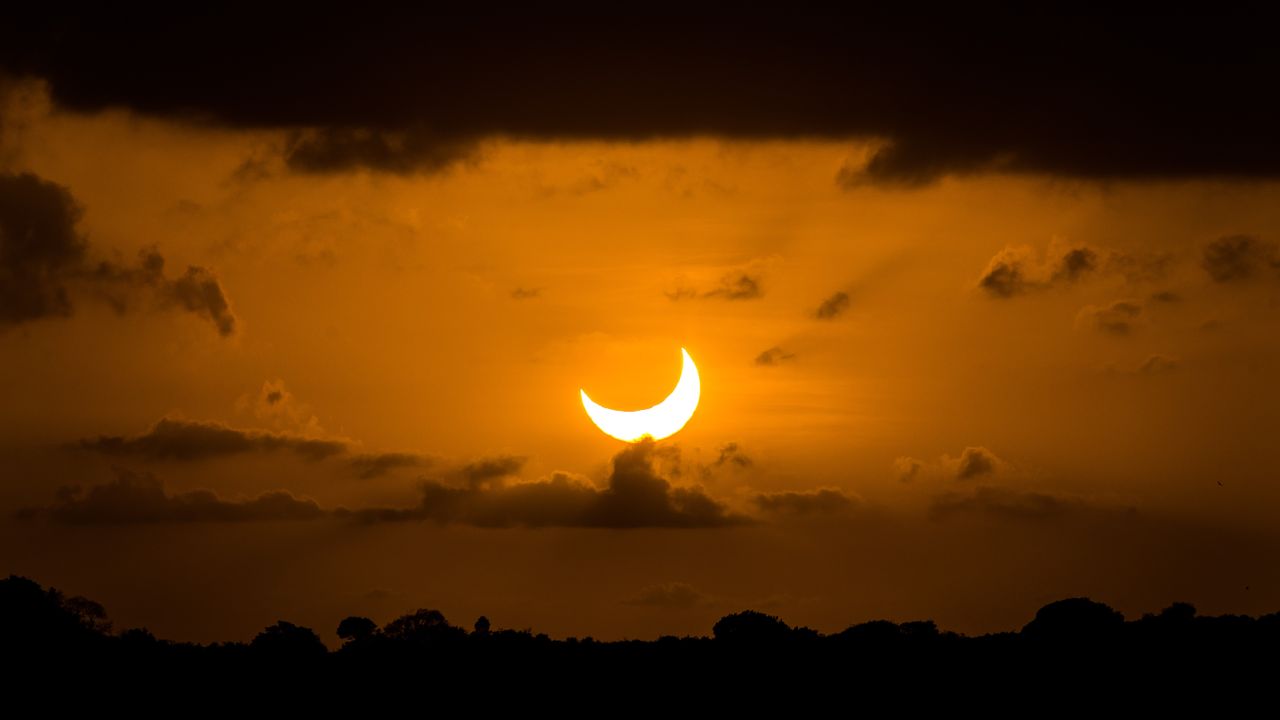
The Aug. 12 eclipse won't bring totality to Britain, but up to 98% of the sun will disappear in one of the U.K.'s most dramatic partial eclipses in decades.
When you purchase through links on our site, we may earn an affiliate commission. Here’s how it works.
It will be a magnificent day for England's south coast. From Portsmouth's Historic Dockyard and Brighton's Royal Pavilion to Dorset's Jurassic Coast and Cornwall's Land's End, beaches and cliff tops will be plunged into darkness in the day during the U.K.'s first total solar eclipse for almost 91 years. There is, however, a problem — this scenario won't occur until Sept. 23, 2090.
A total solar eclipse visits a location on Earth on average once every 366 years, and the British are currently in no-man's land. Aug. 12, 2026, is particularly cruel, with a path of totality cruising past the British Isles as it surges across the Atlantic Ocean from Iceland to northern Spain. Eclipse chasers in the U.K. are used to traveling, and travel they will, but those left behind will nevertheless experience a very deep partial solar eclipse peaking at 98% in extreme locations. It will be the U.K.'s most significant partial solar eclipse since March 20, 2015, when another path of totality just missed the U.K. to the north.
Related: Total solar eclipse 2026 — Everything you need to know
During a partial solar eclipse, it is NEVER safe to look directly at the sun without solar eclipse glasses designed for solar viewing. Read our guide on how to observe the sun safely.
A deep partial eclipse is a compelling sight, and the widespread nature of this one means millions of Brits can experience it without leaving home.
London, Manchester and Glasgow all experience 91.4% coverage, staggered by only a few minutes. Belfast does slightly better at 93.1%, while Cardiff edges ahead among the U.K's capitals at 93.2%. In practice, these differences are subtle — this is a nationwide event that requires no travel. That said, expect crowds at U.K. national parks, such as Snowdonia, the Brecon Beacons and the Pembrokeshire Coast in Wales; the South Downs and the Lake District in England; and the Cairngorms and the Isle of Skye in Scotland.
However, it's in County Kerry, Ireland, that sees the biggest eclipse in the British Isles archipelago, with Great Skellig — Luke Skywalker's island sanctuary in "Star Wars Episode VII: The Force Awakens" and "Star Wars Episode VIII: The Last Jedi" — seeing a whopping 98% partial eclipse.
This is a late, low eclipse, and timing matters. The action takes place between 5:59 p.m. and 8:10 p.m. BST, but the main event comes around 7:05-7:13 p.m. BST, when the eclipse reaches its maximum across the U.K. The deeply eclipsed sun will appear above the west-northwest horizon as a thin crescent, hanging like a curved blade, with its tips pointing toward the ground.