// SPACE.COM — SPAZIO & SCIENZA
How to safely observe eclipses and the solar surface with a smart telescope
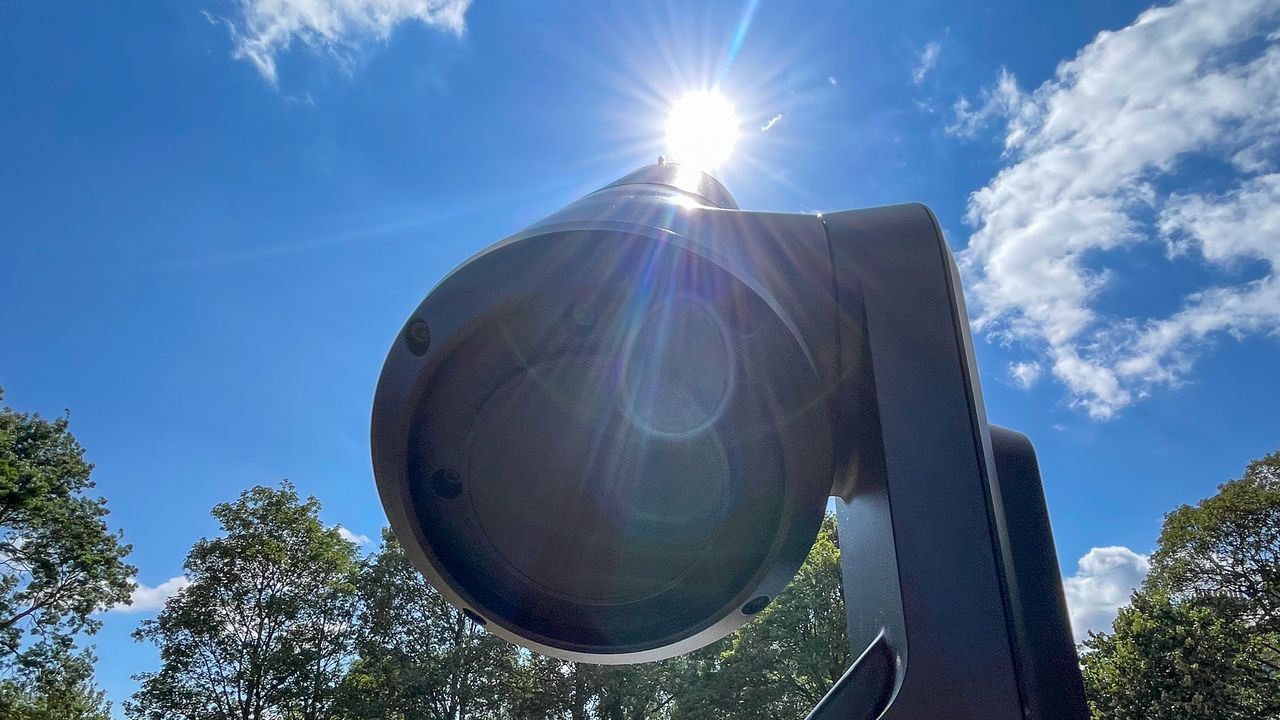
Solar observation is easy with a smart telescope like the Unistellar eQuinox 2 and the matching filter, meaning you can capture it with no stress on big events like the Aug. 12 total solar eclipse.
When you purchase through links on our site, we may earn an affiliate commission. Here’s how it works.
Solar observation can be tricky or underwhelming when trying to observe with handheld methods such as using solar eclipse glasses and solar binoculars. Hunting for the sun with binoculars can be tricky due to the essential ISO 12312-2 rated solar filters on the glass blocking all vision except for the solar disk itself. This is where a smart telescope like the entire Unistellar range can help; it automatically finds and tracks the solar disk from a few presses on your smartphone.
Need a smart telescope? Skip ahead to pick from our list of recommendations to suit all budgets.
All you need is to attach the correct Unistellar solar filter for your model, click Go-to on the Sun and the telescope will slew to the solar disk. If connected to a tablet or larger screen, you can get a much bigger image of the sun to share with groups and family. This also allows you to watch the observation from a shaded spot and get comfortable without needing to stay out under the beating sun.
Smart telescopes not only find and track the solar disk but they can image it too. Using built-in image focusing, stacking and processing, the telescope delivers a sharper image within seconds and reveals solar details like sunpots on the surface. If you don't want to miss getting a shot of the next solar eclipse, you can use the solar observation mode to capture the sun at all stages of the eclipse from your smart telescope. At the time of writing, the next total solar eclipse is coming on Aug. 12, 2026 and will be mainly visible in Greenland, western Iceland and northern Spain. Partial eclipses will be visible in some other European countries, parts of Canada and New York City.
For solar observation with a smart telescope, the first thing you will need is a smart telescope. While I'm going over how to use a Unistellar eVscope 2 for solar imaging and observation, most of the other smart telescope brands have models that are capable of this too, like the Dwarflab Dwarf Mini 3 and Vaonis Vespera II. If you are used to using a traditional telescope, bear in mind that you will need a smart device to operate the smart telescope and observe your targets. Most smart telescopes come with a tripod, so you shouldn't have to worry about getting one extra but it is an essential piece of equipment.
Next, you need a solar filter for your telescope. This is to protect the image sensors in the body of the telescope and drastically reduce the amount of light entering the aperture, so that you don't get a highly overexposed image. Many brands sell these solar filters separately and in the case of Unistellar, you have to make sure you get the right one for your model. There is a solar filter for their Odyssey range and then another filter for their pro range, which features the eQuinox 2 and eVscope 2 models.
Finally, you will also need access to somewhere with a good view of the sun, so a park, garden or open space is ideal. Solar imaging is best done in mid-to-late morning before the sun has heated up our atmosphere, which causes disturbance in the image. This is especially important if you are looking to get crisp shots of sunspots.
Make sure your tripod is level, with your smart telescope properly attached, then turn it on and remove the dust cap. Open your preferred app and add your device by following the on-screen instructions.