// SPACE.COM — SPAZIO & SCIENZA
Exploring 'very low Earth orbit': The world's 1st air-breathing satellite thruster could soon get a test run
"By enabling satellites to fly lower, longer and more efficiently, we are enabling higher-resolution Earth observation, much better satellite communications, more responsive and accurate missions and a more sustainable orbital infrastructure."
When you purchase through links on our site, we may earn an affiliate commission. Here’s how it works.
A new way to move around Earth's outer atmosphere could soon get a field test.
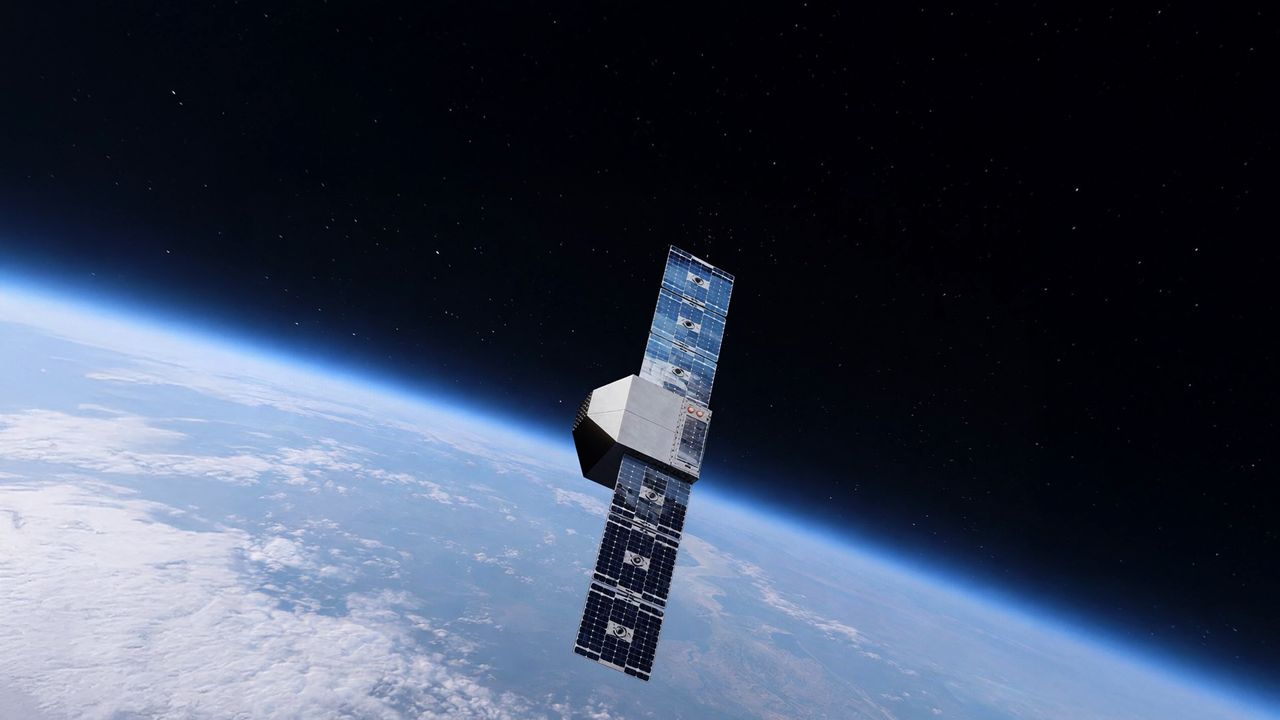
The Spanish company Kreios Space plans to launch into orbit the world's first satellite that uses scooped-up air to push it forward, the company announced on Tuesday (Aug. 4).
The technology Kreios Space has been developing is called air-breathing electric propulsion (ABEP). It relies on air sourced from Earth's atmosphere, which is then heated up, ionized and expelled to generate thrust.
This method will allow satellites in very low Earth orbit (VLEO) — the region from roughly 60 miles to 250 miles (100 to 400 kilometers) above our planet — to counteract atmospheric drag without the aid of liquid fuel.
"Kreios is building the satellites that make sustained operations in very low Earth orbit possible," Kreios Space CEO Adrián Senar said in the Aug. 4 announcement.
"By enabling satellites to fly lower, longer and more efficiently, we are enabling higher-resolution Earth observation, much better satellite communications, more responsive and accurate missions and a more sustainable orbital infrastructure," he continued.
Kreios Space chose Lithuanian-based Kongsberg NanoAvionics to provide the satellite bus that will carry the ABEP system into orbit for the test run.
"Kreios is tackling one of the most demanding operating environments in space, and this mission joins a very short list of European VLEO initiatives," Kongsberg NanoAvionics CEO Atle Wøllo said in the same statement.