// NATURE NEWS — SPAZIO & SCIENZA
FNIP1 variants are associated with favourable metabolism in 1 million humans
Nature
(2026) Cite this article
Altered energy metabolism is a shared driver across cardiometabolic diseases—the leading cause of death globally1. Energy metabolism varies between individuals and is partly heritable2,3,4,5,6,7,8,9. Here, to investigate the genetic basis of energy metabolism, we perform an exome-sequencing analysis of 1,032,116 people from America, Europe and Asia, and estimate associations between rare protein-coding variants and the ratio of triglyceride to high-density-lipoprotein cholesterol (TG:HDL)—an energy-state biomarker that we associate with diverse cardiometabolic risk factors and diseases. We identify 59 independent genes (P < 1.04 × 10⁻⁷) that are enriched for liver- and adipose-expressed master regulators of energy balance, storage and metabolism; 23 (39%) of these genes encode approved or clinical-stage drug targets. Ultra-rare protein-truncating variants in FNIP1 (allele frequency, 0.01%), which encodes a suppressor of energy expenditure and mitochondrial metabolism, are associated with a lower TG:HDL ratio, lower liver fat, lower glycaemia, favourable fat distribution and around 60% lower odds of cardiometabolic disease. FNIP1 knockdown in primary human hepatocytes induces lipid breakdown and lysosomal gene expression, while combined hepatic knockdown of Fnip1 with its paralogue Fnip2 or knockdown of its interactor Flcn protect against weight gain, reduce liver fat and enhance insulin sensitivity in mice fed a high-fat diet. Our study implicates the FNIP1 pathway in human energy metabolism and highlights its inhibition as a potential therapeutic strategy in cardiometabolic disease.
Altered energy and lipid metabolism contribute to cardiometabolic diseases such as coronary artery disease (CAD), obesity, type 2 diabetes and metabolic-dysfunction-associated steatotic liver disease (MASLD), which collectively represent the leading cause of death worldwide and account for a substantial and growing burden of morbidity1,10. The TG:HDL ratio has been proposed as a biomarker of the metabolic state of the body and its levels are associated with insulin resistance, type 2 diabetes and CAD7,11,12,13,14.
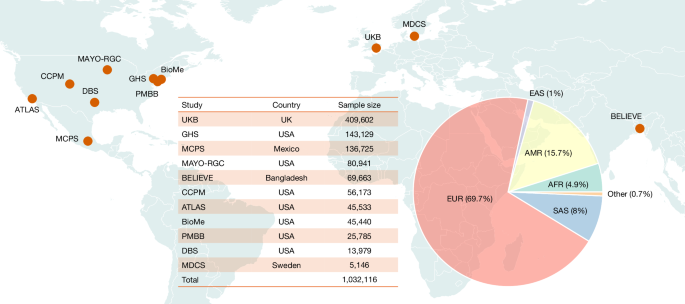
Large exome-sequencing association studies of rare coding variants have led to the identification of therapeutic targets8,9,15,16,17,18. Here we use data from over 1 million people with exome sequencing, genome-wide common variant imputation and detailed health phenotypes from 11 cohorts across the world (Fig. 1 and Supplementary Table 1) to validate the TG:HDL ratio as a biomarker of the energy state of the body and risk of various cardiometabolic diseases.
In total, 1,032,116 individuals were included in the exome-wide association analysis of rare variants with a TG:HDL ratio. The contributing cohorts were as follows: UCLA ATLAS Precision Health Biobank (ATLAS); BangladEsh Longitudinal Investigation of Emerging Vascular and nonvascular Events (BELIEVE); Mount Sinai BioMe BioBank (BioMe); Colorado Center for Personalized Medicine Biobank (CCPM); Dallas Biobank Study at UT Southwestern Medical Center (DBS); Geisinger Health System MyCode (GHS); Mayo Clinic Project Generation (MAYO-RGC); Mexico City Prospective Study (MCPS); Malmö Diet and Cancer Study (MDCS); University of Pennsylvania Penn Medicine BioBank (PMBB); and UK Biobank (UKB). AFR, African ancestry; AMR, admixed American ancestry; EAS, East Asian ancestry; EUR, European ancestry; SAS, South Asian ancestry. World maps were generated in R (v.4.5.2) using the maps package (v.3.4.3).
We also perform a genetic discovery analysis of the TG:HDL ratio, implicating 59 genes of which coding variants are independently associated with this metabolic biomarker, including known and new therapeutic targets. With a combination of human genetics, omics data, and in vitro and in vivo validation in experimental models, we implicate the folliculin interacting protein 1 (FNIP1) and folliculin (FLCN) pathway in energy metabolism and t