// BBC BUSINESS NEWS — FINANZA
The furious dispute over what caused Air India flight 171 to crash
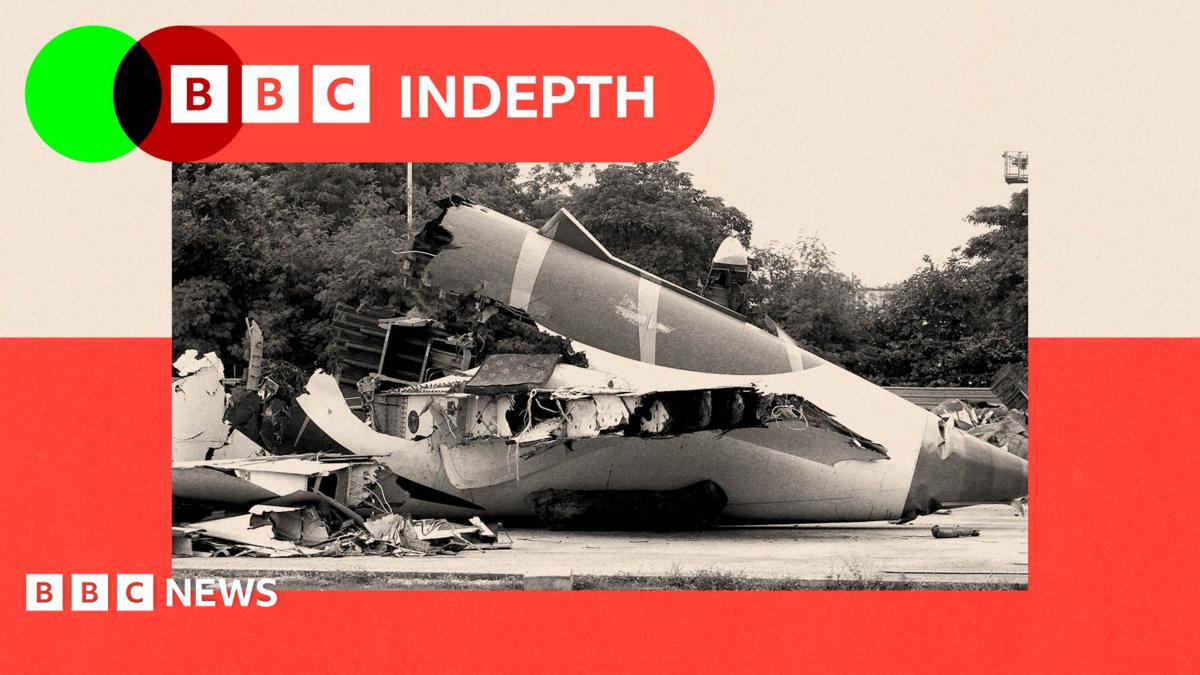
The furious dispute over what caused Air India flight 171 to crash
It was a hot and dry afternoon on 12 June last year, when Air India Flight 171 left the terminal at Sardar Vallabhbhai Patel Airport in Ahmedabad in the western Indian state of Gujarat. Settling into their seats for the nine-and-a-half-hour journey to London were 230 passengers - including 169 Indian nationals and 53 Britons. Looking after them were 10 cabin crew.
On the flight deck were Captain Sumeet Sabharwal, a pilot with decades of experience, and his younger colleague, first officer Clive Kunder. Just 32 seconds after take-off the plane crashed, killing all but one of those on board. Another 19 people on the ground were also killed.
CCTV footage from the airport and a social media video show the aircraft taking-off in what looks like a normal fashion, but rather than gain height it appears to hang in the air, before gliding gently downwards.
It disappears from view behind buildings and trees. Seconds later a huge cloud of flame and black smoke appears, and the magnitude of the disaster becomes apparent. What is not at all clear from the footage, however, is what actually caused the crash.
The crash killed all but one of those on board, Vishwash Kumar Ramesh
Finding out why so many people died is the job of India's Aircraft Accident Investigation Bureau (AAIB), part of the country's Ministry of Civil Aviation. Under international law, as set out in Annex 13 of the Convention on International Civil Aviation, the country in which an accident occurs is directly responsible for the official investigation.
Other parties, including the country where the aircraft or its engines were built, can also take an active part as "accredited representatives". In the case of AI171, that means the US National Transportation Safety Board (NTSB). The NTSB sent a delegation which included technical experts from Boeing, which made the plane itself and GE Aerospace, which built the engines, as well as the US aviation regulator, the Federal Aviation Administration.
According to Annex 13, "the sole objective of the investigation of an accident or incident shall be the prevention of accidents or incidents. It is not the purpose of this activity to apportion blame or liability".
For Boeing, a company already reeling from years of safety scandals, it is about the integrity of one of its premium products: the 787 Dreamliner, an aircraft with a hitherto impeccable safety record. Air India, a loss-making airline belonging to the Tata Group, can ill-afford to see its brand tarnished. Families of those who died, meanwhile, want to know what really happened to their loved ones.