// HACKER NEWS — CYBERSECURITY
The Ultimate Horse
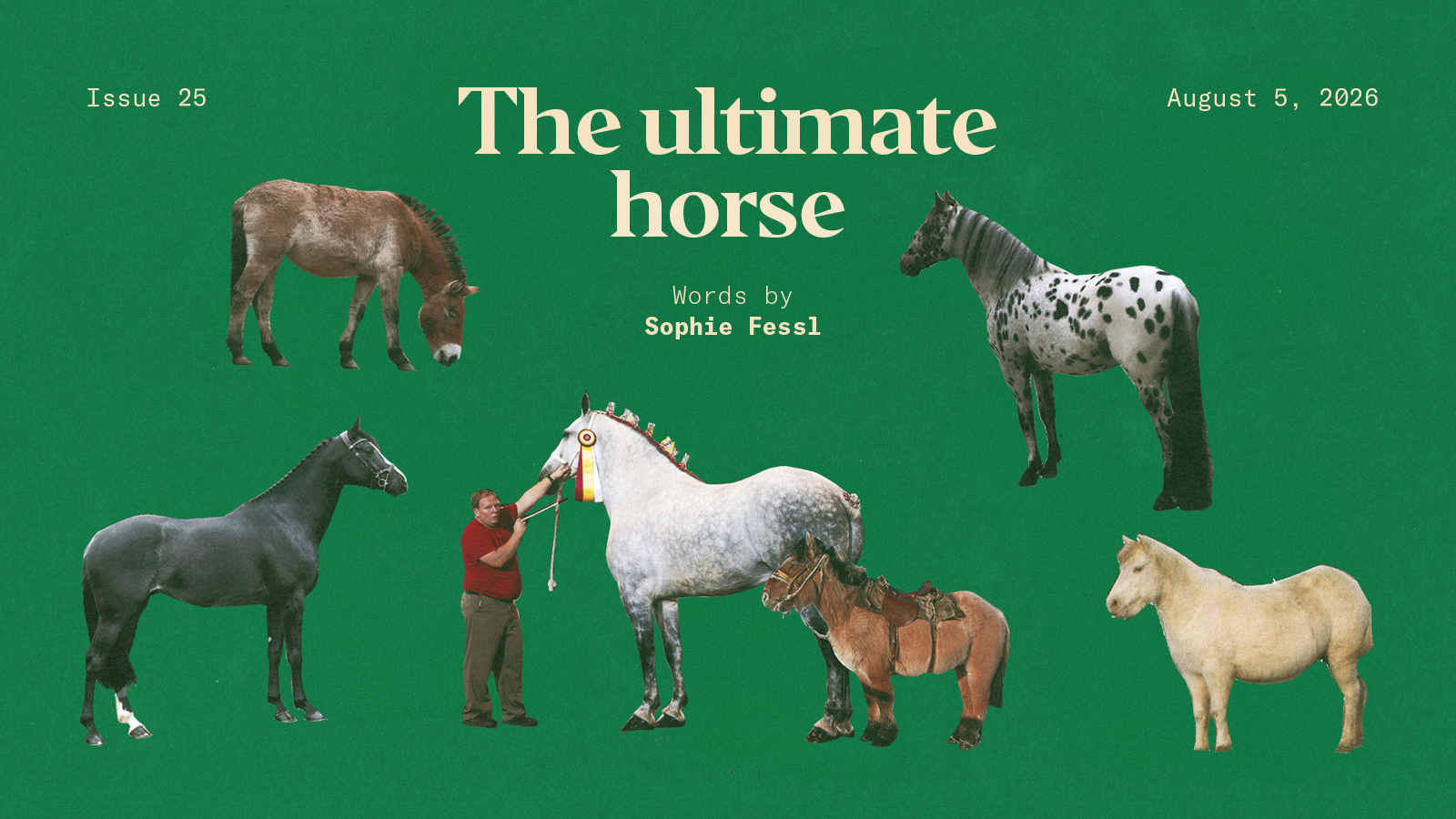
In June 1973, chestnut colt Secretariat ran the Belmont Stakes so fast that no horse has matched him since. In less than two and a half minutes, Secretariat flew along the track, finally pulling away to win by 31 lengths, nearly three quarters of a football field. The other horses were so far behind they weren’t even in the television frame. Fifty years later, billions of dollars have been poured into breeding and training, yet Secretariat’s record still stands.
This is the paradox of the thoroughbred: breeders have spent centuries trying to create a faster horse, but in doing so, they may have bred away the very genetic diversity that would allow the horse to keep improving, or even to remain robust.
The paradox is not confined to the racetrack. The horse began as a terrier-sized, multi-toed forest dweller and, over 55 million years of evolution and a few thousand years of human intervention, became everything from the compact Icelandic pony to the streamlined racehorse. For most of that history, natural selection shaped horses slowly. Only recently has human ambition taken over, breeding animals for speed, endurance, and docility. The result is extraordinary diversity in form and performance, but also a dramatic narrowing of genetic diversity.
The story begins 55 million years ago, deep in the warm, humid forests that covered what is now North America. You’d be hard pressed to recognize the earliest equid. Known as Hyracotherium, it stood only 14 inches tall, closer to a terrier than a modern horse. With four toes on the front feet and three on the back, it was ideally suited to moving gingerly over soft, marshy ground and nibbling fruits and leaves.
When global temperatures rose, between 18 and 15 million years ago, the equid family diversified into more than twenty genera (the subdivision above species living in woodlands and savannas). Most of these lineages have long since died out: today, only the genus Equus survives, which includes horses, zebras, asses, and donkeys.
As grasslands spread, over millions of years, equids developed into the horses we see today. Few evolutionary stories are as well documented. In the nineteenth century, when paleontologist OC Marsh unearthed a rich collection of fossil horses in the American West, their significance was immediately recognized. Here, laid out almost step by step, was evolution in action: horses transitioning from small, many-toed forest-dwellers into large, single-toed animals that grazed on grass rather than eating fruit and leaves.
That single toe, of which the hoof is the toenail, is the evolutionary innovation key to horses’ success. Life on the plains favored animals able to run efficiently over long distances. Rigid, lightweight hooves help with this: they minimize sideways wobble while storing and releasing energy like a spring, much like the shoes a human sprinter might wear, or even the prosthetic running blades sometimes used by amputees.
Over millions of years, the number of toes fell gradually from several to just one. Between 43 and 33 million years ago, Mesohippus still sported three toes of roughly equal size, with each touching the ground. By the time of Hipparion, about 23 million years ago, the middle toe carried most of the animal’s weight: the outer two toes had shrunk into vestiges, and the middle toe had become dominant. Finally, Pliohippus took a pivotal step toward the modern form, with a single weight-bearing toe ending in a solid hoof. This evolutionary streamlining produced the feet of today’s horses: a single, sturdy keratin hoof perfectly suited for galloping over open ground.
The route to the modern horse involved several detours. Hyracotherium, the progenitor of the horse family, appears in the fossil record in North America from around 55 million years ago, disappearing again 8 million years later. Around 12 million years ago, Hipparion, which, though three-toed, otherwise resembled modern horses, colonized Eurasia. Hippidion, which