// ARS TECHNICA — MOBILE & WEB
Samsung Galaxy Z Fold 8 Ultra review: The ultra foldable with an ultra price
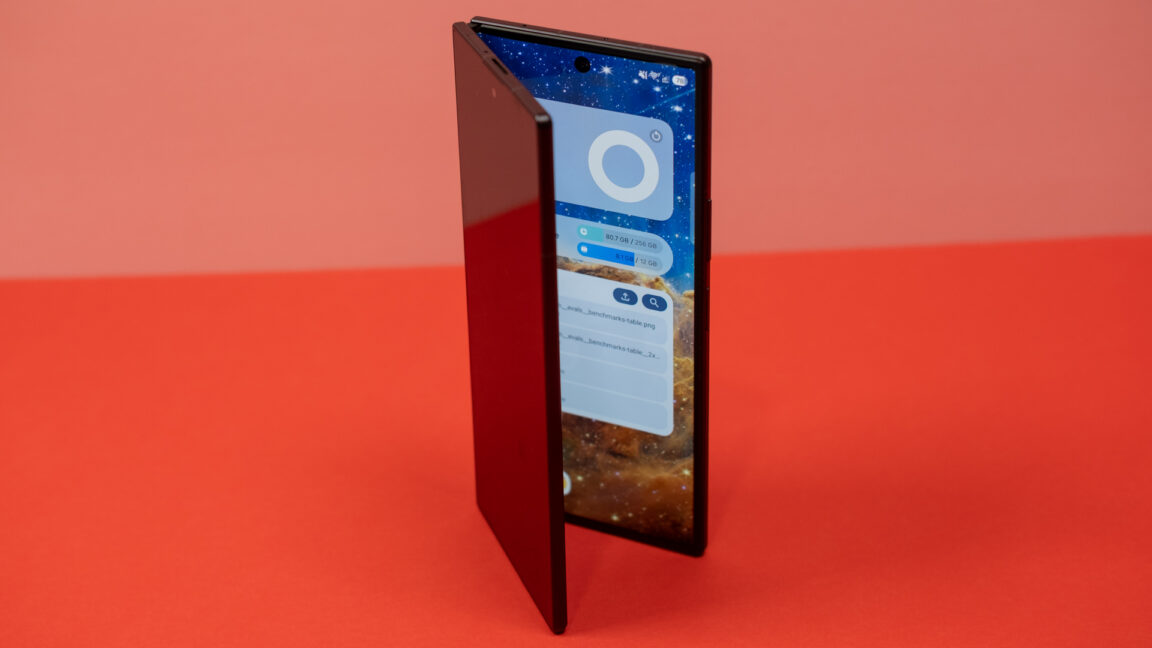
Samsung didn’t have to change much this year because its hardware is just that good.
Samsung has largely defined the foldable phone category, but it’s no longer alone in releasing flexible devices. Google, Motorola, and a raft of Chinese OEMs have their own take on this form factor. Is the new Galaxy Z Fold 8 Ultra really “ultra” enough to remain on top?
This phone doesn’t have the wide frame of the new Z Fold 8, instead matching the approximate size and shape of the company’s last few tablet-style foldables. The Z Fold 8 Ultra is not a big leap, but it continues Samsung’s pattern of iterative foldable improvements. At this point, there’s very little left to improve. The compromises of going with a foldable over a regular flat phone have largely been erased with the Z Fold 8 Ultra. Well, except for the price.
Foldables used to be real pocket-busters, almost like carrying two phones glued together. Samsung has successively shaved a few millimeters off every year, taking a leap last year with the Z Fold 7. The Z Fold 8 Ultra is even a bit slimmer than that phone, but the difference is basically imperceptible. It still has the same buttons in the same places, including a fingerprint sensor in the power button.
The 2026 Samsung flagship foldable is barely thicker than the average flat phone when folded, which is impressive considering the powerful hardware inside. The two halves come together with no gap, and the hinge feels smooth and springy. The phone almost seems to “leap” into the unfolded configuration when you pry it open, and it ends up flatter than the Galaxy Z Fold 7, which didn’t quite reach 180 degrees. It’s structurally solid in this state, even though it’s barely 4 mm thick. It feels like a small tablet, not a phone that folds in half, but somehow, it is. You can fold it back up, and it fits in your pocket like any regular phone. It’s a very cool piece of hardware.
The 6.5-inch 1080p cover OLED is about the same size and shape as any non-foldable smartphone on the market today. It has the latest Gorilla Glass Ceramic coating, and it’s plenty bright for outdoor use. The real star of the show is the 8-inch internal foldable screen. Its resolution is 2256 x 2504, a bit higher than last year’s phone, and its peak brightness has increased to 3000 nits.
Even very bright foldable screens can be hard to read in bright light because the plastic top layer is so reflective. Samsung has addressed that somewhat with the Z Fold 8 Ultra with its new anti-reflective layer. Reflections aren’t gone, but like the treated glass on Samsung’s flat Ultra phones, the intensity of reflections is much reduced. This makes the big internal screen more legible outdoors.
The other screen update tackles the classic foldable crease. Early on, foldable screens had a veritable chasm running down the middle. That has been minimized to varying degrees, with some phones showing almost no crease at all. Samsung is now in that group with the Z Fold 8 Ultra thanks to its “Titanium Flex” technology. This metallic layer apparently supports the OLED better, eliminating the crease. If you look from the right angle in the right lighting, you may be able to see a bit of distortion, but you can’t really feel it while using the screen.
The only truly clunky aspect of the phone’s design is the camera module. Because the internals are so tightly packed, the camera hardware pokes way out past the rear glass. It stands out in the wrong way and can get snagged on your pocket when you try to put the phone away. The three modules are lined up in the corner in usual Samsung fashion, which makes the phone a wobbly mess when you set it down.
Samsung’s One UI is a known quantity at this point. It comes loaded with some duplicative apps and junk you may not want, like Facebook and LinkedIn. The interface can be a little cluttered, and there are features buried in the settings that you’ll probably never touch. But Samsung doesn’t change much year-to-year, so if you’ve