// ARS TECHNICA — LINUX & OPEN SOURCE
State judge orders Kalshi to stop offering sports bets and other wagers
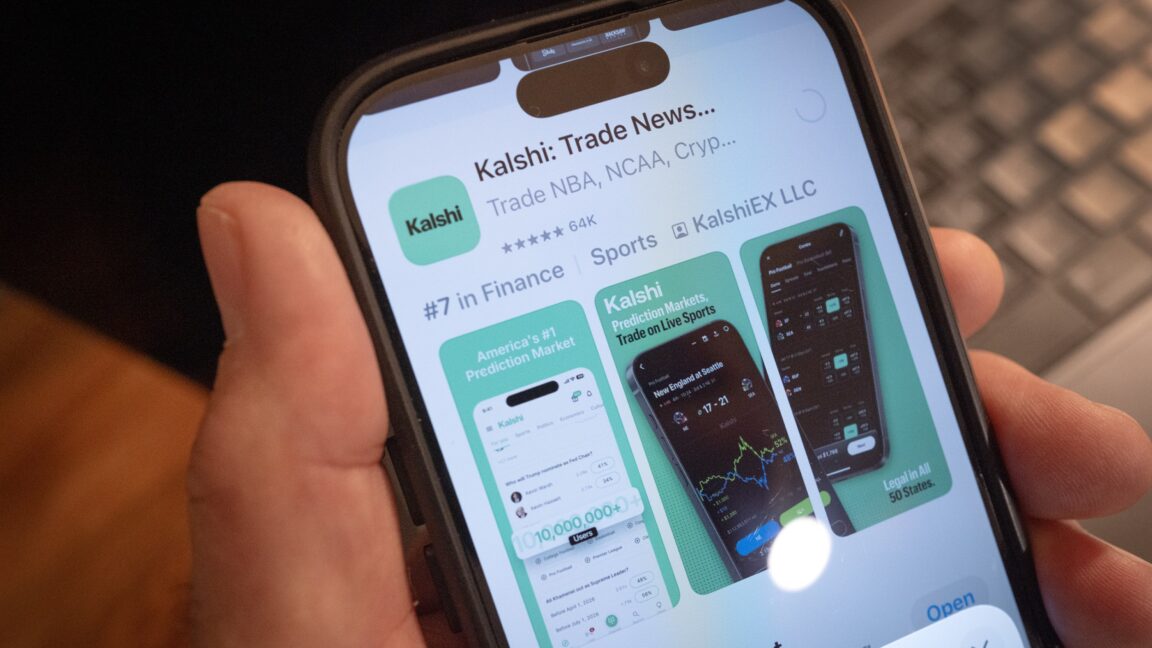
Kalshi ordered to stop offering bets in Washington, must implement geofencing.
A state court in Washington this week ordered Kalshi to stop offering sports gambling and a variety of other wagers on its prediction market. King County Superior Court Judge John McHale issued a preliminary injunction in response to a lawsuit filed against Kalshi by the state of Washington.
“The order requires Kalshi to stop offering, accepting, or facilitating wagers on sports, elections, politics, entertainment, culture, tech and science, or mentions in Washington,” said a press release yesterday from Washington Attorney General Nick Brown. “Kalshi must implement an IP address and residency-based geofence by August 19 and a multi-source geofencing solution by September 2. This does not include all the wagers offered on Kalshi, but it includes a substantial part of their business, which in recent years has been increasingly driven by sports wagers.”
Kalshi is not licensed by the state Gambling Commission and is not registered to conduct business in Washington, the court order said. McHale found that Kalshi ads claiming “that it offers ‘legal betting’ in Washington state are likely to mislead a reasonable consumer that such gambling activities are legal under state law.”
Under the court order, Kalshi could face penalties of up to $120,000 per day if it fails to complete the implementation of the ordered geofencing by September 2. “Kalshi will not prohibit users from exiting positions they already hold. The State reserves, and does not waive, the right to seek recovery for fees and losses incurred by Washington consumers on or after September 2, 2026,” the order said.
To get a preliminary injunction, a plaintiff must show they are likely to succeed on the merits of their claims. McHale found that Washington is likely to succeed in proving its claims that Kalshi violated state laws on gambling and consumer protection.
“Kalshi operates an online betting platform that it advertises as a ‘prediction market’ and that allows consumers to bet on thousands of topics ranging from sports, political elections, entertainment, popular culture, and whether public figures will utter specific words or phrases (mentions’),” McHale wrote.
The judge found that “Kalshi’s provision, marketing, and advertising of illegal gambling activities constitute unfair and/or deceptive acts or practices in trade or commerce” under Washington law.
Brown hailed the court ruling, saying that “Kalshi has gotten rich promoting wagers on sports, elections, natural disasters, events related to the Iran War, and more. Under this order, Kalshi is banned from offering wagers on most of those topics in Washington.”
Kalshi argues that it doesn’t have to follow state laws because the US Commodity Futures Trading Commission (CFTC) has exclusive jurisdiction over prediction markets. The Trump administration has repeatedly made the same argument and sued states that try to regulate the platforms. The battle involving states, the US government, and Kalshi is being litigated in state and federal courts throughout the country.