// TOM'S HARDWARE US — HARDWARE & GADGET
AMD Ryzen 7 7700X3D vs Ryzen 7 7800X3D faceoff — seeing double with Zen 4 X3D
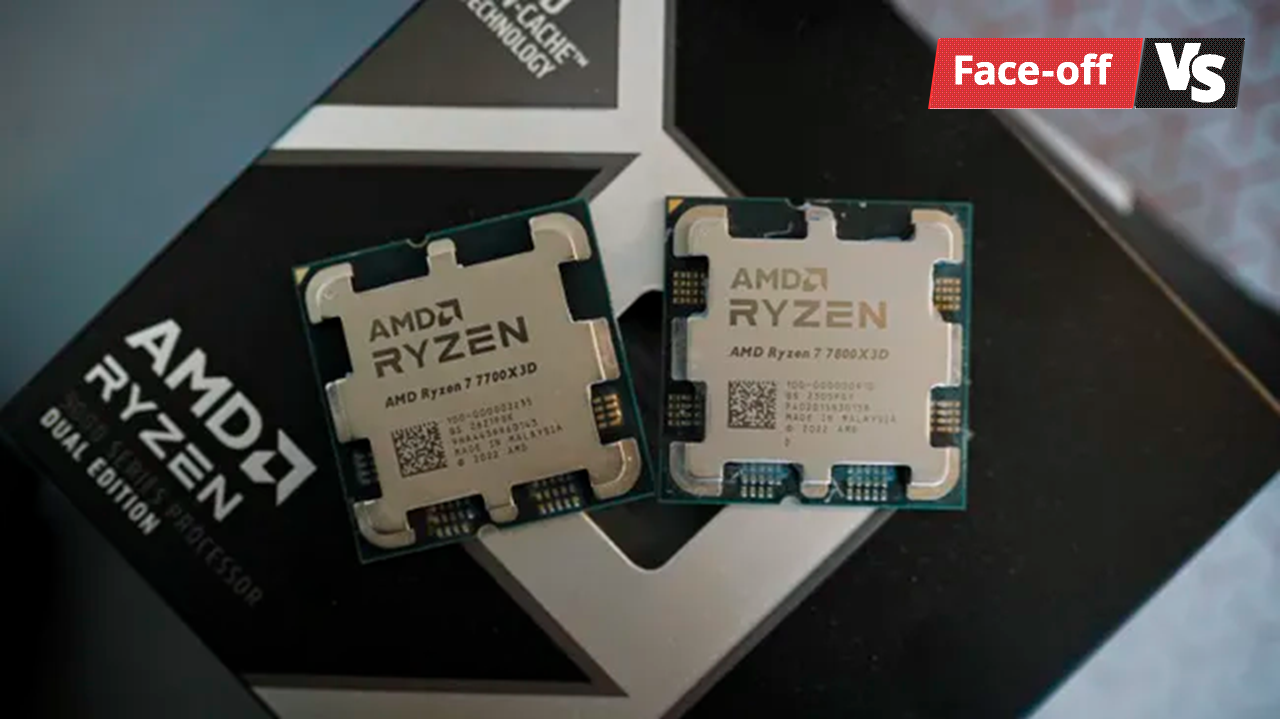
AMD's new 8-core X3D chip takes on the popular choice
When you purchase through links on our site, we may earn an affiliate commission. Here’s how it works.
AMD recently expanded its X3D lineup with the Ryzen 7 7700X3D, a new entry that slots in below the Ryzen 7 7800X3D as a more affordable way to get 3D V-Cache on the AM5 platform. Launched on July 16 at $329, the 7700X3D is essentially built from the same silicon as the 7800X3D, just with lower clocks and a price tag that undercuts it by $120 at launch.
The Ryzen 7 7800X3D, on the other hand, needs no introduction at this point. Launched back in April 2023 at $449 (now $360), it quickly became one of the most recommended gaming CPUs on the market and has held that reputation for over three years. AMD has kept it in the lineup even as newer X3D chips took the place at the top of the best CPU for gaming charts, which says a lot about how well it has aged.
With the 7700X3D now available, AM5 builders finally have a cheaper way into the X3D club without stepping down to the six-core Ryzen 5 7600X3D. The obvious question is how much performance actually gets left on the table by going with the cheaper option, and whether the 7800X3D's higher clocks are worth the extra money in 2026.
Using data from our CPU benchmark hierarchy and individual reviews of both chips, we’re going to compare them point-for-point across gaming, application performance, power consumption, and more.
The Ryzen 7 7700X3D is the newer of the two chips here, launching on July 16, 2026, priced at $329. For the time being, it's a Newegg exclusive in North America, at least for this quarter, before wider retail availability presumably follows. It's built on the same Zen 4 architecture as the rest of the Zen 4 X3D family and manufactured on TSMC's N5 process.
The chip features 8 cores and 16 threads, with a base clock of 4.0 GHz and a boost clock of 4.5 GHz. That boost clock is notably 500 MHz lower than the 7800X3D, which is really the main differentiator between the two chips on paper. AMD has essentially taken 7800X3D silicon that couldn't hit the higher clocks and repackaged it as a cheaper SKU.
For the cache, the Ryzen 7 7700X3D carries the full 96MB of 3D V-Cache-enabled L3, for a total cache pool of 104MB once you factor in L2. This matches the 7800X3D exactly, and it's the reason the 7700X3D isn't just a watered-down budget chip.
Get Tom's Hardware's best news and in-depth reviews, straight to your inbox.