// HACKER NEWS — CYBERSECURITY
Cultivating a state of mind where new ideas are born (2023)
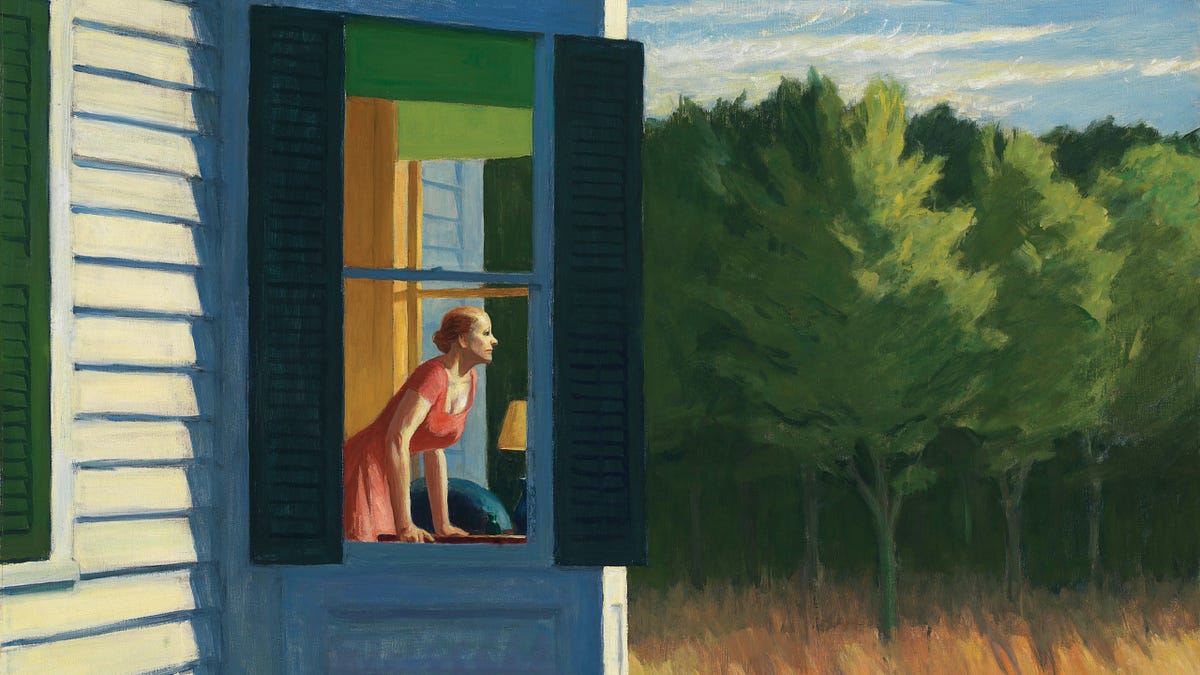
The Knight: As you know, I am afraid of emptiness, desolation and stillness. I cannot bear the silence and isolation.
Death: Emptiness is a mirror turned to your own face.
In the early 2010s, a popular idea was to provide coworking spaces and shared living to people who were building startups. That way the founders would have a thriving social scene of peers to percolate ideas with as they figured out how to build and scale a venture. This was attempted thousands of times by different startup incubators. There are no famous success stories.
In 2015, Sam Altman, who was at the time the president of Y Combinator, a startup accelerator that has helped scale startups collectively worth $600 billion, tweeted in reaction that “not [providing coworking spaces] is part of what makes YC work.” Later, in a 2019 interview with Tyler Cowen, Altman was asked to explain why.
SAM ALTMAN: Good ideas — actually, no, great ideas are fragile. Great ideas are easy to kill. An idea in its larval stage — all the best ideas when I first heard them sound bad. And all of us, myself included, are much more affected by what other people think of us and our ideas than we like to admit.
If you are just four people in your own door, and you have an idea that sounds bad but is great, you can keep that self-delusion going. If you’re in a coworking space, people laugh at you, and no one wants to be the kid picked last at recess. So you change your idea to something that sounds plausible but is never going to matter. It’s true that coworking spaces do kill off the very worst ideas, but a band-pass filter for startups is a terrible thing because they kill off the best ideas, too.
This is an insight that has been repeated by artists, too. Pablo Picasso: “Without great solitude, no serious work is possible.” James Baldwin: “Perhaps the primary distinction of the artist is that he must actively cultivate that state which most men, necessarily, must avoid: the state of being alone.” Bob Dylan: “To be creative you’ve got to be unsociable and tight-assed.”
When expressed in aphorisms like this, you almost get the impression that creativity simply requires that you sit down in a room of your own. In practice, however, what they are referring to as solitude is rather something like “a state of mind.” They are putting themselves in a state where the opinions of others do not bother them and where they reach a heightened sensitivity for the larval ideas and vague questions that arise within them.
To get a more visceral and nuanced understanding of this state, Johanna and I have been reading the working notes of several highly creative individuals. These notes, written not for publication but as an aid in the process of discovery, are, in a way, partial windows into minds who inhabit the solitary creative space which the quotes above point to. In particular, we’ve found the notes of the mathematician Alexander Grothendieck and the film director Ingmar Bergman revealing. They both kept detailed track of their thoughts as they attempted to reach out toward new ideas. Or rather, invited them in. In the notes, they also repeatedly turned their probing thoughts onto themselves, trying to uncover the process that brings the new into the world.
This essay is not a definite description of this creative state, which takes on many shapes; our aim is rather to give a portrait of a few approaches, to point out possibilities.