// HACKER NEWS — CYBERSECURITY
Webmaster a Manifesto for Everyone
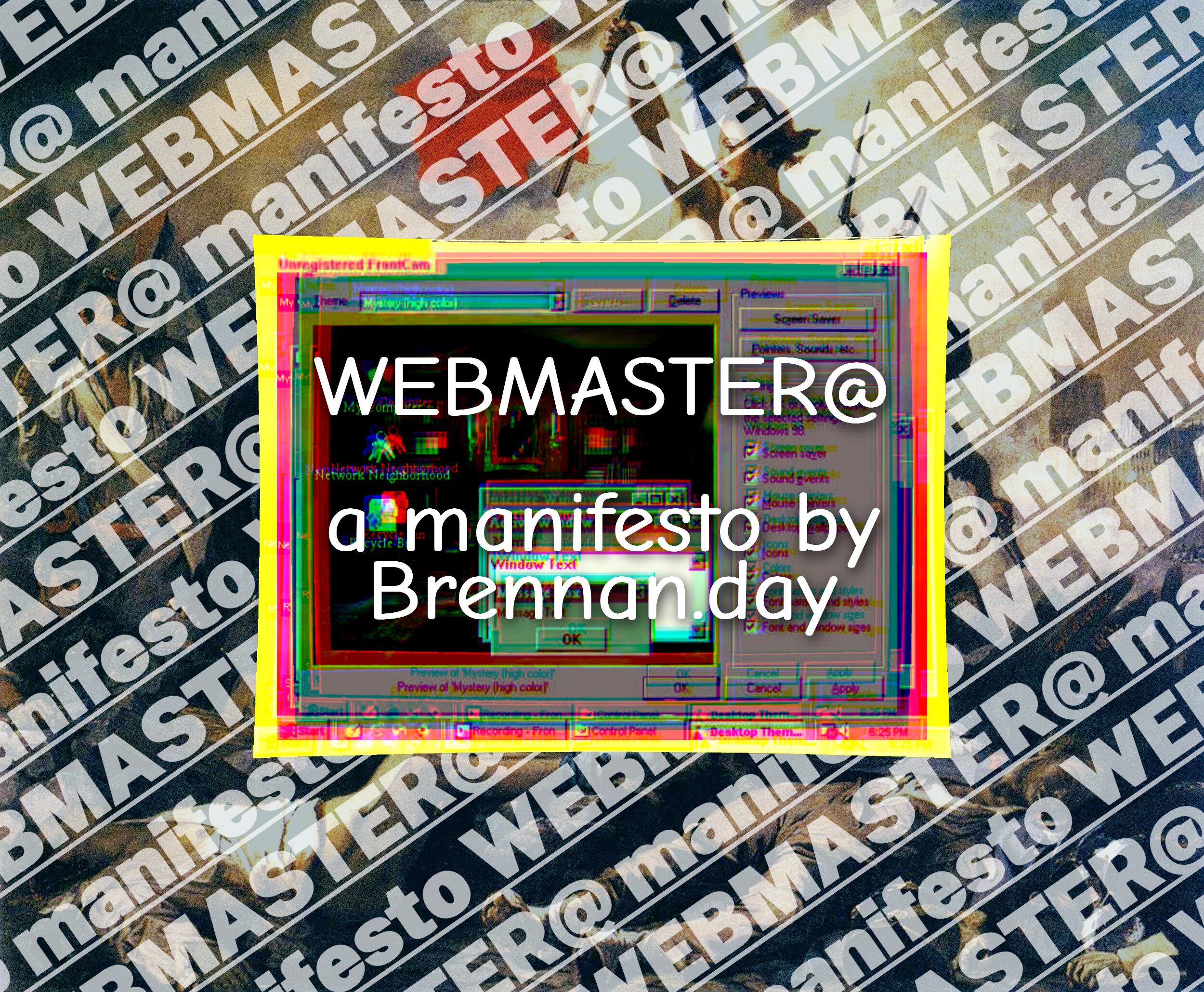
1: 'Liberty Leading the People' by Eugène Delacroix ca. 1830 | Wikimedia Commons // 2: Windows 98 Themes posted by /u/2ezyo | Reddit (edited by the Author)
A week ago, when I was working on my project for HTML Day 2026 I stumbled upon this passage from an essay on blink and marquee tags:
At the time, there was a new breed of web professionals proudly labeled “webmasters.” Part designer, part developer and part evangelist, webmasters held enough esoteric knowledge about the web to manage, edit and create websites, both large and small.
— Jay Hoffman (August 28th, 2017)
Over the past year, I've written dozens of articles on the Independent Web. Forty-two essays on principles, technical tutorials, accessibility, and advocacy.
And, in a way, it has all been leading to this manifesto. Only through months of research and getting to know many kind and talented people and building things myself have I finally understood the true power of the webmaster.
I think this will be the most important thing I'll ever write, and I wish to share it with you. With everyone.
The earliest webmasters were unauthorized, self-taught, one-person operations. The first webmaster was a woman, Stanford librarian Louise Addis.
It was a few years after Tim Berners-Lee christened the first web server at CERN at the end of 1990, and published the first website info.cern.ch on August 6th, 1991[1].
The webmaster was first understood as the Internet's equivalent to the real-world postmaster.
"Other protocols have defacto standards for well known mailbox names, such as USENET@domain for NNTP (see [RFC977]), and WEBMASTER@domain for HTTP (see [HTTP])."
— RFC 2142, "Mailbox Names for Common Services, Roles and Functions," Dave Crocker, Internet Mail Consortium. (May 1997)