// ARS TECHNICA — INTELLIGENZA ARTIFICIALE
Google Pixel 11 series review: Is the magic fading?
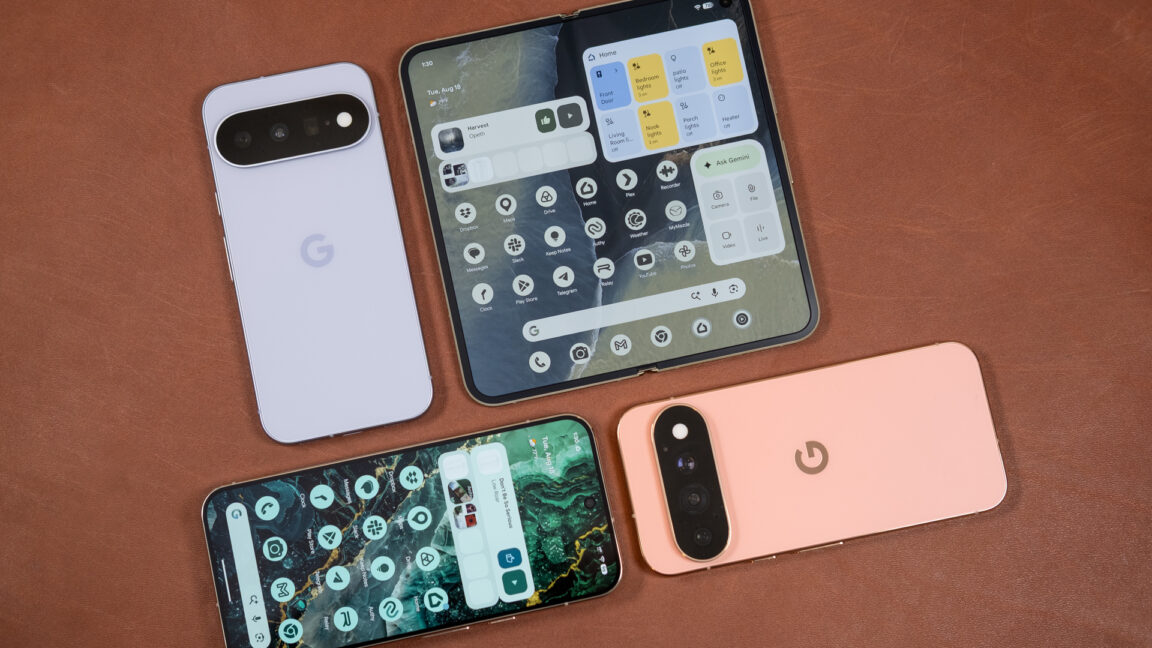
Google’s new Pixels make some compromises but still manage to be good phones.
Google’s approach to making smartphones has changed a lot over the years. It started with Nexus phones aimed at the tinkerer and enthusiast niche back when there were countless companies making smartphones. Today, there are far fewer, and Google’s hyper-polished Pixel lineup is seeing less competition and higher sales. So maybe Google thinks it can just keep doing what works. The new Pixel 11 series is Google’s most refined yet, featuring sleek designs, smart software, and incredible screens. They’re also rather boring.
Google made precious few hardware changes in its 2026 phones, shaving off a fraction of a millimeter here and dropping a gram there. The design language has been the same now for three generations, all while prices continue to inch upward. And this year, Google’s hardware has actually regressed in a few key areas. Despite that, the Pixel 11 phones aren’t bad—they’re some of the best 2026 has to offer. But it feels like Google is forgetting that it’s not just competing against Apple and Samsung. It also has to compete against the Pixels of yesteryear.
Just like last year’s Pixel 10 series, Google’s 2026 lineup includes three flat phones and one foldable. The flat Pixels are the same size, and even side-by-side, it’s hard to tell them apart from their predecessors. We’ve got almost identical aluminum and glass sandwich designs, which do admittedly look very nice. They still have Pixelsnap, too.
The Pixel 11s feel extremely solid, and Google has finally managed to make the buttons less wobbly. The base model Pixel also has a flatter camera bar, which makes it a little more pocket-friendly. The three flat phones are all still eSIM-only in the US—the international versions and the Pixel 11 Pro Fold retain their SIM card slots.
The Pixel 11 Pro and Pro XL keep the taller camera bar on the back, but it’s nice that the cameras are centered on the back, unlike Samsung phones. You can set a Pixel down on a table, and it’s stable enough to poke at. The Pixel 11 Pro Fold still has that off-center camera module, which makes it less stable.
The back of the phone is also home to the Pixel 11’s new HiLight module. This ring of LEDs is inside the camera flash of the Pro phones to act a bit like an old-fashioned notification LED. However, it’s mostly tied to Gemini to indicate when the AI is listening or responding. It also lights up to tell you when one of your favorite contacts calls. And that’s it.
HiLight only works when the phone is face down—if the accelerometer detects any other orientation, it won’t light up. So it really only makes sense if you’re using “OK Google” hotword detection and leaving your phone face down a lot. Annoyingly, you can’t even have the LEDs light up for text messages from your starred contacts.
It’s really a baffling addition to Google’s phones. It would be questionable even if it had all the functionality of a classic notification LED, but it barely does anything as it currently stands. Honestly, give me the thermometer back. That at least had a theoretical use, even if it didn’t come up very often. HiLight has been so hobbled that it might as well not exist. Google says more features will be added later, but why the slow drip? We had notification LEDs figured out 20 years ago.
The displays on the Pixel 11 OLED screens are all fantastic, and Google says they’re twice as scratch-resistant now. While the base model stayed the same, all the other screens got a little brighter this year. These phones are perfectly legible in bright outdoor light, even the Pixel 11 that remained at 3,000 nits. The other phones have a peak brightness of around 3,600 nits. They are a bit more reflective than Samsung’s latest flagship phones, which have an anti-reflective quality, but the Pixels still look great. The Pixel 11 Pro Fold’s internal screen is a bit too reflective due to its plastic top layer, though. So far, Samsung is the