// SPACE.COM — SPAZIO & SCIENZA
A SpaceX rocket slammed into the moon this month — and a NASA spacecraft has spotted its lunar grave (photos)
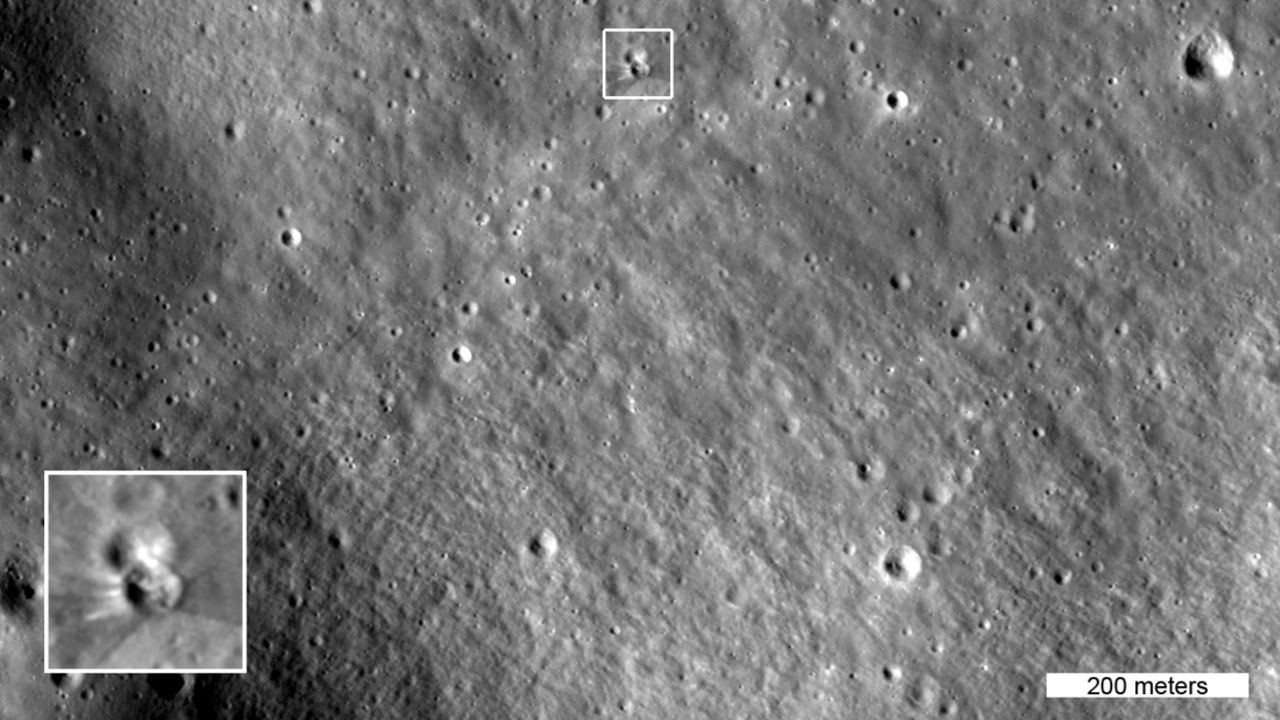
The newly formed crater is about 60 feet (18 meters) wide.
When you purchase through links on our site, we may earn an affiliate commission. Here’s how it works.
NASA's veteran moon-circling spacecraft, the Lunar Reconnaissance Orbiter (LRO), has imaged the impact site of that errant Falcon 9 upper stage.
The photos were taken on Aug. 11 and Aug. 12, just a few days after the SpaceX rocket body slammed into the moon near Einstein Crater at 5,400 mph (8,690 kph).
LRO's high-resolution camera system, known as LROC, got good views of the aftermath from a variety of angles, snapping away every 117 minutes, the time it takes the orbiter to circuit the moon.
According to LROC Principal Investigator Mark Robinson, who's based at the Houston company Intuitive Machines, the newly formed impact crater is about 60 feet (18 meters) wide and appears to be less than 10 feet (3 m) deep.
"The distinctive V-shaped ejecta pattern on the south side of the crater is consistent with natural impactors hitting the moon at low angles relative to the surface," said Robinson.
The sixth (and final) image in LROC's sequence of the new crater, he added, was acquired with the largest slew angle (68 degrees), presenting a view similar to what an Artemis astronaut would see looking out his or her Orion spacecraft window toward the lunar horizon.
To capture imagery of the impact site, LRO operators tilted the spacecraft so its cameras would point toward the target region each time the spacecraft passed about 60 miles (97 km) above the moon. In doing so, researchers could see the crater under multiple lighting conditions that revealed impact features.
According to NASA, the LRO imagery shows bright and dark rays stretching out from the crater.