// SPACE.COM — SPAZIO & SCIENZA
Partial lunar eclipse live: Latest news, viewing tips and live updates from Aug. 27-28 eclipse
When you purchase through links on our site, we may earn an affiliate commission. Here’s how it works.
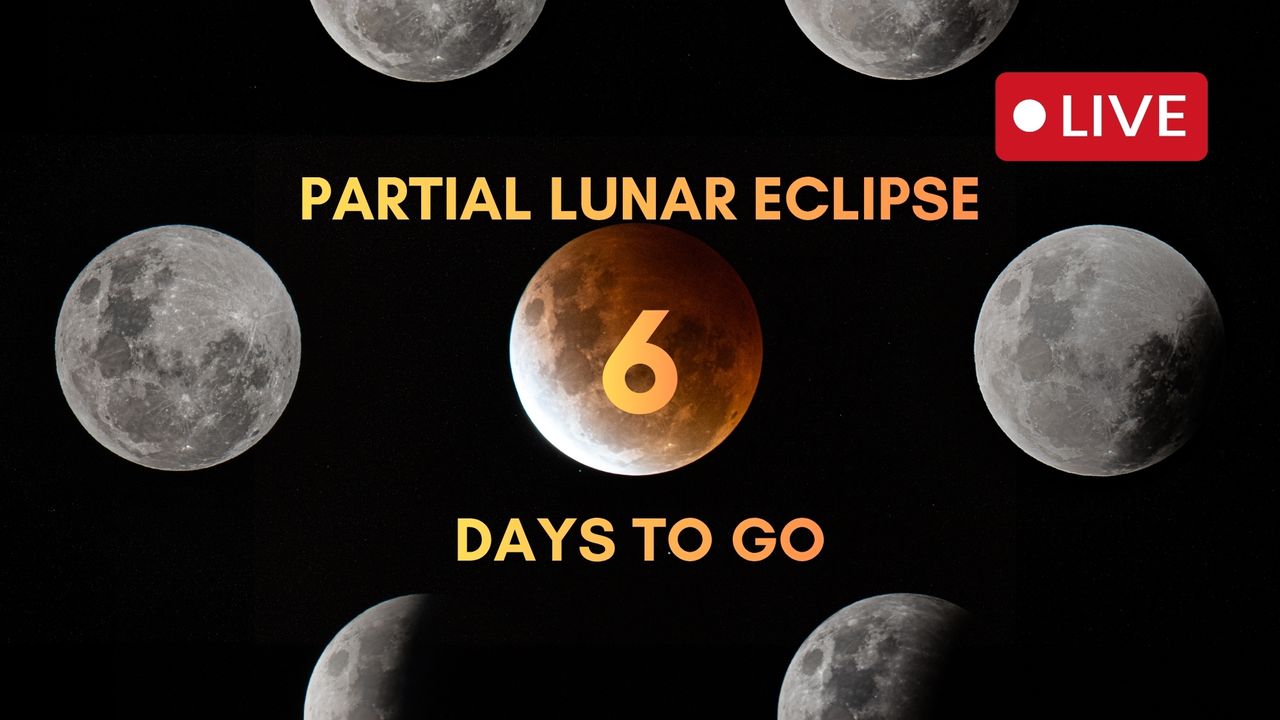
The countdown is on for the deep partial lunar eclipse of Aug. 27-28. Over the next week, we'll be bringing you the latest eclipse news, viewing tips as well as live updates throughout eclipse night.
Although this isn't quite a total lunar eclipse, it's pretty close! At maximum eclipse, 96.2% of the moon will slip into Earth's dark central shadow known as the umbra, according to Time and Date. Much of the moon may take on a rusty red hue, while a thin sliver remains brightly illuminated.
It's the deepest partial lunar eclipse visible anywhere on Earth until Dec. 31, 2028, making it a must-see event worth staying up late — or setting an alarm early — for.
When most people hear the words "partial lunar eclipse," they might often assume it will be less impressive than a total eclipse, and not really worth the effort to try and see it. But the Aug. 27-28 eclipse is anything but ordinary.
At maximum eclipse, 96.2% of the moon will be immersed in Earth's umbra, the darkest part of our planet's shadow. That means only a thin sliver of the lunar surface will remain directly illuminated by the sun, while the rest of the moon will take on a deep reddish-orange hue.
If you miss this one, you'll have to wait until Dec. 31, 2028 for another lunar eclipse that rivals it in spectacle. So whether you're planning on staying up late in the US or setting your alarms early in Europe, this is one skywatching show that's well worth making time for!
We're officially one week away from one of the best skywatching events of the year!
On the evening of Aug. 27 (for North America), or the early hours of Aug. 28 (for western Europe), Earth's shadow will creep across the full moon during a very deep partial lunar eclipse. At maximum eclipse, 96.2% of the moon will be immersed in Earth's dark central shadow.
The eclipse will be visible, at least in some part, from North and South America, Europe, Africa and parts of western Asia, weather permitting. Observers in the Americas are well-positioned for the best views while skywatchers across Europe will need to look toward the western horizon before sunrise as the eclipse reaches its peak.