// ARS TECHNICA — MOBILE & WEB
Report: Kennedy Space Center not ready for era of super heavy rockets
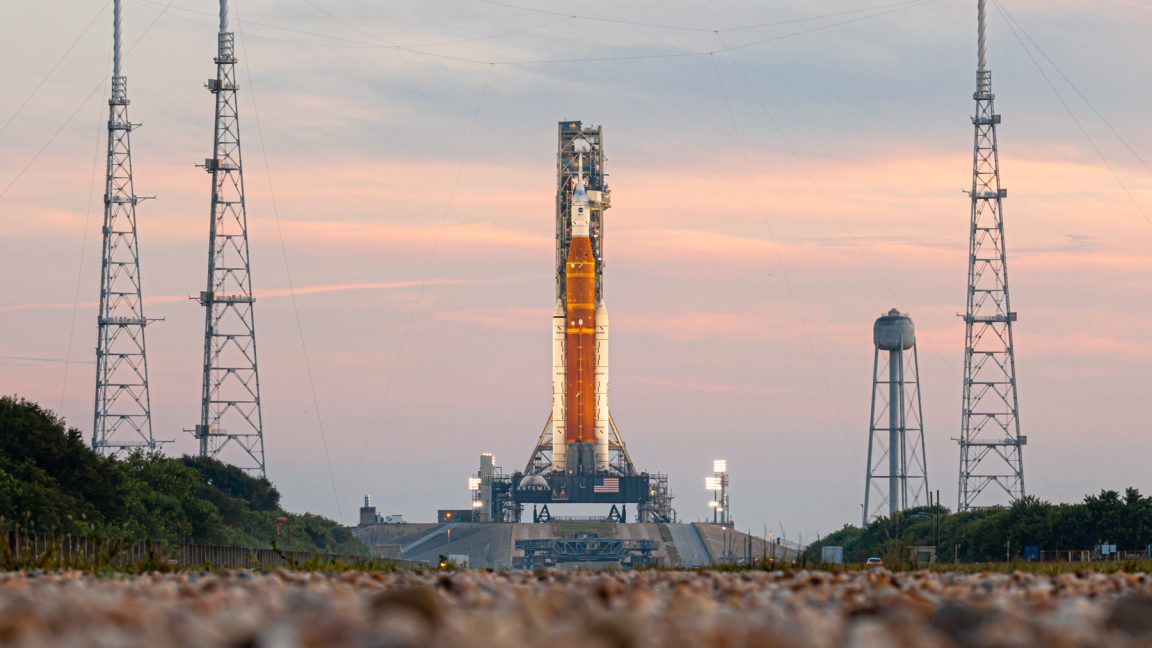
SpaceX has told NASA it plans to launch Starship every eight days from Kennedy.
NASA’s infrastructure at Kennedy Space Center, the crown jewel of US spaceports, is aging and approaching its limit due to increased demand from private companies, including SpaceX and Blue Origin, a new report finds.
“NASA’s launch infrastructure is vital to providing the agency, other government agencies, and commercial partners access to space for their most complex and expensive missions,” states the report, published by the NASA Office of Inspector General. “Nevertheless, NASA’s launch infrastructure is dated and often does not provide the capacity to meet the growing demands of the agency and its partners.”
The report covers NASA’s launch facilities at the Kennedy Space Center in Florida and Wallops Flight Facility in Virginia. However, the most noteworthy information in the report concerns the Florida spaceport, where demand from SpaceX’s Starship and Blue Origin’s New Glenn launch vehicles is expected to stress NASA.
NASA only has a handful of launch pads at Kennedy. Launch Complex 39A is currently leased by SpaceX for Falcon 9 and Falcon Heavy launches, and also houses a new launch facility that will soon support Starship launches. Launch Complex 39B is home to NASA’s Space Launch System rocket, and Launch Complex 39C has not been used due to its proximity to this pad. Finally, NASA has built a 10-acre site, Launch Complex 48, that it may lease to small launch vehicle companies.
The space agency’s neighbor to the south, Cape Canaveral Space Force Station, has many more pads. This includes the Launch Complex 36A and 36B leased to Blue Origin for the New Glenn rocket.
Although the Space Force manages its own launch facilities, the military works closely with NASA and they share some responsibilities. Most critically, there are supply lines for helium and nitrogen, as well as 231 miles of paved roads and bridges that serve both Kennedy and Cape Canaveral. Additionally, the report cites serious concerns about a six-decade-old electricity distribution system for NASA’s launch pads.
One example of overcapacity cited by the report concerns the availability of gaseous nitrogen used during the fueling, testing, and launching of rockets. During the Artemis I launch campaign in 2022, there were issues with the availability of enough nitrogen to support the rocket. But according to the report, the problem has not gone away.
“The system cannot simultaneously support launches … of Blue Origin’s New Glenn launch vehicle at Space Launch Complex 36 and United Launch Alliance’s Vulcan Centaur launch vehicle at Space Launch Complex 41,” the report states. “Blue Origin officials stated this issue created a major scheduling challenge during preparation for the New Glenn-1 mission that launched in January 2025, and further expressed concern that during future Space Launch System launches there could be 1- to 2-month blackout periods from the pipeline.”
The solution for this is to construct a new gaseous nitrogen system to supplement the existing capacity, but the $25 million project is currently unfunded.