// ARS TECHNICA — INTELLIGENZA ARTIFICIALE
AI won’t replace radiologists, but it will dramatically change their jobs
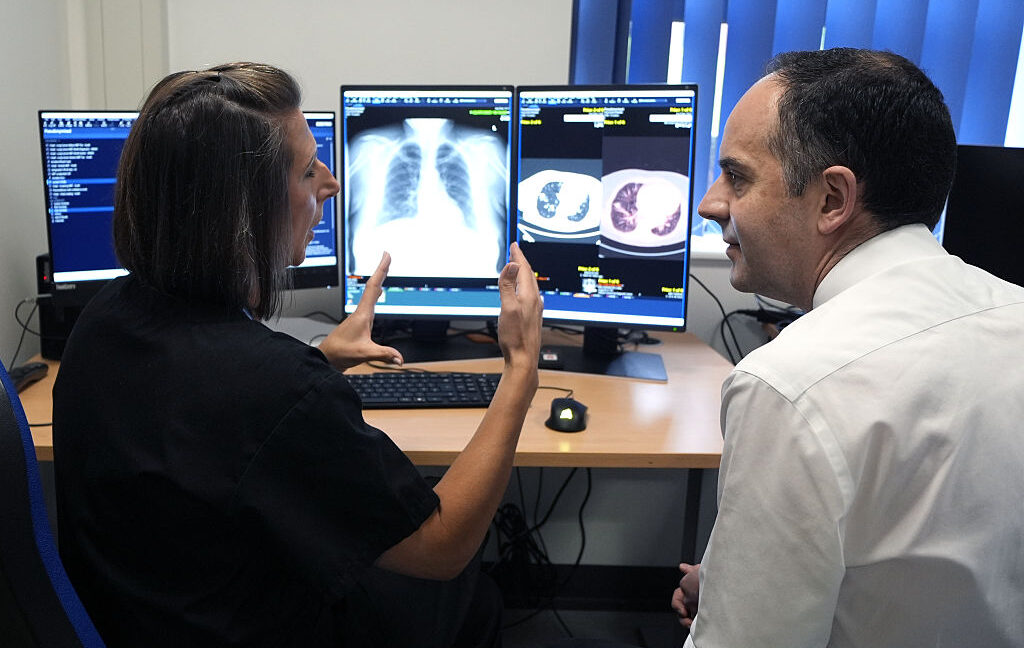
A pioneering AI scientist once predicted computers would replace human radiologists. They haven’t.
In 2016 Geoffrey Hinton, the Nobel-winning “godfather of AI,” predicted that radiologists—the physicians who read X-rays, ultrasounds, and other images to help make medical diagnoses—would find themselves replaced by computers within five years. Today the field can retort by quoting Mark Twain’s famous quip: The report of my death was an exaggeration.
Radiology’s ranks are in fact growing steadily, with the number of practitioners expected to expand by 26 percent or more over the next three decades. But what Hinton may have missed about the dynamics of the job market should not obscure his prescience: He was correct that human physicians now have a silicon-based colleague in the room that matches or exceeds their performance. In fact, radiology is far and away medicine’s hot spot for AI, making it a bellwether for the adoption of expert decision-making systems across healthcare and perhaps in other fields.
As of early 2026, about three-quarters of the 1,400 AI-enabled medical devices cleared by the Food and Drug Administration were for radiology. Some make physicians more efficient by drafting reports or alerting them to the images that urgently need attention. But other AI tools have the potential to improve on human performance by identifying abnormalities that may not be visible to the human eye, or interpreting images as well as—and sometimes better than—trained radiologists. For example, an analysis of 43 clinical trials concluded that AI-assisted colonoscopies reveal more polyps than conventional ones.
Improving accuracy is important, because the average human error rates involving diagnostic images are estimated to range from 3 to 5 percent, which translates to about 40 million errors worldwide each year. Yet the solution is not as simple as replacing humans with machines. Ten years after Hinton’s sensational prediction, the big question is not whether humans or AI do statistically better at a given task, but how the technical precision of AI can be combined with the experience and flexibility of humans to improve accuracy for the benefit of patients.
Finding the best way to design such a collaborative system is not straightforward. Even if AI is more reliable on average than a skilled radiologist at interpreting certain images, it is still going to make some mistakes that humans would not, says radiologist Curtis Langlotz, director of the Center for Artificial Intelligence in Medicine and Imaging at Stanford University. That puts radiologists in the role of evaluating each AI decision—the vast majority of which will be correct—and identifying the rare instances when the algorithm got it wrong.
“This requires a whole mental rewiring,” says radiologist Paul Yi, section chief of intelligent imaging informatics at St. Jude Children’s Research Hospital in Memphis, Tennessee.
Physicians have grown used to overruling computers, but this moment is different. Electronic medical record alerts triggered by rule-based algorithms have been warning physicians for decades about things like potentially dangerous drug interactions. Physicians typically override those warnings about half the time, Langlotz says. “I’m going to get some advice from the computer and I’m going to have to evaluate that in the context of all the other information I have about that patient and just make the best decision,” he says.
In contrast, AI image analysis systems in radiology are usually based on neural networks that can identify tumor subtypes, outline the boundaries of lesions, and perform other diagnostic tasks with high accuracy. Unlike rules-based algorithms, which give answers or prompts that doctors can quickly interpret based on their own medical knowledge, neural networks are referred to as “black box” systems. These AI models typically do not reveal how they reached a decision, which makes a radiologist’s job of deciding whether to veto i