// SPACE.COM — SPAZIO & SCIENZA
September full moon 2026: When, where and how to see the Harvest Moon
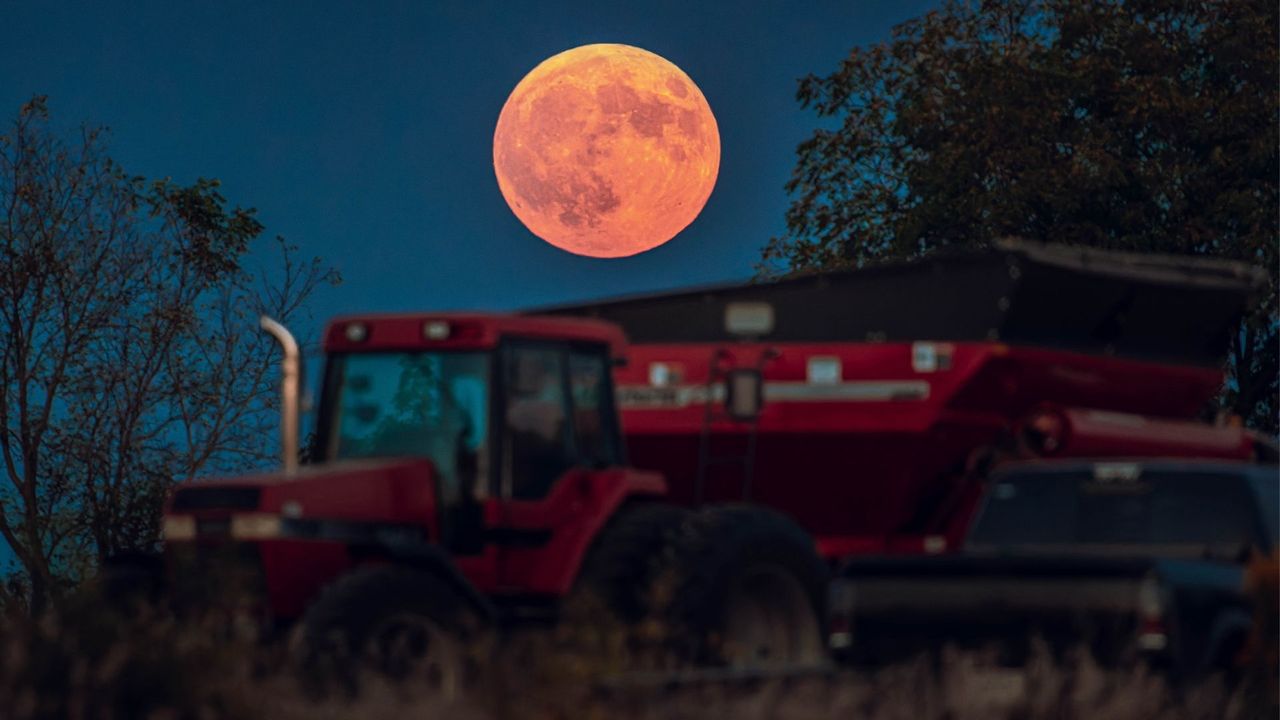
Your guide to September's full Harvest Moon, from peak times to skywatching highlights.
When you purchase through links on our site, we may earn an affiliate commission. Here’s how it works.
The full moon of September 2026 will occur at 12:49 p.m. EDT (1649 GMT) on Sept. 26 as the moon glows opposite the sun in Earth's sky.
September's full moon is often referred to as the Harvest moon — a traditional name for the full moon that falls closest to the September equinox, according to the Old Farmer's Almanac.
Sadly, the sun, Earth and moon won't line up again to create a spectacular lunar eclipse, as was the case in August. But it'll still present a magnificent treat for stargazers hoping to explore the majesty of the lunar disk with the naked eye, a telescope, or a camera.
Stargazers in the U.S. will get their first look at the Harvest Moon when it rises over the eastern horizon among the stars of the constellation Pisces at sunset on Sept. 26.
The moon will adopt a beautiful yellow-orange glow as its reflected light is filtered through Earth's atmosphere while close to the horizon, thanks to a process known as Rayleigh scattering. That strange hue will gradually fade in the hour following moonrise, as Earth's satellite arcs away from the skyline.
Its disk will appear particularly large while close to the horizon thanks to a phenomenon called the "Moon Illusion", which tricks our senses into thinking that the lunar disk is larger than it really is while close to the horizon, as opposed to when it glows directly overhead.
The table below details local full moon timings for when the moon is 100% illuminated for a selection of cities spread across the globe (local moonset and moonrise times will vary based on your location):
The September full moon is called the Harvest Moon when it is the closest full moon to the September equinox, when the sun crosses the celestial equator moving from north to south, marking the beginning of astronomical autumn in the northern hemisphere.