// HACKER NEWS — CYBERSECURITY
Why humanoid robots won't catch up to human workers any time soon
Today’s Robot Week article is sponsored by 80,000 Hours, a non-profit that helps early-career professionals make the most of their careers.
If you’ve been paying any attention to the robotics world in the last couple of years, you’ve probably noticed that humanoid robots are getting better at an impressive pace.
In October 2024, Elon Musk had several of Tesla’s Optimus robots serving drinks at an event unveiling Tesla’s new Cybercab.
“Optimus is not a canned video. It’s not walled off. The Optimus robots will walk among you,” Musk said at the event.
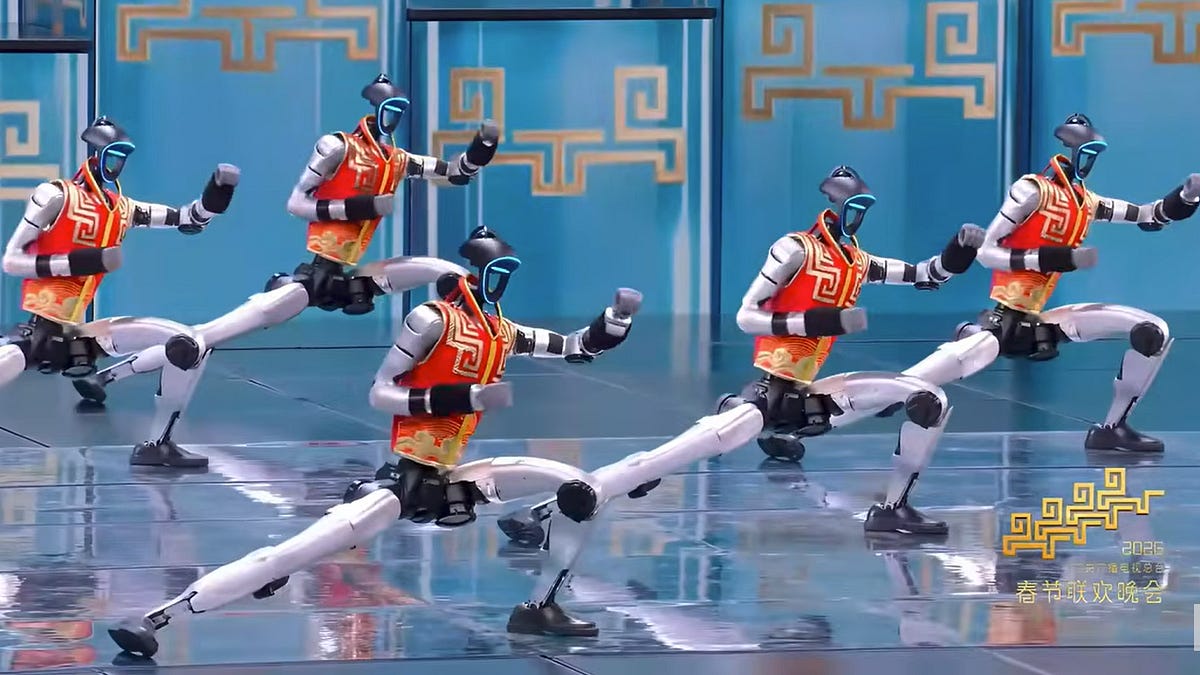
Then in February 2026, the Chinese company Unitree staged a stunning martial arts performance at the Spring Festival Gala in Beijing. A mixed cast of humans and humanoid robots carried out a perfectly synchronized, fluid dance routine. Robots performed spins, jumps, and even backflips.
It was a big improvement over the 2025 show, which featured robots walking stiffly across the stage while waving handkerchiefs.
Just last week, at the 2026 World Humanoid Robot Games in Beijing, a robot ran 100 meters in 8.86 seconds, crushing Usain Bolt’s human world record of 9.59 seconds. At last year’s competition, the fastest robot took more than 20 seconds to run 100 meters.
Demonstrations like these have impressed a lot of casual observers — and created a lot of anxiety about future job losses. If humanoid robots can already serve people drinks, perform elaborate dance routines, and outrun humans, how long will it be before they put millions of people out of work?
But if you talk to robotics experts — and I’ve talked to many in recent months — a more nuanced picture emerges.
As Physical Intelligence co-founder Karol Hausman put it, people (including himself) “are not very good at judging progress in robotics or judging what is impressive and what isn’t.” Sure, robots can do acrobatic maneuvers that are “very difficult for a human to do,” he said. But then “something as simple as picking up a Coke can turns out to be very, very difficult.”