// ARS TECHNICA — MOBILE & WEB
13 years and $500 million for a stage adapter? Report justifies NASA cancellations.
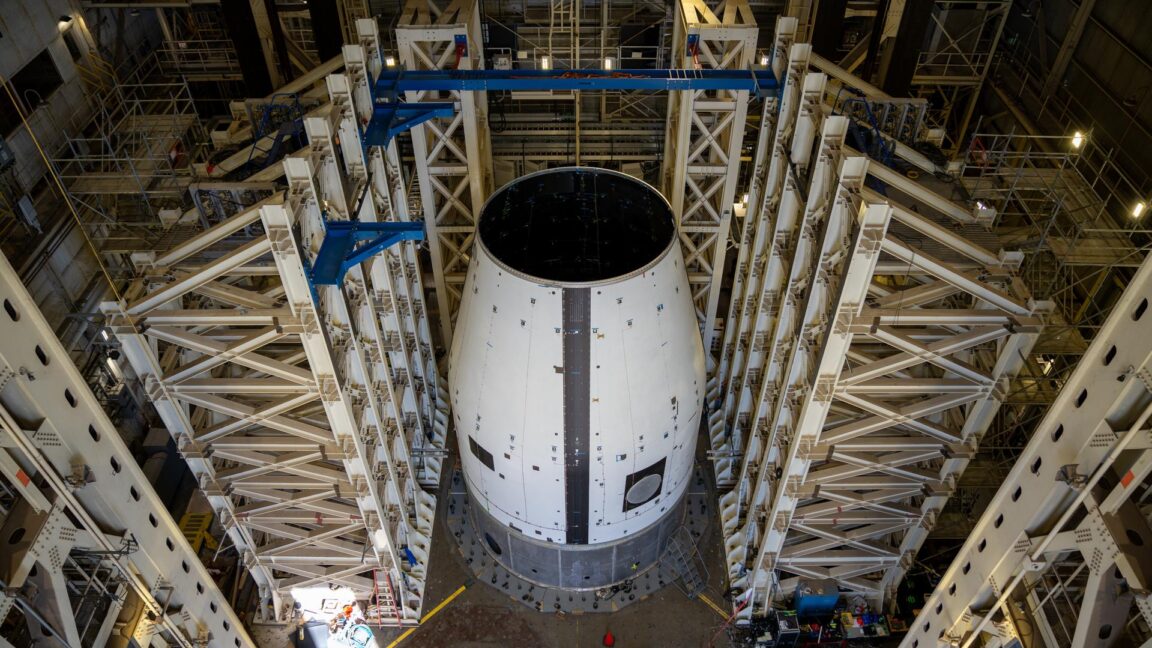
“Contract values for these efforts ballooned from nearly $2.8 billion to $5.9 billion.”
Three months ago, NASA Administrator Jared Isaacman announced the space agency was making a major pivot from building a space station in lunar orbit to a base on the surface. This “Ignition” event followed an earlier announcement in which NASA also said it was ending development of a new upper stage for its Space Launch System rocket.
In the aftermath of these decisions, there was some grumbling—mostly from contractors involved with the programs—that NASA was foolishly walking away from nearly complete hardware that the space agency needed for its Artemis Program.
Isaacman said these programs were not essential for landing humans on the Moon, and added that they had cost far more than originally budgeted and had been subjected to years of delays. Moreover, they were still not ready.
“For too long we tried to satisfy every stakeholder,” he said during the Ignition event in March. “Billions of dollars wasted. Years lost. Hardware that never launched. Fewer flagship science missions. And fewer astronauts in space, which means fewer kids dressing up as astronauts for Halloween. I don’t like it. The president doesn’t like it. The American people have waited long enough.”
On Wednesday, NASA’s Office of the Inspector General prepared a memorandum on the elements of the Artemis Program that NASA was canceling as its focus shifted to the Moon’s surface. These were:
The memorandum notes that each of these projects has experienced substantial cost increases and numerous delays over the last decade.
“Over the course of their life cycles, the combined contract values for these efforts ballooned from nearly $2.8 billion to $5.9 billion and NASA extended their contracted delivery dates by up to seven years,” states the report by the inspector general. “However, our projections indicate that if NASA allowed work to continue to completion, the systems would have cost more and taken longer than what was on contract.”
In a written response to the report, the chief of NASA’s Human Spaceflight Directorate, Lori Glaze, said the data in the memorandum support NASA’s decision to cancel these programs earlier this year.
“NASA notes that the challenges summarized in the memorandum—cost growth, schedule slips, contractor performance issues, and evolving mission requirements—reinforce the rationale behind the decisions publicly announced during Ignition Day to streamline the Artemis architecture, modernize acquisition practices, and align programs with the nation’s objectives for sustained lunar presence,” Glaze wrote.