// NATURE NEWS — SPAZIO & SCIENZA
Ada Yonath obituary: Crystallographer who overcame ‘impossible’ challenge of mapping the ribosome
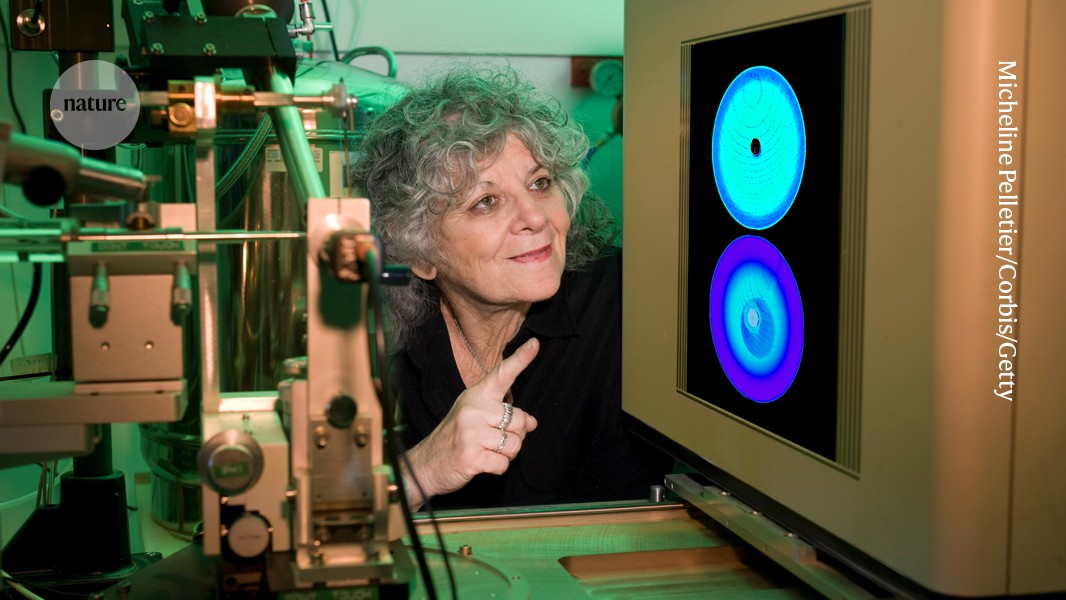
Georgina Ferry is the author of Dorothy Crowfoot Hodgkin: Patterns, Proteins and Peace, a Life in Science (2019).
Search author on:
PubMed
Google Scholar
Grit and determination feature in most scientific careers, but the Israeli structural biologist Ada Yonath surmounted more obstacles than most. Yonath was the first to grow crystals suitable for X-ray analysis that would reveal the structure of the ribosome — a macromolecular complex that functions as a factory for proteins in living cells and is fundamental to implementing the genetic instructions to make a living organism. For this work, she won a share of the 2009 Nobel Prize in Chemistry.
Yonath was the fourth of eight women ever to win the chemistry Nobel, and the first since Dorothy Crowfoot Hodgkin, 45 years previously. But she never saw her gender as important, saying, “I am a scientist, not male or female. A scientist.”
Yonath, who has died aged 87, explored the interaction of antibiotics that were known to exert their effects through binding to bacterial ribosomes. These studies not only revealed how such compounds disrupt ribosomal function, but also shed light on antibiotic resistance and opened up the possibility of designing new drugs.
Making samples one billion times bigger lets simple microscopes pinpoint amino acids
Born Ada Lifshitz in Jerusalem to an impoverished Orthodox Jewish family, Yonath lost her father when she was 11 years old. Her parents had little education themselves, but they encouraged her insatiable curiosity. Despite having to take evening and weekend jobs to support her family, she graduated from Beit Hakerem (now Hebrew University Secondary School), an academically rigorous secular institution, and completed undergraduate and master’s degrees at the Hebrew University of Jerusalem. She obtained a doctorate in structural biology at the Weizmann Institute of Science in Tel Aviv, Israel, working on the protein collagen.
After completing postdocs at the Mellon Institute (a forerunner of Carnegie Mellon University) in Pittsburgh, Pennsylvania and at the Massachusetts Institute of Technology in Cambridge, she returned to the Weizmann Institute in 1970 to set up Israel’s first biological crystallography laboratory. Although she initially studied individual proteins, she conceived the idea of working out the structure of the ribosome.
It was an impossible task with the technology available at the time, and she was widely ridiculed. The ribosome is composed of a large and a small subunit, which together comprise a complex of protein and ribosomal RNA amounting to some hundreds of thousands of atoms — more than ten times larger than any molecule solved previously.
How to win a Nobel prize: what kind of scientist scoops medals?