// ITS FOSS — LINUX & OPEN SOURCE
Terramaster F4-425 Pro: An Hardware Upgrade for an Already Solid NAS
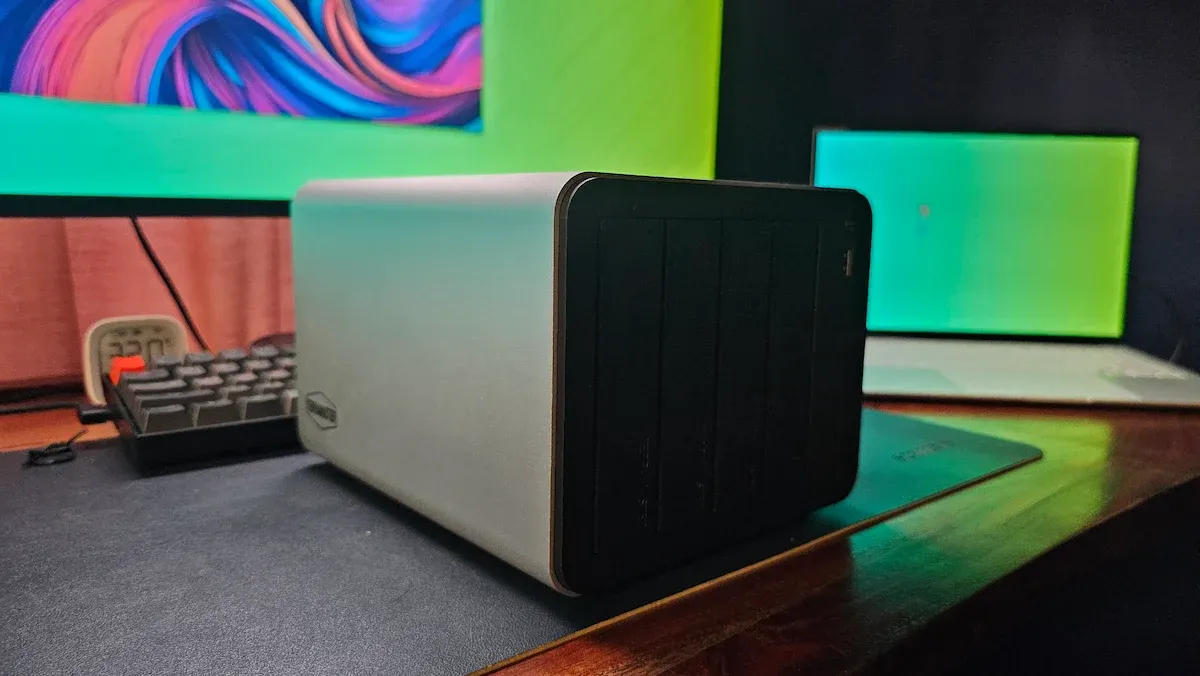
Terramaster F4-425 Plus was the first NAS I ever used in my hoemlab setup. It's a solid device for a NAS. Not too expensive, silent and has a decent operating system. The hybrid HDD+SSD model along with TRAID and built-in backup tools makes it a good NAS choice.
Now Terramaster has refreshed their F4-425 series with a Pro model. The main thing that changes here is the CPU. There is also a revamped operating system in the form of TOS 7 but that should be available on previous F4-425 models, too.
The new F4-425 is still a solid device, hardware wise. Operating system has rough edges and hopefully it will improve in the future updates if Terramaster is serious on this product. They usually are.
I have used the device for a few days as it's a new device and I have been travelling to other cities for most of the past few weeks. So what I am sharing here are more of first impressions. A more thorough review with extended daily use will follow.
Still, there is enough here to give you a useful picture of where the F4-425 Pro stands right now.
Visually, the F4-425 Pro is identical to the Plus. Same aluminum chassis, same front layout with four HDD bays and a single USB-A port, same rear port arrangement. There is no design refresh here. You cannot distinguish between the two by just looking at them from the outside.
What changed is the processor primarily. The Plus had an Intel N150 with 4 cores. The Pro moves to the Intel Core 3 N350 with 8 cores and a 7W TDP. The integrated GPU gains 32 execution units versus 16 to 24 on the Plus, which matters for hardware-accelerated transcoding. My unit is the top configuration with the N350 and 16GB DDR5.
The 8-core upgrade is meaningful for a NAS running multiple Docker containers, simultaneous services, and media transcoding. There is also a cheaper N305 variant at $699.99 with 8GB less RAM, but given how much a NAS tends to do in parallel, I would lean toward this configuration.
One constraint worth noting is that there is only one SODIMM slot. If you want to upgrade beyond 16GB later, you will need a single module of single-rank DDR5.
Before the hardware rundown, I want to share something I stumbled into during setup that I did not know before and found genuinely useful.