// HACKER NEWS — CYBERSECURITY
A Tesla ran a stop sign and killed a man, Full Self-Driving/Autopilot was on
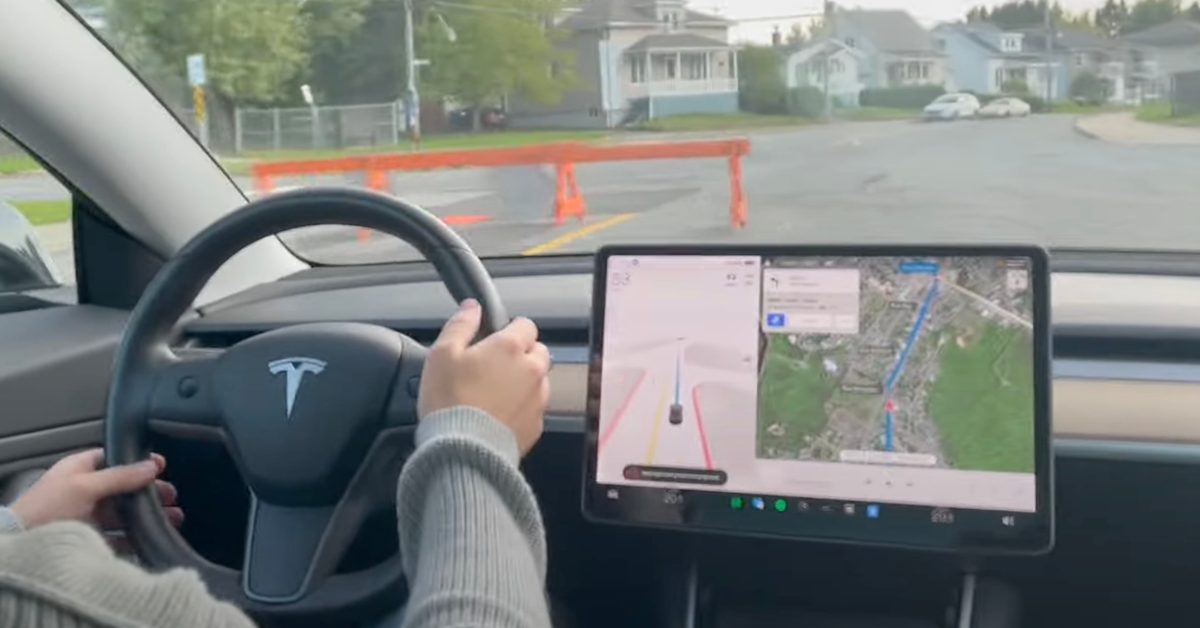
A Tesla Model 3 ran a stop sign in Buena Vista Township, New Jersey, and hit a Honda Civic turning left through the intersection. The Civic’s driver, 82-year-old Stephen Field, was killed.
Police reported it as a car that failed to stop. What no one reported is that Tesla’s own data says the car’s driver-assist system was engaged. This is part of an ongoing Electrek investigation matching reported crashes to Tesla’s redacted NHTSA data.
Around 6:57 p.m. on Sunday, July 6, 2025, New Jersey State Police troopers were called to the intersection of County Route 671 and Chestnut Avenue in Buena Vista Township, in Atlantic County. A Tesla Model 3 failed to stop at a stop sign and struck a Honda Civic that was making a left turn, NJSP spokesman Jeffrey Lebron said.
Field, the Civic’s driver, suffered fatal injuries. The Tesla’s driver and three passengers were hurt and taken to a hospital with moderate injuries. The crash is still under investigation.
The handful of local reports described it as a Tesla that ran a stop sign. None mentioned Autopilot, “Full Self-Driving,” or any driver-assist system. As far as the public knew, this was an ordinary human-error crash.
It wasn’t. Under a NHTSA Standing General Order, automakers must report crashes where a Level 2 driver-assist system was engaged within 30 seconds of impact. Tesla filed a report on this one.
In it, Tesla identifies the car as a 2019 Model 3 and marks the automation “Engagement Status” as “Verified Engaged” — meaning it confirmed through its own telematics that the system was active. It logs a fatality, and it says it holds the event-data recorder and telematics from the car.
Then it redacts the three fields that would explain what happened: the crash narrative, the software version, and whether the road was within the system’s approved operating area. All blacked out as “confidential business information,” the same redactions Tesla applies to 99.9% of its reports.
Because Tesla redacted the software version, we can’t say for certain whether this was basic Autopilot or “Full Self-Driving.” But the intersection points to FSD.
Reading a stop sign and deciding whether to stop is a City-Streets function, and that’s FSD. Basic Autopilot is built as a highway lane-keeping system, and it does not respond to stop signs. So a driver-assist car verified engaged as it ran a stop sign was, most likely, running FSD.