// HACKER NEWS — CYBERSECURITY
Show HN: Copperhead – Hardware as Fast as Software
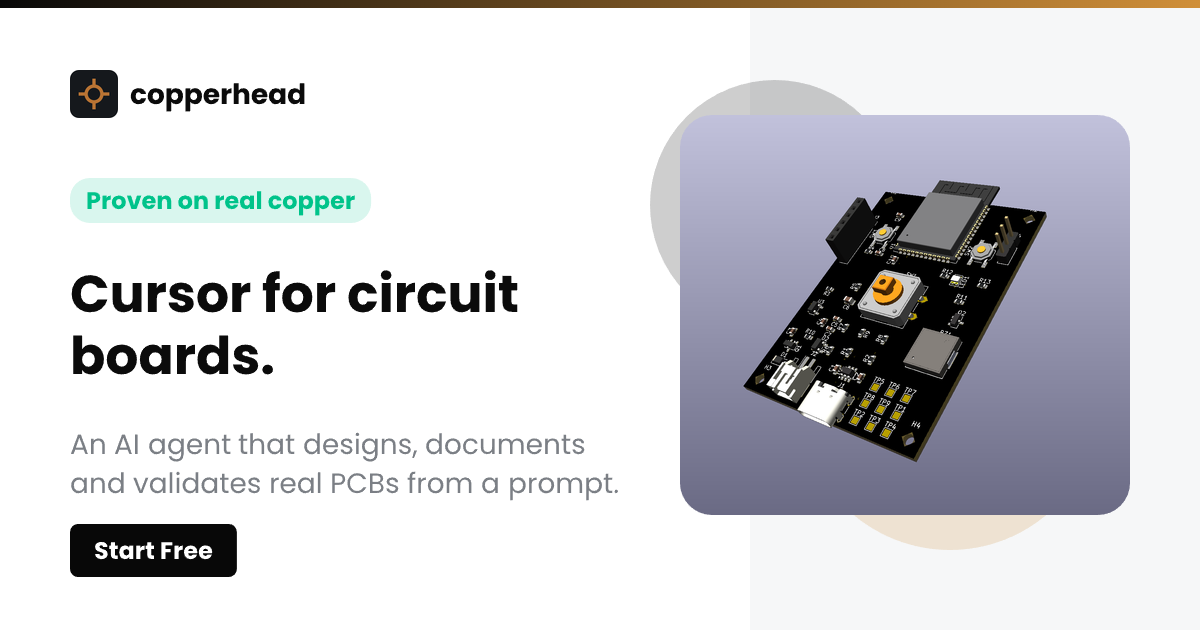
Copperhead is an open-source AI engineering platform that helps hardware teams design, verify and ship circuit boards.
Open Telegraph: pocket-size ESP32-S3 Morse key, built end to end with this workflow. Every decision, every check, every file is public.
You write the brief. copperhead runs eight stages against it, each one its own agent run, each one committing only once its gate finds the work on disk. A run that goes wrong stops instead of drifting.
copperhead is open core. The CLI is free and always will be, and it does the real work on its own. You pay to host it, to work as a team or to give an auditor what they ask for.
Self-hosted, built for procurement, one price a year.
An open source AI agent that designs, documents and verifies printed circuit boards. You describe a change or hand it a product brief, and it edits your real KiCad files, updates every document that references them, and runs KiCad's own checks until they pass. Longer introduction here.
Drift. A hardware design spreads one decision across a schematic, a bill of materials, a power budget and several documents, and nothing breaks when they fall out of sync. The inconsistency is found at bring-up, and a respin costs 5,000 to 50,000 dollars and six to eight weeks. The full argument is here.
Node 20 or newer, KiCad with kicad-cli on your path and a model API key of your own. Then npm i -g copperhead.
That is the main case. Point it at a KiCad repository, run copperhead init and start asking for changes. It can also run the full pipeline from a written brief with copperhead create, but iterating on real designs is what it is best at.
It refuses to run on a dirty git tree, refuses to edit any design file before a validated change proposal exists and refuses changes that break a budget or constraint you have documented, citing the line it would violate. It also never invents a part number it cannot justify from a datasheet.