// SPACE.COM — SPAZIO & SCIENZA
2 satellites just burned up in Earth's atmosphere — and scientists were watching from a private jet. Here's why
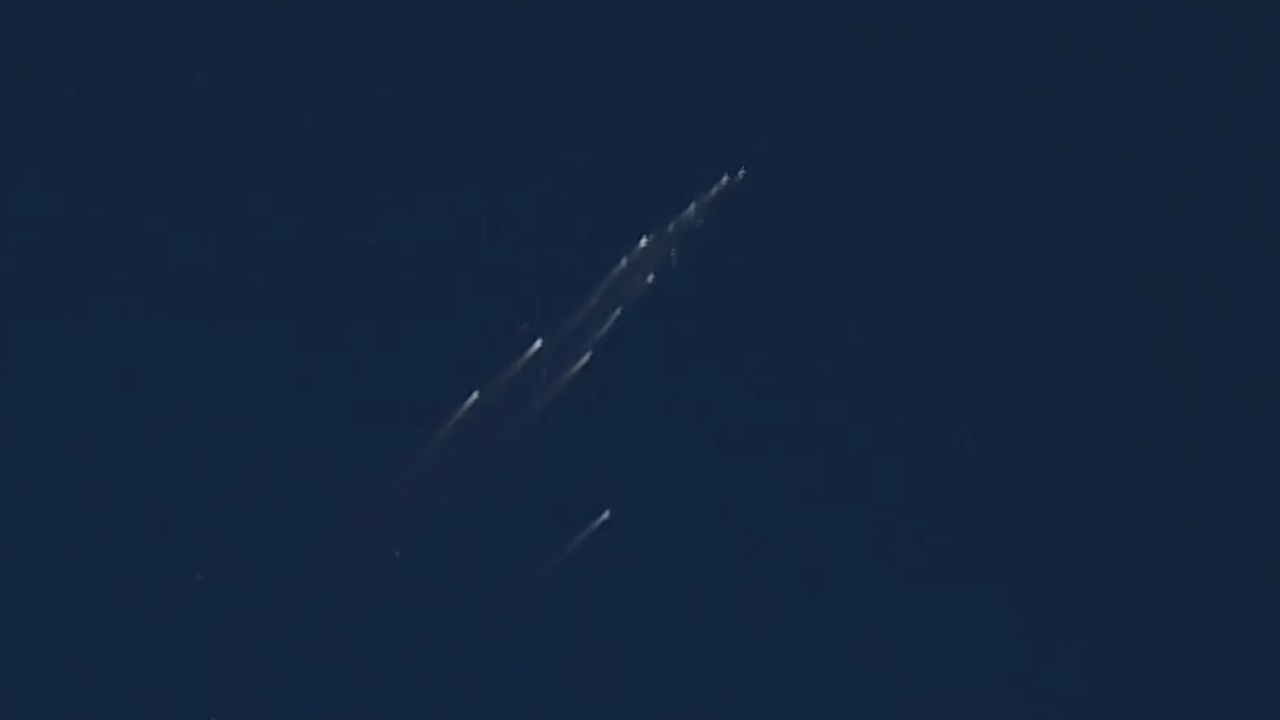
"There was a sudden explosion as the satellites disintegrated."
When you purchase through links on our site, we may earn an affiliate commission. Here’s how it works.
A team of researchers just chased a pair of reentering satellites in a private jet to learn about the pollution caused by space debris burning up in Earth's atmosphere.
The satellites in question were the European Space Agency's (ESA) Tango and Samba spacecraft, which once formed the Cluster constellation, together with the already de-orbited Rumba and Salsa. The quartet used to study the interaction of Earth's magnetic field with the solar wind. After 25 years of service, ESA took advantage of the Tango and Samba's controlled demise to help scientists learn what happens when satellites break apart and burn up during their spiral back to Earth.
The international team of researchers chased the two reentries, which occurred one day apart — on Aug. 31 and Sept. 1 — above the southern Pacific Ocean a few hundred miles from the Polynesian archipelago of Tonga.
Their goal was to understand what happens when satellites disintegrate and what chemical compounds arise in the process. Although companies such as SpaceX, Amazon and Blue Origin want to launch huge numbers of satellites to space in the next decade — SpaceX alone plans to loft 100,000 of its Starlink V3 spacecraft — very little is known about the effects of satellite reentries on Earth's atmosphere. Researchers are also still unsure which spacecraft burn up completely and how many fragments may reach the ground, putting lives and property at risk.
"We want to understand what happens to these bodies as they fly through the atmosphere, which causes friction and very high temperatures," Jiří Šilha, CEO of the Slovak company Astros Solutions, and one of the researchers aboard the plane, told Space.com. "We know that those satellites break up into fragments, which subsequently melt in the atmosphere."
The researchers chased the reentering spacecraft following exact calculations provided by ESA controllers, who were able to maintain connection with the spacecraft until the very last moment before they plunged into the atmosphere.
The satellite reentries, although they occurred during daylight, were visible from aboard the plane even to the naked eye, said Šilha, and created spectacular fireballs that lasted tens of seconds.
"Bolides and meteors only last a few seconds or less," said Šilha. "But satellites are slower. They enter the atmosphere at a shallower angle, and the atmosphere slows them down further."